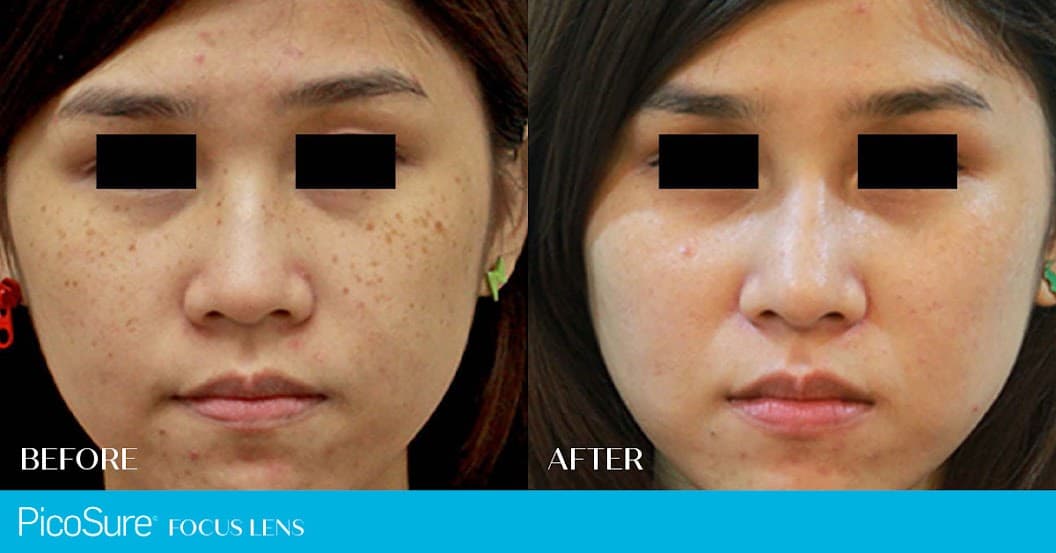
5 Star Rated PicoSure Laser at Dr Joney De Souza Skin & Laser Clinic in London
Written by the Dr Joney De Souza team on 4th February 2026
Pigmentation and sun damage are among the most common reasons patients seek medical assessment for their skin. While these concerns are often grouped together, they can arise from very different underlying processes and require careful evaluation before treatment is recommended. At Dr Joney De Souza Clinic, the management of pigmentation is guided by diagnosis first, with laser technology selected only where it is clinically appropriate.
PicoSure is a picosecond laser platform that may be used to treat certain forms of pigmentation, sun damage and also tattoo removal. It is not considered a universal solution and is not suitable for all pigmentation patterns or skin types. Its role is best understood within the wider context of skin assessment, pigment behaviour, and long term skin health.
Pigmentation occurs when melanin production becomes uneven or excessive within the skin. Sun exposure is a major contributing factor, but pigmentation can also develop following inflammation, hormonal change, or injury to the skin. In many cases, more than one mechanism is involved.
Sun damage typically presents as freckles, sun spots, or a general unevenness in skin tone that becomes more noticeable over time. Post-inflammatory hyperpigmentation may develop following acne, eczema, or other skin conditions, particularly in patients with darker skin tones. Melasma presents differently again, often appearing as symmetrical patches of pigmentation influenced by hormonal and environmental factors.
These conditions behave differently and respond differently to treatment. For this reason, pigmentation should never be approached as a single diagnosis or treated with a one size fits all solution.
PicoSure differs from traditional heat based lasers in how it delivers energy to the skin. It uses ultra short pulses measured in picoseconds to create a photo-mechanical effect rather than relying on prolonged heat.
This mechanism allows pigment particles to be broken into very small fragments, which are then gradually cleared by the body’s natural processes. By limiting thermal spread to surrounding tissue, PicoSure may reduce the risk of prolonged redness or pigment disturbance in selected patients.
This approach can be particularly useful for certain superficial and mixed pigmentation patterns when performed by an experienced medical team.
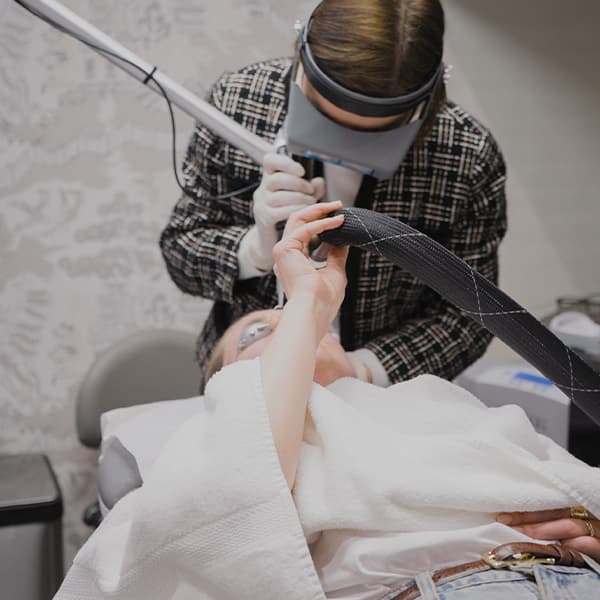
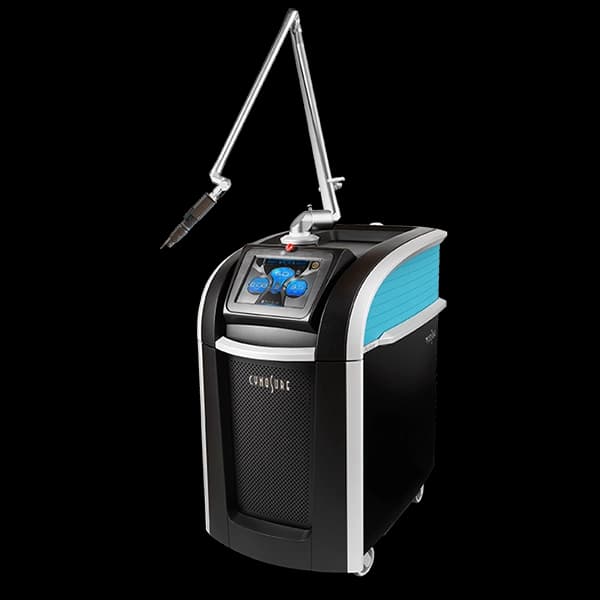
“This time, I was going for the big guns: PicoSure, which is manufactured by Cynosure. This had been sold to me by friends who had used it for similar reasons (sun damage and a teenage aversion to SPF) as ‘the laser to end all lasers”.
“While most laser machines use heat to stimulate new collagen, PicoSure (pico laser) lasers send a vibration down into the deeper layers of skin to trigger collagen production and repair. Dr Joney de Souza’s expert laser practitioner and specialist, Roma, put me at ease. She told me that PicoSure is her favourite laser to work with because ‘the results speak for themselves’. She said they even use the laser in tattoo removal because of how effective it is.”
PicoSure may be recommended for patients with specific types of pigmentation, including sun spots, freckles, and post-inflammatory hyperpigmentation. In carefully selected cases, it may also be used as part of a broader management strategy for melasma, although this condition requires particular caution.
PicoSure is not always the first line treatment. In some cases, topical skincare, chemical peels, or alternative laser technologies may be more appropriate. Treatment planning is always individualised rather than device driven.
| Feature | PicoSure Laser | Traditional Pigmentation Lasers | IPL (Intense Pulsed Light) |
|---|---|---|---|
| Energy delivery | Ultra-short picosecond laser pulses | Longer pulse or continuous laser energy | Broad-spectrum light |
| Primary mechanism | Photo-mechanical pigment fragmentation | Thermal destruction of pigment | Light absorption by pigment |
| Heat transfer to surrounding skin | Minimal | Moderate to high | Variable |
| Precision of pigment targeting | High | Moderate | Lower |
| Suitability for sun damage | Suitable for selected cases | Suitable for selected cases | Commonly used for sun damage |
| Suitability for post-inflammatory pigmentation | May be considered following assessment | Used cautiously | Variable, higher risk in some skin types |
| Suitability for melasma | Selected, stable cases only | Often avoided | Often avoided |
| Downtime | Minimal to short | Variable, can be longer | Minimal |
| Risk of post-treatment pigmentation | Lower when appropriately selected | Variable, depends on settings | Higher in some skin types |
| Skin surface disruption | None | Possible | None |
| Treatment approach | Gradual, controlled correction | May be more aggressive | Broad area treatment |
| Best suited for | Targeted pigment, sun spots, uneven tone | Deeper or more established pigment in selected patients | Diffuse sun damage in lighter skin tones |
PicoSure is one of several options used to address pigmentation and sun damage. Compared with IPL, it offers more precise targeting of pigment. Compared with more aggressive resurfacing lasers, it focuses on pigment disruption without significant surface injury. Chemical peels may also be appropriate in some cases, particularly for superficial pigmentation. The most appropriate treatment depends on the individual, and combination approaches are often considered where appropriate.
Successful pigmentation treatment is rarely about a single procedure. Long term improvement relies on accurate diagnosis, appropriate treatment selection, consistent sun protection, and realistic expectations. At Dr Joney De Souza Clinic, PicoSure is used selectively as part of a wider, doctor led approach to skin health. The emphasis remains on safety, precision, and outcomes that support long term skin quality rather than short term correction.
PicoSure uses ultra short laser pulses to disrupt pigment through a photo-mechanical effect rather than sustained heat. This differs from traditional lasers, which rely more heavily on thermal energy and may carry a higher risk of prolonged redness or pigment disturbance in certain skin types. Explore our FAQ to fully understand PicoSure and how it treats pigmentation and sun damage.
A pico laser treatments works by delivering high energy laser pulses in extremely short bursts. Instead of heating the skin, the laser creates a photo acoustic effect that breaks pigment and ink into tiny fragments. This allows the body’s immune system to gradually remove the pigment while protecting surrounding skin tissue.
Pico laser treatment is commonly used to improve pigmentation, sun damage, melasma, acne scars, uneven skin tone, fine lines, and tattoos. It can also stimulate collagen production, helping to improve skin texture and overall skin quality. Pico laser is often chosen because it delivers visible results with less downtime compared to traditional lasers.
PicoSure is not a traditional resurfacing laser. It focuses on pigment disruption and subtle skin quality improvement without removing or ablating the surface of the skin.
PicoSure may be considered for post-inflammatory hyperpigmentation following acne once active inflammation has settled. Treatment suitability depends on pigment depth and skin stability.
When performed appropriately, PicoSure does not significantly disrupt the skin barrier. However, temporary sensitivity can occur, and post-treatment skincare is important to support recovery.
Temporary darkening can occur as pigment fragments before it is cleared by the body. This is a recognised part of the treatment response and usually resolves over time.
PicoSure may be used for diffuse pigmentation in selected cases, but treatment choice depends on how evenly pigment is distributed and whether alternative treatments may offer better overall correction.
Laser treatment for pigmentation can be performed year-round in selected patients, but strict sun avoidance and protection are essential. In some cases, treatment may be deferred depending on sun exposure risk.
PicoSure treats existing pigment but does not prevent new pigmentation from forming. Long term management relies on sun protection, skincare, and lifestyle factors.
Chemical peels address pigmentation through controlled exfoliation, while PicoSure targets pigment using laser energy. The most appropriate option depends on pigment type, depth, and skin tolerance.
Treatment intervals are typically several weeks apart to allow the skin to recover and pigment to clear naturally.
You can find all our treatment pricing for PicoSure here
PicoSure pricing in our London clinic starts from; £250*