Latest
PicoSure for Melasma and Pigmentation
Blogs
Read the article: PicoSure for Melasma and Pigmentation
Doctor-led MaxG IPL photorejuvenation in Marylebone, London for sun damage, pigmentation, redness and rosacea. Clearer skin from £350. Book today.
Doctor-led MaxG IPL photorejuvenation targeting pigmentation, redness and sun damage at Dr Joney De Souza Clinic, Marylebone, London


If years of sun exposure have left brown marks, blotchy redness or a complexion that no longer looks even, MaxG IPL photorejuvenation is built for exactly that. At Dr Joney De Souza Clinic in Marylebone we use it to lift pigment, calm redness and restore clarity, all without surgery and with very little downtime.
This treatment tends to suit you if you recognise one or more of these concerns:
IPL is at its best on lighter to medium skin tones and on flat, surface-level pigment and redness, where it gives its clearest, most even results. If your priority is tightening loose skin or softening deeper lines, we can guide you to skin tightening. It is not used on raised lesions, and very dark or freshly tanned skin is usually better suited to other options, which we confirm at your consultation.
Related concerns: this treatment helps with rosacea, pigmentation and age spots.
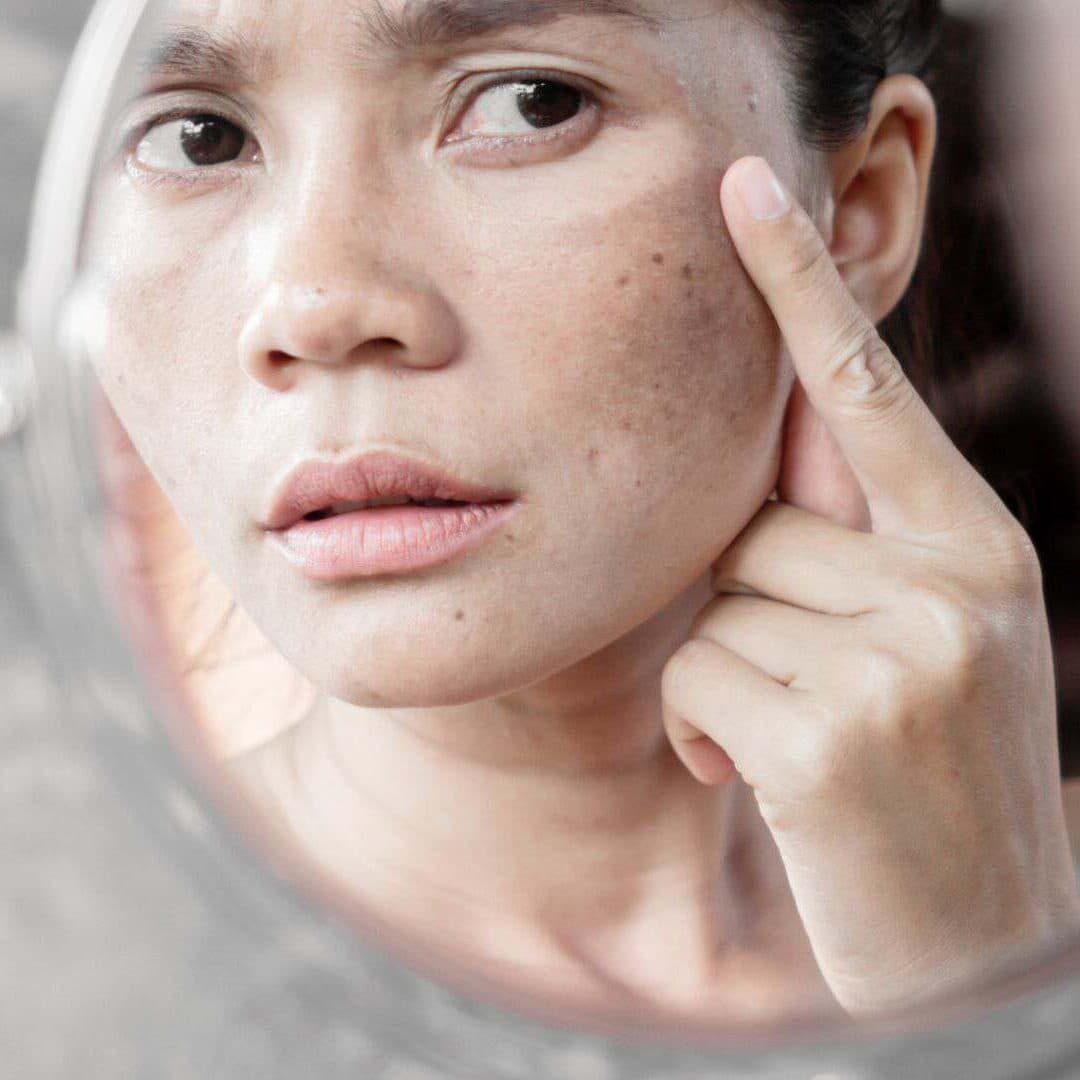








MaxG IPL photorejuvenation is an intense pulsed light treatment that sends precisely controlled broad-spectrum light into the skin to target pigmentation, redness and sun damage. A single-wavelength laser addresses one target at a time, but the MaxG device delivers light across a range of wavelengths, so it can treat both brown marks and red vessels in the same pass.
At Dr Joney De Souza Clinic in Marylebone, MaxG IPL is a doctor-led treatment for patients who want clearer, more even skin. The result is a visible reduction in sun damage, pigmented spots and redness, with the complexion looking brighter and more uniform. The same light energy also stimulates collagen in the deeper layers of the skin, so texture improves gradually across a course.
Related treatments at Dr Joney De Souza: PicoSure, CO2 laser, age spots and pigmentation and rosacea.
Many patients notice a visible reduction in pigmentation, sun spots and redness following a course of MaxG IPL treatment. In most cases, darkened spots begin to fade within one to two weeks of the first session, with further improvement developing after each subsequent treatment.
Furthermore, with a maintenance programme patients can sustain clearer, more even skin over time. Individual results vary, and Dr De Souza will advise on realistic outcomes at your consultation.
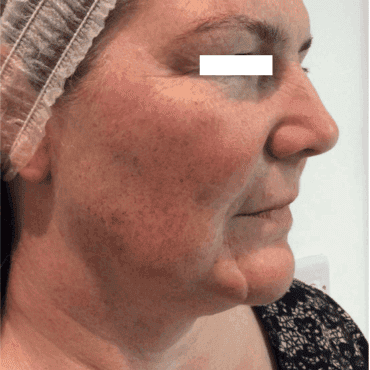
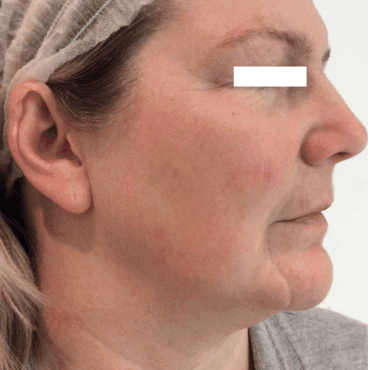
The MaxG device emits controlled pulses of broad-spectrum light that pass into the skin and are selectively absorbed by melanin in pigmented spots and haemoglobin in blood vessels. Those targeted cells take up the light energy and break down, so your body clears the pigment and reduces visible redness over the following days. The same energy reaches fibroblasts in the dermis, prompting fresh collagen and a gradual lift in skin texture.
MaxG IPL leaves the skin surface intact rather than removing a layer, so you can return to normal activities the same day. Your practitioner adjusts the wavelength filters and energy settings for your skin type and your particular concern, which keeps the treatment precise and appropriate to how your skin actually presents.
Before any treatment begins, your practitioner assesses your skin type, reviews the areas that concern you and confirms that MaxG IPL is the right choice for you. Your Fitzpatrick skin type is recorded so the device settings can be matched correctly, and your medical history is reviewed to rule out anything that would make IPL unsuitable. This step sets the wavelength filters and energy levels used in your session, which shapes both safety and result.
Your skin is thoroughly cleansed to remove all makeup, sunscreen and skincare before treatment. A cool gel is then applied across the area to protect the surface and improve contact between the device and your skin. This preparation helps the light energy penetrate evenly and keeps the surface comfortable through the session.
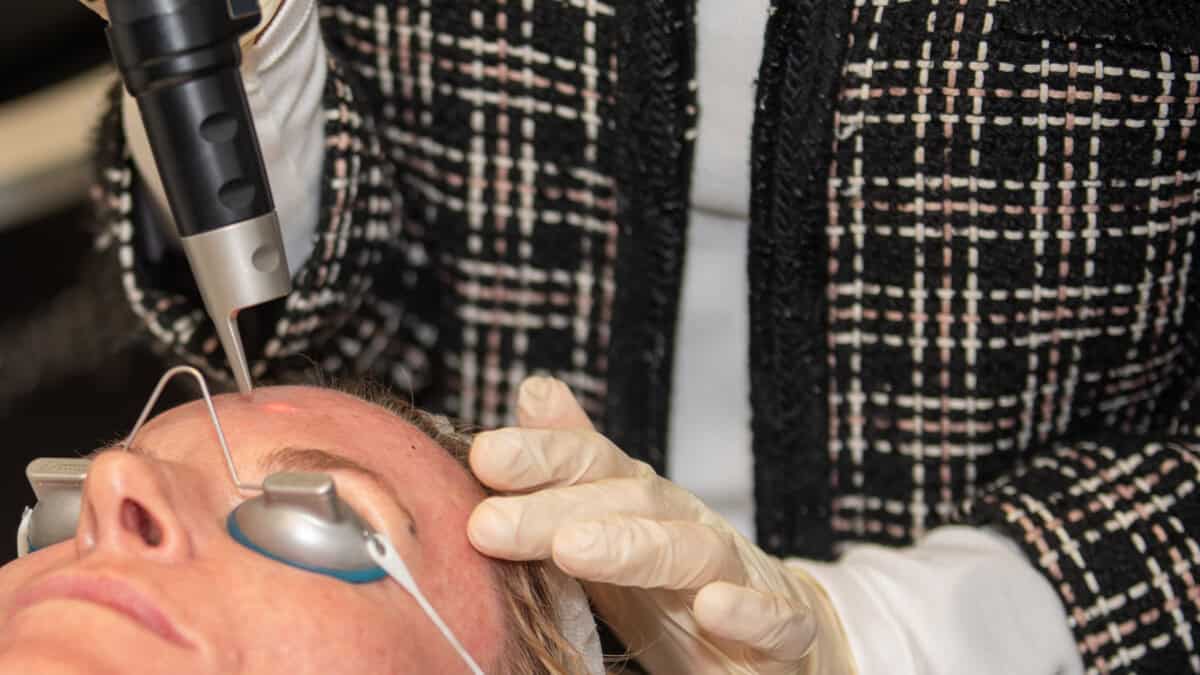
Your practitioner places the MaxG handpiece against the skin and delivers controlled pulses of light across the area. Each pulse feels like a quick, warm snap, and the integrated cooling system keeps you comfortable throughout. Your practitioner works methodically over every area of concern, adjusting the parameters between zones so pigmentation and redness can both be treated in the same session.
Straight after treatment, mild redness and warmth in the treated area are normal and usually settle within a few hours. Pigmented spots may look slightly darker over the next few days before they start to fade. Your practitioner confirms your aftercare at the end of the appointment, including how to protect the area from the sun, which skincare to use and what to avoid while your skin recovers.
In the days after treatment, darkened pigment rises to the surface and begins to flake away, while redness and vascular marks reduce as your body clears the treated vessels. Results from a single session typically become visible within two to four weeks. Most people notice continued improvement between sessions as collagen remodelling builds on top of the early pigment and redness clearing.
A full course of MaxG IPL is usually three to six sessions spaced three to four weeks apart. Once you complete the course, your practitioner advises on a maintenance plan suited to your skin and lifestyle. Annual or twice-yearly maintenance sessions help sustain your results and keep on top of any new pigmentation or redness that appears over time. Many patients fold MaxG IPL into a long-term skin health programme at the clinic.
Every MaxG IPL treatment at Dr Joney De Souza Clinic starts with a personalised consultation. Your practitioner takes the time to understand your concerns, assess your skin type and confirm the right settings for how your skin presents. The plan is tailored to your skin rather than pushed through a fixed protocol. Treatment is carried out by Dr Joney De Souza, Dr Mattia Parducci, or Roma, our laser and skin specialist. Your consultation is with Dr Joney De Souza or Dr Mattia Parducci.
Arrive with clean skin and no active sunburn or tan in the treatment area. Your practitioner will ask you to avoid retinoids and exfoliating acids for several days beforehand. At the consultation your skin type is formally assessed using the Fitzpatrick scale and your areas of concern are noted in detail. This is the right moment to ask about the procedure, the sensations to expect and how your skin may look in the days that follow. IPL usually needs no numbing cream, so treatment begins promptly once the assessment is done.
Once your skin is cleansed and gel is applied, your practitioner delivers pulses of IPL light methodically across the area. Each pulse produces a brief warm snap, and the MaxG cooling system keeps you comfortable throughout. Most appointments take 20 to 30 minutes for the face alone, with extra time if the neck, décolletage or other areas are included. You stay fully awake throughout and can speak with your practitioner at any point.
Afterwards, expect mild redness and warmth in the treated area, which settle within a few hours. Pigmented spots may look slightly darker for the first few days before they fade naturally. Keep out of direct sun and apply a broad-spectrum SPF 50 every morning throughout your course. Avoid retinoids, active exfoliants and heat-based activities such as saunas for at least 48 hours after each session. Your practitioner confirms all of this before you leave the clinic.
MaxG IPL is offered at many clinics across London, so the difference lies in the hands that hold the device. At Dr Joney De Souza Clinic every treatment sits inside a doctor-led setting where clinical assessment, device knowledge and your safety come first. Treatment is carried out by Dr Joney De Souza, Dr Mattia Parducci, or Roma, our laser and skin specialist. Your consultation is with Dr Joney De Souza or Dr Mattia Parducci. Dr De Souza brings more than two decades in aesthetic medicine and laser treatment, and that experience shapes the standard of care throughout the clinic.
“My ‘less is more’ approach has become the mainstay of my practice and clients appreciate that they will have natural looking results.”
Dr Joney De Souza, The Sybarite
IPL is a medical device treatment, and its outcome rests directly on how well the practitioner understands skin physiology, device parameters and patient selection. Every MaxG IPL session at the clinic is handled with that rigour: a thorough assessment, settings chosen for your skin type and structured aftercare across your whole course.
MaxG IPL photorejuvenation at Dr Joney De Souza Clinic is priced by treatment area, the complexity of the concerns involved and the clinical expertise behind the session. Each price covers the full appointment, including assessment, treatment and aftercare guidance, not simply device time. MaxG IPL starts from £350 per session, with course pricing available.
MaxG IPL is used most often on the face, where sun damage and pigmentation show up most clearly. The neck, décolletage and small isolated areas are also treated regularly. If you have extensive sun damage spread across several areas, planning a structured multi-area course from the outset tends to give the most consistent overall improvement, and your practitioner will map this out with you.
| Area | Single (£) | Course of 4 (£) |
|---|---|---|
Face | 350 | 1260 |
Face & Neck | 500 | 1800 |
Face, Neck & Décolletage | 750 | 2700 |
Neck | 350 | 1260 |
Neck & Décolletage | 500 | 1800 |
Décolletage | 350 | 1260 |
Very small area (5x5cm) | 100 | 350 |
MaxG IPL and PicoSure laser both treat pigmentation and skin concerns, yet they work in different ways and suit different presentations. MaxG IPL uses broad-spectrum light to target pigment and vascular marks across the skin at once, which makes it strong for generalised sun damage, redness and uneven tone. It fits well when you want overall photorejuvenation across larger areas such as the face, neck or décolletage.
PicoSure works differently, using ultra-short picosecond laser pulses that shatter pigment particles more precisely, so it comes into its own for stubborn pigmentation, melasma and tattoo-related pigment. Your individual skin assessment guides the choice between the two. Some patients do best with one treatment, while others get the clearest outcome from a combined programme that addresses different aspects of pigmentation and skin quality.
MaxG IPL photorejuvenation is one of the most asked-about laser and light treatments at Dr Joney De Souza Clinic. The questions below cover what patients raise most often at consultation, from how the treatment works and who it suits, to what recovery looks like and how results compare with other options in Marylebone, London.
MaxG is an advanced intense pulsed light (IPL) system that delivers precisely filtered light into the skin to target both pigment and small blood vessels. At Dr Joney De Souza Clinic in Marylebone we use it to break up sun damage and pigment and to reduce redness, so the skin looks clearer and more even. The light is absorbed by those targets and cleared naturally by your body over the following days, which lets MaxG treat two of the most common signs of ageing, brown and red marks, in one treatment.
MaxG works well for sun damage, age spots and pigmentation, facial redness and flushing, broken capillaries and the redness linked with rosacea. It also refreshes dull, uneven skin for a brighter overall complexion. It targets several concerns at once, so it is a common choice for general photorejuvenation, and your practitioner confirms suitability at your consultation.
Most patients have a course of three to six sessions, spaced around three to four weeks apart, for the clearest result. The exact number depends on your skin and the concern being treated. Your practitioner confirms your plan after assessing your skin, and many patients then have an occasional maintenance session to keep results consistent. If deeper pigment is proving stubborn, you may also want to read about age spots and how we approach them.
Downtime is minimal. Treated brown spots often darken briefly before flaking away over a week or so, and you may have mild redness for a few hours. Most patients return to normal activities straight away. We recommend daily SPF and avoiding sun exposure before and after treatment.
Most patients describe a light, warm snap with each pulse, brief and very manageable, and we keep you comfortable throughout. You will often see brighter, more even skin within one to two weeks as treated pigment clears. Redness and vessels improve gradually across the course, and final results build as you complete your sessions.
IPL uses a broad spectrum of filtered light to treat several targets, such as pigment and redness, across a wider area, which makes it ideal for general photorejuvenation. A laser uses a single, focused wavelength for more specific or intensive work. Your practitioner chooses between IPL and a laser such as PicoSure based on your concern and skin type, and sometimes a combination gives the best result.
Yes. MaxG combines well with skin-quality treatments such as polynucleotides and Profhilo, and with PicoSure for more stubborn pigment. Treating tone and texture together often produces a clearer, more refreshed overall result. Your practitioner sequences any combined treatments appropriately and advises on the right plan at your consultation.
MaxG has a strong safety record in experienced hands, and every treatment follows a proper skin assessment. IPL is best suited to lighter to medium skin tones; very dark or recently tanned skin carries a higher risk and is usually better treated with other options. For that reason your practitioner reviews your skin type carefully before recommending IPL. Side effects are usually limited to temporary redness and brief darkening of spots.
MaxG IPL starts from £350 per session, with course pricing available, and every price includes the doctor-led consultation and aftercare. You can see the full breakdown on our pricing page. To book, reach us by WhatsApp, phone or online. Dr Joney De Souza Clinic sits in Marylebone, central London, close to Bond Street, Baker Street and Marble Arch.
Yes. MaxG is one of the most effective options for the persistent facial redness and visible vessels seen in rosacea, because the light targets the small blood vessels behind it. IPL cannot cure rosacea, but it can significantly reduce redness and improve how the skin looks. Your practitioner assesses your skin and explains what IPL can realistically achieve, and many patients pair it with a tailored skincare routine for the best control.
Keep the skin clean and moisturised, and let any darkened spots flake away naturally rather than scrubbing them. Apply SPF 50 every morning and avoid direct sun and tanning before and after your course. Avoid heat treatments such as saunas for 48 hours. Your practitioner gives you full written aftercare before you leave the clinic.
Our patients return to us year after year for natural, balanced results. Every review reflects our commitment to precision, safety and a personalised approach to aesthetic care.
From the journal
Latest
More from the journal
Blogs
Blogs
Blogs
Blogs
Acne & Acne Scarring