
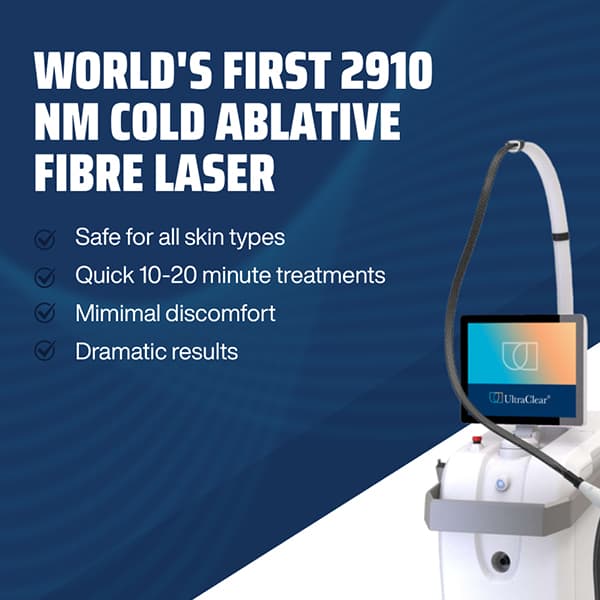
In aesthetic medicine, terminology can often blur the line between marketing and mechanism. When patients hear “UltraClear,” they may assume it simply refers to clearer skin. In reality, UltraClear describes a specific 2910 nm fibre-based laser platform designed for controlled skin resurfacing and collagen stimulation.
Understanding how this technology works and where it fits within modern laser medicine allows for more informed decision-making.
UltraClear operates at a 2910 nanometre wavelength, delivered via fibre-based fractional technology. This wavelength specifically targets water within the skin, allowing precise ablation of damaged epidermal tissue while stimulating dermal remodelling.
Unlike traditional CO2 systems that rely on broader thermal diffusion, UltraClear delivers energy rapidly and in controlled micro-columns. Because energy dispersion is tightly regulated, surrounding tissue experiences less unintended heat exposure.
The result is:
Rather than aggressively removing large surface areas, fractional delivery creates microscopic treatment zones that trigger healing while preserving untreated skin between columns. This accelerates recovery and improves safety margins.
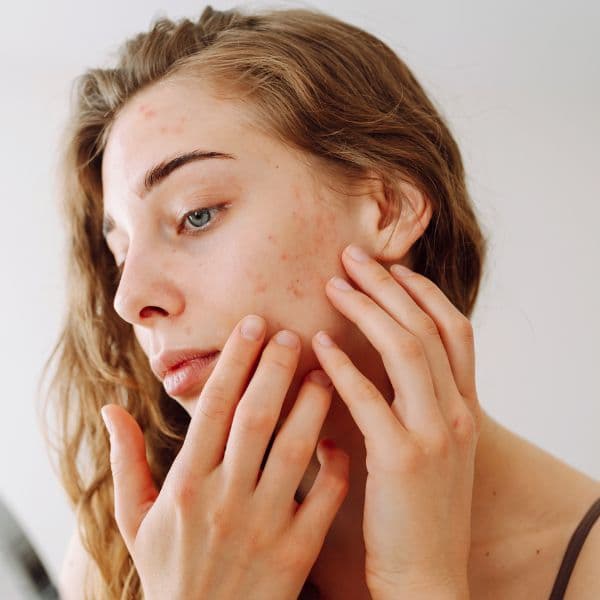
UltraClear’s adjustable depth settings allow it to treat both superficial and structural concerns. It is commonly used for:
Superficial protocols focus on textural refinement and tone improvement. Deeper settings stimulate dermal collagen remodelling for more established structural ageing.
Treatment selection depends on skin biology, scar morphology, and tolerance for downtime rather than a fixed “one intensity suits all” approach.
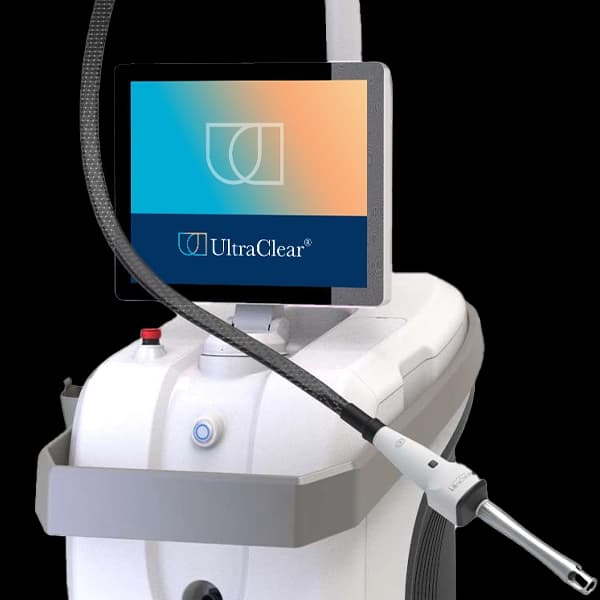
UltraClear’s fibre-based delivery improves precision and reduces excessive thermal spread compared with older fully ablative lasers.
Patients typically experience transient erythema and controlled peeling over several days. Recovery varies according to treatment depth, but lighter protocols may allow return to normal activities within 24–48 hours. More intensive resurfacing requires a short but structured healing phase.
Importantly, suitability remains practitioner-dependent. Accurate assessment of skin type, inflammatory history, and pigmentation risk determines safe parameter selection.
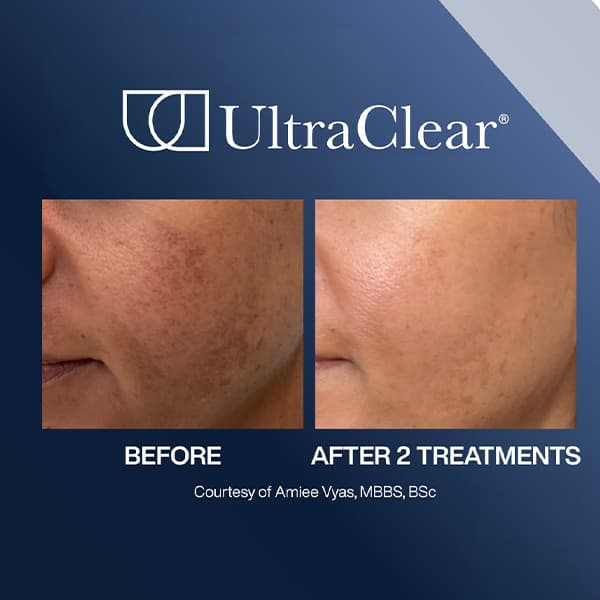
Traditional ablative platforms, such as CO2 lasers, remain powerful tools for severe photodamage and deep scarring. However, they involve extended downtime and higher risk of post-inflammatory hyperpigmentation in certain skin types.
UltraClear occupies a balanced position between fully ablative resurfacing and non-ablative stimulation. It provides meaningful collagen activation while maintaining a more manageable recovery profile.
For many patients seeking measurable improvement without prolonged interruption to daily life, this balance proves particularly valuable.
At Dr Joney De Souza’s clinic in London, UltraClear is integrated within structured treatment plans rather than used in isolation. Combination protocols may include regenerative support, microneedling, or adjunctive therapies depending on individual goals.
Technology alone does not determine outcome. Treatment planning, parameter control, and long-term skin strategy remain the defining factors.
UltraClear represents an evolution in precision laser resurfacing — not because it promises instant perfection, but because it allows controlled, biologically aligned collagen stimulation with predictable recovery.