Laser Tattoo Removal London

PicoSure tattoo removal in Marylebone offers fast, effective laser removal for unwanted tattoos. At Dr Joney De Souza Clinic, PicoSure targets ink particles quickly with fewer treatments, minimal downtime and excellent results. Book your tattoo removal consultation today.

PicoSure Tattoo Removal

time-graphic
Procedure time
20–45 minutes
laptop-graphic
Back to work
Immediately
recovery-graphic
Recovery time
1–3 days
heart-graphic
Anaesthetic
Topical cream
warning-graphic
Sessions needed
6–12 sessions typically

Not sure? Prefer us to call you?

Contact Us

Who Is PicoSure Tattoo Removal For?

PicoSure laser tattoo removal at Dr Joney De Souza Clinic suits patients who want to fade or fully remove an unwanted tattoo, whether for personal, professional or cosmetic reasons. In practice, PicoSure is effective on a wide range of tattoo types — from amateur single-colour tattoos through to multi-colour professional work — and works well on all skin types. Most patients choose PicoSure tattoo removal for one or more of the following:

  • Full removal of an unwanted tattoo
  • Significant fading before a cover-up tattoo
  • Removal of a tattoo that has not responded well to previous laser treatment
  • Fading of stubborn ink colours including blues, greens and purples
  • A treatment that minimises risk of scarring or skin texture change

PicoSure tattoo removal suits adults of all skin types, including darker skin tones that may be unsuitable for older Q-switched lasers. However, results vary depending on tattoo size, ink density, colour palette, tattoo age and individual skin response. Your specialist carries out a thorough consultation before treatment to assess your specific tattoo and advise on realistic outcomes and the expected number of sessions.

What Is PicoSure Tattoo Removal?

PicoSure is a picosecond laser — it delivers ultra-short pulses of laser energy measured in trillionths of a second, which is significantly faster than traditional nanosecond Q-switched lasers. This speed creates a photomechanical effect known as PressureWave™ technology, which shatters tattoo ink particles into smaller fragments that your immune system absorbs and clears more efficiently. In practice, this means PicoSure can achieve greater fading per session compared with older laser technology, and typically requires fewer sessions overall for comparable results.

At Dr Joney De Souza Clinic in Marylebone, tattoo removal sessions use the PicoSure platform, which targets a broad spectrum of ink colours. Unlike Q-switched lasers, which can struggle with blues, greens and purples, PicoSure addresses a wider colour range more effectively. As a result, patients with multi-colour tattoos or previously resistant ink see better clearance per session.

How PicoSure Tattoo Removal Works

PicoSure delivers ultra-short pulses of laser energy that create a photomechanical shockwave within the tattoo ink, shattering particles into smaller fragments. Your immune system then gradually clears these fragments over the following weeks, progressively fading the tattoo with each session.

WhatsApp to Book

Consultation and tattoo assessment

Before treatment, your specialist assesses your tattoo in detail — including size, ink colours, density, age and any previous laser treatment history. They review your skin type and discuss how these factors affect the number of sessions needed to achieve your goals. Your specialist also reviews your medical history to confirm there are no contraindications and sets realistic expectations for the rate of fading. Before committing to treatment, you can ask any questions at this initial consultation.

Preparing for your session

Before each tattoo removal session, avoid sun exposure and tanning of the treated area for four weeks, as tanned skin increases the risk of pigmentation changes after laser treatment. On the day, arrive with the tattoo area clean and free of any topical products. Your specialist applies a topical numbing cream 30 to 45 minutes before the procedure to ensure comfort during treatment. Additionally, shave the treatment area if needed, as hair on the tattoo can interfere with the laser energy reaching the ink.

The PicoSure tattoo removal session

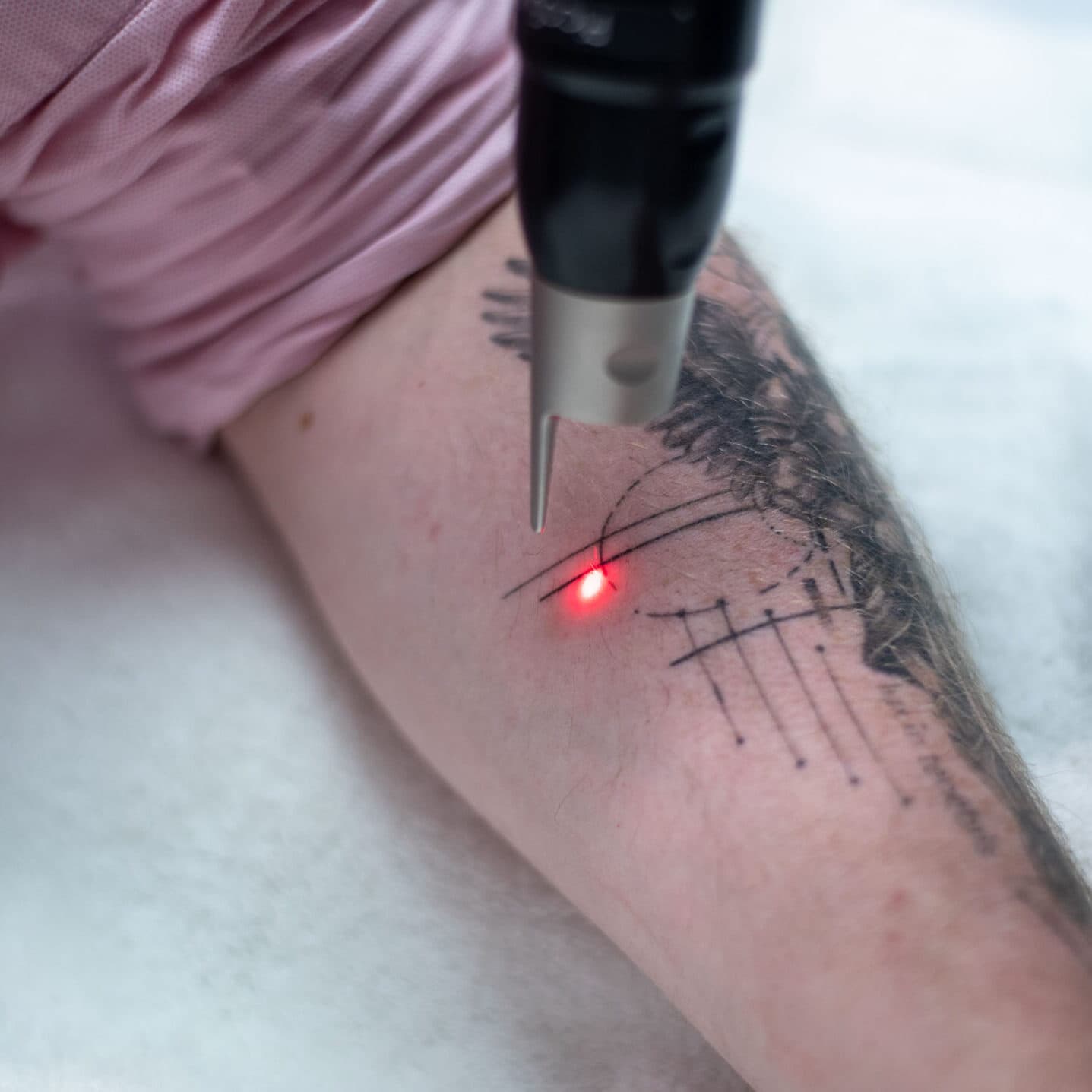
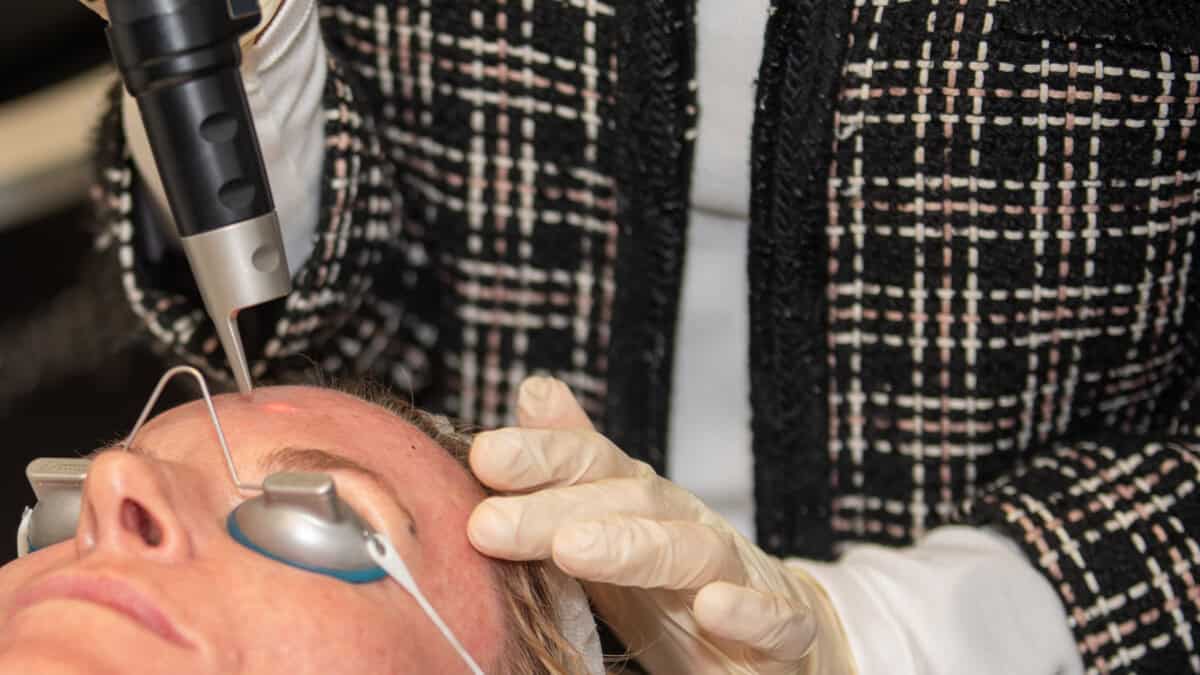
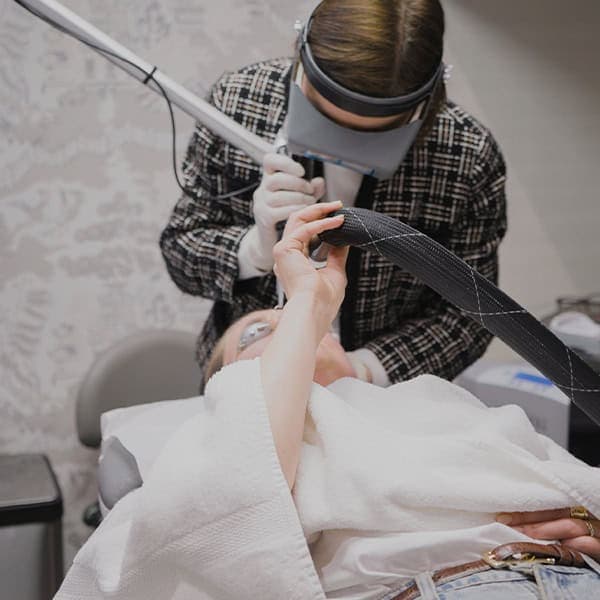
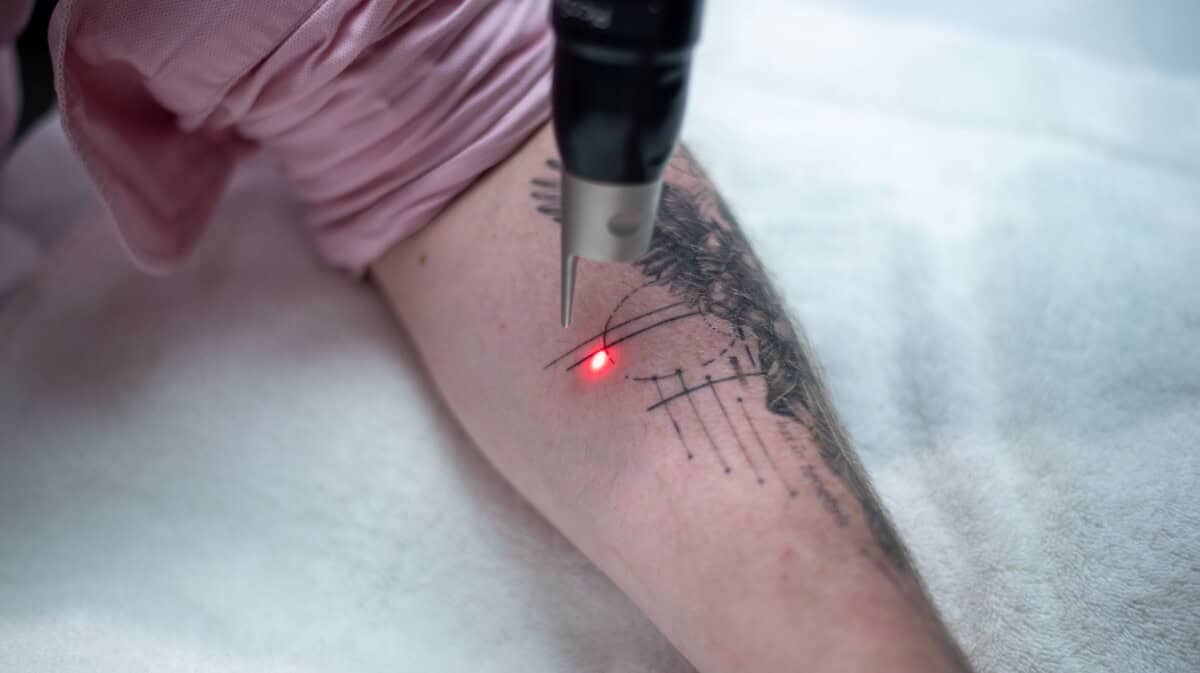
Your specialist cleanses the tattoo area and applies protective eyewear. The PicoSure handpiece delivers a series of ultra-short laser pulses across the tattoo in a methodical pattern, targeting the ink at the correct depth and wavelength for the colours present. In practice, patients describe the sensation as a sharp flick or snap — similar to a rubber band — at each pulse. Session duration depends on the tattoo size, ranging from 20 minutes for a very small tattoo to 45 minutes for a larger piece. A topical numbing cream makes the procedure comfortable for most patients.

Immediate aftercare

Immediately after treatment, the tattoo area typically appears red, swollen and frosted — a white surface reaction caused by the laser energy, which resolves within 15 to 30 minutes. Your specialist applies a soothing gel and a protective dressing before you leave. The treated area may remain red and feel tender for 24 to 48 hours. You can return to normal activities immediately after each session, but avoid sun exposure, swimming, saunas and friction on the treated area for one week.

Between sessions — allowing the skin to clear

After each PicoSure session, your immune system works to absorb and clear the shattered ink particles over the following 6 to 8 weeks. Visible fading typically becomes apparent two to four weeks after each session and continues to develop throughout the interval between appointments. Sessions are spaced 6 to 8 weeks apart to allow maximum clearance before the next treatment. The rate of fading varies between patients and depends on tattoo age, ink density, colour and individual immune response.

Results and number of sessions

Most patients need between 6 and 12 PicoSure sessions to achieve significant fading or complete removal, depending on the tattoo. Amateur tattoos with a single black or dark colour typically respond faster — sometimes as few as 4 to 6 sessions — while professional multi-colour tattoos with dense ink layers may require 10 to 12 sessions or more. Your specialist provides an estimate at your initial assessment, though the actual number of sessions only becomes clear as fading progresses.

Fading versus full removal

Not all tattoos reach 100% clearance with laser treatment, and your specialist discusses realistic expectations at your consultation. Some tattoo inks — particularly certain white, flesh-toned and bright yellow inks — respond unpredictably and may darken or prove difficult to remove completely. In practice, your specialist reviews progress at each session and adjusts the treatment plan as your tattoo responds.

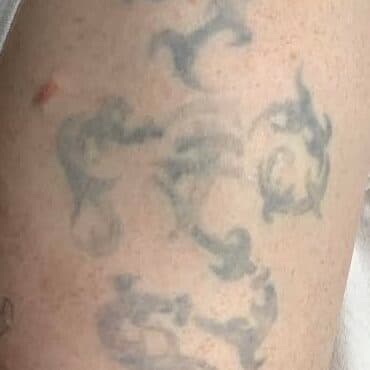
Laser Tattoo Removal Before & After Results in Marylebone

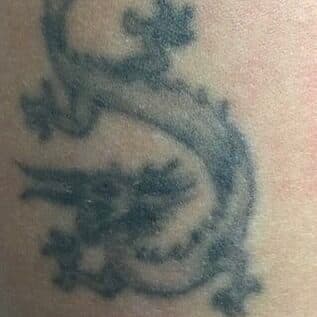
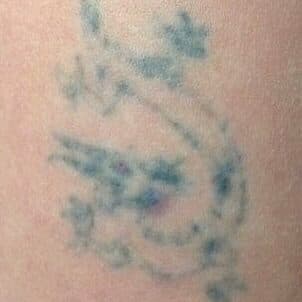
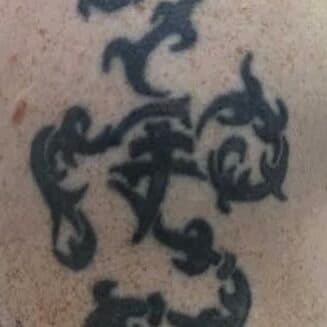
The following results show tattoo fading achieved with PicoSure laser treatment at Dr Joney De Souza Clinic, Marylebone. Individual results vary based on ink type, tattoo age and skin tone.

Before
After
Before
After

Your Tattoo Removal Journey

Tattoo removal at Dr Joney De Souza Clinic typically involves a course of 6 to 12 sessions, spaced 6 to 8 weeks apart to allow maximum ink clearance between treatments. A progress review at each appointment allows your specialist to adjust the approach as your tattoo responds and fading develops.

Before your tattoo removal session

Before each session, avoid sun exposure and tanning of the treatment area for four weeks and keep the skin moisturised in the days leading up to your appointment. On the day, arrive with the tattoo area clean and shaved if hair is present. Your specialist applies topical numbing cream 30 to 45 minutes before the procedure. Additionally, avoid blood-thinning supplements and alcohol for 24 hours before treatment to reduce bruising risk.

During your PicoSure tattoo removal session

Your specialist cleanses the area and applies protective eyewear before starting the laser. The PicoSure handpiece delivers pulses across the tattooed skin in a methodical pattern. Most patients describe the sensation as a sharp snap at each pulse, made comfortable by the topical numbing cream applied beforehand. Sessions range from 20 minutes for a very small tattoo to around 45 minutes for larger pieces. After the final pulse, your specialist applies soothing gel and a dressing before you leave.

After your tattoo removal treatment

The treated area typically appears red, frosted and slightly swollen immediately after the session. This initial reaction resolves within 30 minutes to a few hours. As advised, keep the area clean and apply the aftercare product provided. Avoid sun exposure, swimming, saunas and friction on the treated skin for one week. Visible fading begins to develop within two to four weeks as your immune system clears the shattered ink particles. Your next session is scheduled 6 to 8 weeks after each treatment.

Why Dr Joney De Souza Clinic?

At Dr Joney De Souza Clinic in Marylebone, tattoo removal sessions use the PicoSure laser platform — one of the most advanced picosecond laser systems available in the UK. In practice, this means patients benefit from superior ink clearance per session compared with older Q-switched technology, with particular effectiveness on stubborn colours that traditional lasers struggle to address.

  • PicoSure picosecond platform — faster, more effective ink shattering than nanosecond lasers
  • Effective on a wide colour range including blues, greens and purples
  • Suitable for all skin types, including darker skin tones
  • Centrally located in Marylebone, minutes from Baker Street and Bond Street
  • Progress reviewed at every session to adapt the treatment plan as fading develops
  • Realistic expectations set at consultation — no false promises on outcome or session count

Experienced Practitioners

Tattoo removal sessions at the clinic are carried out by specialist practitioners with experience in PicoSure laser technology and the assessment of different tattoo types, ink compositions and skin responses. In practice, each session includes a review of fading progress and any adjustments to laser parameters before treatment proceeds — a standard that directly affects both the safety and the effectiveness of each appointment.

WhatsApp to Book

Tattoo Removal Pricing

Pricing for PicoSure tattoo removal depends on the size of the tattoo. Your specialist measures the tattoo at your initial consultation and confirms the per-session cost before treatment begins. A course of 4 sessions is available at a reduced rate for each size category.

Which Size Category Is Your Tattoo?

  • Very small (1–3cm): small symbols, lettering, fine-line tattoos
  • Small (4–8cm): palm-sized or equivalent area
  • Medium (9–15cm): half-sleeve sections, larger single designs
  • Large (16–20cm): substantial pieces, partial sleeves
  • Extra large (over 20cm): full panels, large back or chest pieces

Tattoo removal pricing

Associate pricing. Exact size category confirmed at your initial consultation. Course of 4 sessions available at a reduced per-session rate.

Associate (£)Associate x4(£)

Extra Large (16–20 cm)

350

1,260

Large (16–20 cm)

300

1,080

Medium (9–15 cm)

250

900

Small (4–8 cm)

200

720

Very small (1–3 cm)

150

540

Course of 4 sessions available. Size category confirmed at initial consultation. Consultation is complimentary.
Not sure? WhatsApp us for advice

Also Consider: PicoSure for Skin Rejuvenation and Pigmentation

The PicoSure platform at Dr Joney De Souza Clinic also treats skin pigmentation, age spots, sun damage and acne scarring — using the same picosecond laser technology in a different clinical application. In practice, patients who have completed tattoo removal sessions sometimes use the same technology to address pigmentation or skin texture concerns elsewhere on the face or body. Furthermore, PicoSure’s broad spectrum effectiveness makes it the most versatile picosecond laser platform available at the clinic. Your specialist can advise on whether PicoSure skin rejuvenation is appropriate for your additional concerns at your tattoo removal consultation.

Explore PicoSure Skin Rejuvenation

Frequently Asked Questions

Patients considering PicoSure tattoo removal often arrive with questions about how many sessions they need, what colours respond best to treatment, how painful the procedure is and what to expect throughout the removal process. The answers below cover the most common questions we hear at Dr Joney De Souza Clinic — from how PicoSure compares with older laser technology to what aftercare supports the best fading results.

How does PicoSure tattoo removal work?

PicoSure delivers ultra-short bursts of laser energy — measured in picoseconds (trillionths of a second) — directly into the tattoo ink. This speed creates a photomechanical PressureWave™ effect that shatters ink particles into smaller fragments without generating excess heat in the surrounding tissue. Your immune system then absorbs and clears these smaller fragments progressively over the weeks following each session. In practice, the combination of precise targeting and reduced thermal damage makes PicoSure more effective per session than traditional nanosecond lasers for most tattoo types.

How many sessions does tattoo removal take?

Most patients need between 6 and 12 PicoSure sessions to achieve significant fading or full removal. Amateur tattoos with a single dark ink colour typically respond faster, sometimes in 4 to 6 sessions, while professional multi-colour tattoos with dense layering may need 10 to 12 or more sessions. However, the actual number only becomes clear as your tattoo responds across the initial sessions. Your specialist provides an estimate at the consultation based on tattoo size, age, ink density and colours present.

Is PicoSure tattoo removal painful?

Comfort, Safety and Suitability

Most patients find PicoSure tattoo removal manageable with topical numbing cream, which your specialist applies 30 to 45 minutes before each session. In practice, patients describe the sensation as a sharp snap or flick — similar to an elastic band — at each pulse. The level of discomfort varies with tattoo location: areas over bony surfaces or with thinner skin tend to be more sensitive. Overall, most patients tolerate the procedure well throughout the course of sessions.

Is PicoSure tattoo removal safe?

PicoSure is a well-established laser system with a strong safety profile when operated by trained practitioners. Its picosecond pulse duration reduces thermal damage to surrounding skin compared with older nanosecond lasers, which lowers the risk of scarring and pigmentation changes. As with all laser treatments, temporary side effects including redness, swelling and blistering are possible. Serious complications are rare and your specialist discusses all potential risks at your consultation before you commit to treatment.

Which ink colours does PicoSure remove best?

PicoSure removes black and dark navy inks most effectively, as these absorb the broadest range of laser wavelengths. However, one of PicoSure’s key advantages over traditional Q-switched lasers is its ability to target stubborn colours including blues, greens and purples — wavelengths that older technology struggles to address. Red, orange and yellow inks respond variably and may require additional sessions. White, flesh-toned and bright yellow inks respond unpredictably and your specialist discusses realistic expectations for these colours at your consultation.

What is the downtime after each tattoo removal session?

Tattoo removal with PicoSure has minimal downtime. You can return to normal daily activities immediately after each session. The treated area typically appears red, frosted and slightly swollen for the first few hours, then may remain red or tender for 24 to 48 hours. In practice, we advise patients to avoid sun exposure, swimming, saunas and friction on the treated area for one week after each session and to keep the skin moisturised with the aftercare product provided.

How long should I wait between tattoo removal sessions?

Treatment Protocol and Aftercare

Sessions are spaced 6 to 8 weeks apart to allow your immune system sufficient time to absorb and clear the shattered ink particles from the previous treatment. Treating too soon reduces the effectiveness of each session, as clearance is still in progress. In practice, your specialist reviews the fading at the start of each appointment and confirms that the skin has fully healed before proceeding. Some patients with slower immune clearance benefit from extending the interval to 10 to 12 weeks between sessions.

Can PicoSure remove coloured tattoos?

PicoSure addresses a wider colour range than traditional Q-switched lasers. Black, dark blue and navy inks clear most predictably. Blues, greens and purples — which resist older nanosecond technology — respond better with PicoSure. Red and orange inks respond variably and may need additional sessions. As noted above, white, flesh-toned and certain bright pigments respond unpredictably. For multi-colour tattoos, your specialist maps the colours present at your consultation and advises on expected response for each.

What should I do before each tattoo removal session?

Preparation and Aftercare

Before each session, avoid sun exposure and tanning of the treatment area for four weeks and keep the skin well moisturised. On the day, the tattoo area should be clean, shaved (if hair is present) and free of any topical products. Your specialist applies topical numbing cream before each session. Additionally, avoid blood-thinning supplements, alcohol and aspirin (unless prescribed) for 24 hours before treatment to reduce the risk of bruising and skin reaction.

Will tattoo removal leave a scar?

When performed correctly by a trained practitioner, PicoSure tattoo removal carries a low risk of scarring. The picosecond pulse duration minimises thermal damage to the surrounding tissue, which reduces the scarring risk compared with older Q-switched technology. However, some pre-existing tattoos may already have scarring within the ink from the original tattooing process, which becomes more visible as the ink fades. Your specialist examines the tattoo at your consultation and discusses the realistic risk of any residual texture change.

How do I book tattoo removal at Dr Joney De Souza Clinic?

Book via WhatsApp at the number listed on this page or by completing the consultation form above. Your initial consultation is complimentary and takes 30 to 45 minutes, including a full assessment of your tattoo, an estimate of the number of sessions needed and a discussion of realistic outcomes. Treatment can often proceed at the same appointment. The team aims to respond to all enquiries within one working day.

Tattoo Removal: Your Comparison Questions Answered

Once patients understand how PicoSure tattoo removal works, the most common questions concern how it compares with other laser systems, what affects results and whether full removal is always achievable. The answers below address the most frequent comparisons we hear — from PicoSure versus Q-switched lasers and the difference between fading and full removal, to suitability for different skin types and what to expect over the course of treatment.

Is PicoSure better than Q-switched laser for tattoo removal?

PicoSure delivers energy in picoseconds (trillionths of a second), which is significantly faster than the nanosecond pulses of traditional Q-switched lasers. This speed creates a stronger photomechanical effect — shattering ink into smaller fragments — with less thermal energy delivered to the surrounding tissue. In practice, this means PicoSure achieves greater fading per session for most tattoo types, particularly for stubborn colours including blues and greens, and generally requires fewer total sessions to achieve comparable clearance. Furthermore, the reduced thermal delivery lowers the risk of scarring and pigmentation side effects.

Can any tattoo be fully removed with PicoSure?

Most black and dark-coloured tattoos can achieve significant to complete clearance with PicoSure over a sufficient number of sessions. However, full removal is not guaranteed for every tattoo. Factors that affect clearance include ink density, the colours present, the depth at which the ink sits, tattoo age and individual immune response. Some colours — particularly white, flesh-toned and certain bright pigments — respond unpredictably. In practice, your specialist sets realistic expectations at your initial consultation and reviews progress at each session throughout the course of treatment.

How is tattoo fading different from full removal?

Outcomes, Realistic Expectations and Special Cases

Tattoo fading refers to progressive lightening of the ink without necessarily reaching complete invisibility, while full removal means the tattoo is no longer visible against the surrounding skin. Many patients choose fading as their goal — either for a cover-up tattoo or for general lightening — which typically requires fewer sessions than full removal. In practice, your specialist discusses which outcome is realistic for your specific tattoo and what that level of clearance involves in terms of sessions and timeline at your initial consultation.

Is PicoSure tattoo removal suitable for dark skin tones?

PicoSure is suitable for a wider range of skin tones than traditional Q-switched lasers, which carry a higher risk of pigmentation side effects on darker skin. However, laser tattoo removal on darker skin tones requires careful parameter selection and expertise to minimise the risk of hypopigmentation (lightening of the surrounding skin). In practice, your specialist assesses your skin type at the consultation and adjusts the laser settings accordingly to balance effectiveness with safety. A patch test may be recommended before a full session.

Does tattoo age affect how quickly it can be removed?

Older tattoos tend to respond faster to laser removal than fresh tattoos, because the ink has already started to break down and disperse in the tissue over time. Amateur tattoos, which typically use less dense ink and simpler single colours, also tend to fade faster than professional work with multiple ink layers. By contrast, fresh tattoos with dense, deeply deposited professional ink require more sessions to achieve equivalent clearance. Your specialist reviews the age and quality of your tattoo at your consultation when estimating the number of sessions needed.

Can I have tattoo removal if I have a cover-up tattoo?

Special Cases and Practical Questions

Cover-up tattoos — where one tattoo has been inked over another — are more complex to remove because they typically combine multiple layers of dense ink in different colours. In practice, cover-up tattoos usually require more sessions than a single-layer tattoo of equivalent size. However, patients who want sufficient fading to improve the appearance of a cover-up, or to fade an existing cover-up before a new one, can achieve meaningful results. Your specialist assesses the specific layers and colours at your consultation before advising on a realistic plan.

What happens to the skin after all tattoo removal sessions are complete?

For most patients, the skin in the treated area returns to a close approximation of the surrounding untreated skin once the tattoo ink has been fully cleared. However, some patients notice subtle changes in skin texture or slight variations in pigmentation in the treated area, particularly if the original tattoo involved dense ink or repeated sessions. In practice, these changes are typically minor and not visible from a normal conversational distance. Your specialist discusses the realistic outcome for your specific tattoo at the initial consultation.

Can I get a new tattoo over an area treated with PicoSure?

After Removal: Next Steps

Yes, once tattoo removal is complete and the skin has fully healed — typically three to six months after the final session — most patients can get a new tattoo in the treated area if they choose to. The skin needs to be fully settled and any pigmentation changes stable before new ink is applied. In practice, your specialist can advise on the appropriate waiting period based on how your skin has responded throughout the removal process. Many patients use PicoSure specifically to fade an existing tattoo before a cover-up, in which case new tattooing typically proceeds once sufficient fading has occurred.

How do I care for my skin after tattoo removal?

After each session, keep the treated area clean and apply the aftercare product or dressing provided by your specialist. Avoid sun exposure, swimming, saunas, hot baths and friction on the treated skin for one week. Additionally, do not pick or scratch the treated area, as this increases the risk of scarring or infection. Keep the skin moisturised throughout the treatment course and apply SPF to the treated area whenever it is exposed to daylight, even in winter. Your specialist provides written aftercare instructions after each session.

How much does PicoSure tattoo removal cost in London?

PicoSure tattoo removal at Dr Joney De Souza Clinic starts from £150 per session for a very small tattoo (1–3cm). Single session pricing ranges from £150 to £350 depending on tattoo size. A course of 4 sessions is available at a reduced rate, from £540 to £1,260. Consultations are complimentary. Your specialist measures your tattoo and confirms the exact size category and session cost before treatment begins.

How do I book tattoo removal at Dr Joney De Souza Clinic in London?

Book via WhatsApp or by completing the consultation form at the top of this page. Your initial consultation is complimentary and includes a full tattoo assessment, an estimate of sessions needed and a realistic discussion of expected outcomes. The clinic is centrally located in Marylebone, close to Baker Street and Bond Street underground stations. The team aims to respond to all enquiries within one working day.

4.9 ★★★★★

Read our reviews

Our patients return to us year after year for natural, balanced results. Every review reflects our commitment to precision, safety and a personalised approach to aesthetic care.

My tattoo has faded dramatically after several PicoSure sessions at Dr Joney De Souza Clinic. The process was well explained, the aftercare was excellent and the results have surpassed my expectations.

James A.
James A.22/11/2023
View on Google

I am so pleased with my tattoo removal results. Dr De Souza and his team were professional, reassuring and very knowledgeable. The clinic is excellent and I would not hesitate to recommend it.

Tom B.
Tom B.27/10/2024
View on Google

Excellent results from my laser tattoo removal course. The team at Dr Joney De Souza Clinic were fantastic and made the whole process very straightforward. My tattoo is almost completely gone.

Chris M.
Chris M.29/06/2022
View on Google

Dr De Souza is exceptional and the clinic is first class. My tattoo removal is progressing brilliantly and every session the results improve. Highly recommend this clinic to anyone considering removal.

Mark S.
Mark S.13/08/2023
View on Google

Follow us on Instagram

Choosing where you have your aesthetic injectables is just as important as the treatment itself...

At Dr Joney De Souza, all injectable treatments are carried out in a medically-led environment, where medical training, anatomical expertise, and patient safety come first.

Aesthetics are not just cosmetic procedures — they are medical treatments that require a deep understanding of facial anatomy, skin structure, and vascular safety. Being treated by a medic means your procedure is planned with precision, tailored to your individual features, and delivered with a strong focus on achieving natural-looking results safely.

It also means that if any concerns or complications arise, you are in the hands of someone with the clinical knowledge to assess and manage them appropriately.

Ultimately, it’s about more than just enhancing appearance — it’s about trust, safety, and expertise at every step 🤍

How can you find us?

Our clinic is located in Marylebone, London, in the heart of one of Central London’s most prestigious and renowned medical districts. Perfectly positioned for convenience and discretion, we are easily accessible from across the capital and beyond.

We welcome patients from Mayfair, Harley Street, Marylebone, Knightsbridge, Belgravia, Chelsea, Kensington, Fitzrovia and St John’s Wood, as well as international patients visiting London for specialist treatment.

Our location benefits from excellent transport connections, with close proximity to major Underground stations, mainline rail links and direct access to Heathrow, Gatwick and London City airports. Several secure parking facilities and convenient chauffeur drop-off points are available nearby, ensuring a seamless and comfortable visit.

Whether you are travelling from elsewhere in London, across the UK or internationally, our clinic offers a calm, private and exclusive setting in one of the world’s leading medical destinations.

Opening hours
Monday
9 am–6 pm
Tuesday
9 am–6 pm
Wednesday
9 am–6 pm
Thursday
9 am–6 pm
Friday
9 am–6 pm
Saturday
Closed
Sunday
Closed
Dr Joney De Souza
49 Blandford St, London W1U 7HH
Get directions
Whatsapp
PicoSure Tattoo Removal in London | Dr Joney De Souza