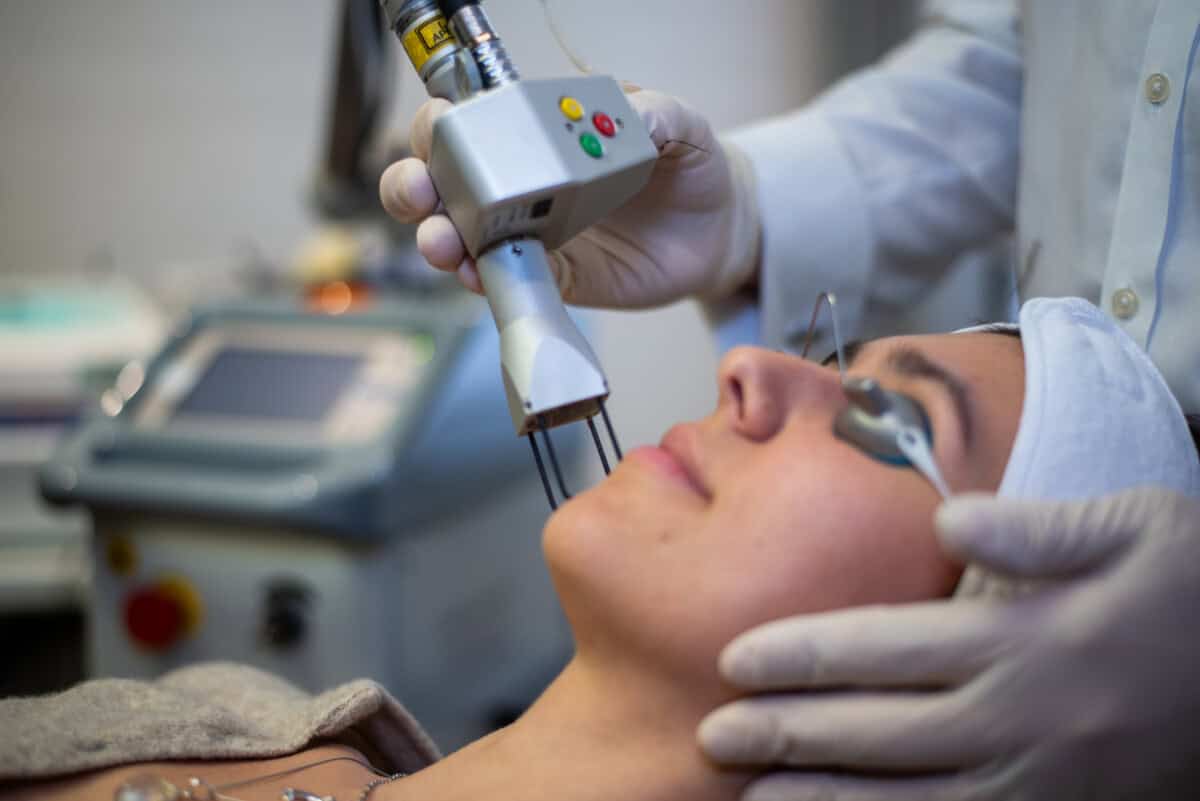
CO2 laser recovery is the part most people worry about before booking. Here’s an honest, day-by-day guide from our Marylebone clinic: what to expect, how long the downtime really lasts, how to heal well, and when your results appear.
At Dr Joney De Souza Skin & Laser in Marylebone, CO2 laser recovery is the question patients ask first. Understandably so. CO2 laser resurfacing delivers significant skin renewal without surgery. That result depends on a short, predictable healing period. This guide walks you through CO2 laser recovery day by day. As a result, you know what to expect and how to plan around it.
Key takeaways
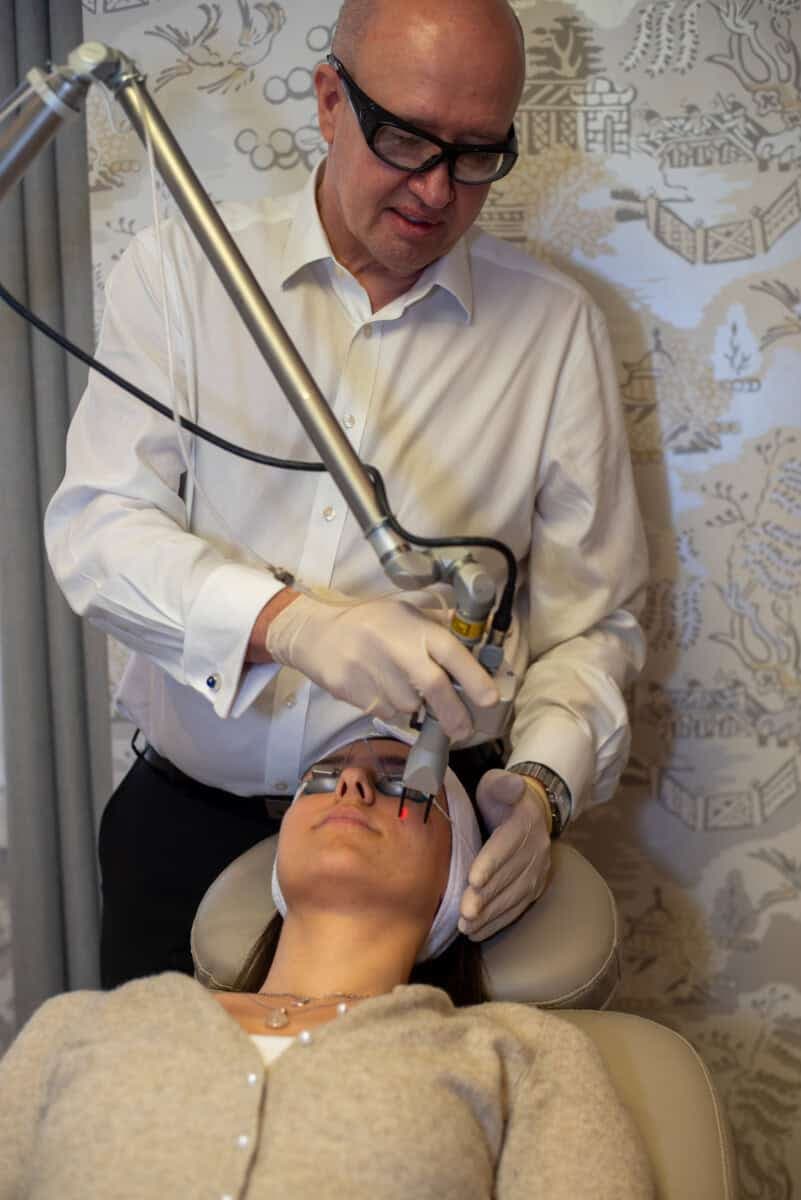
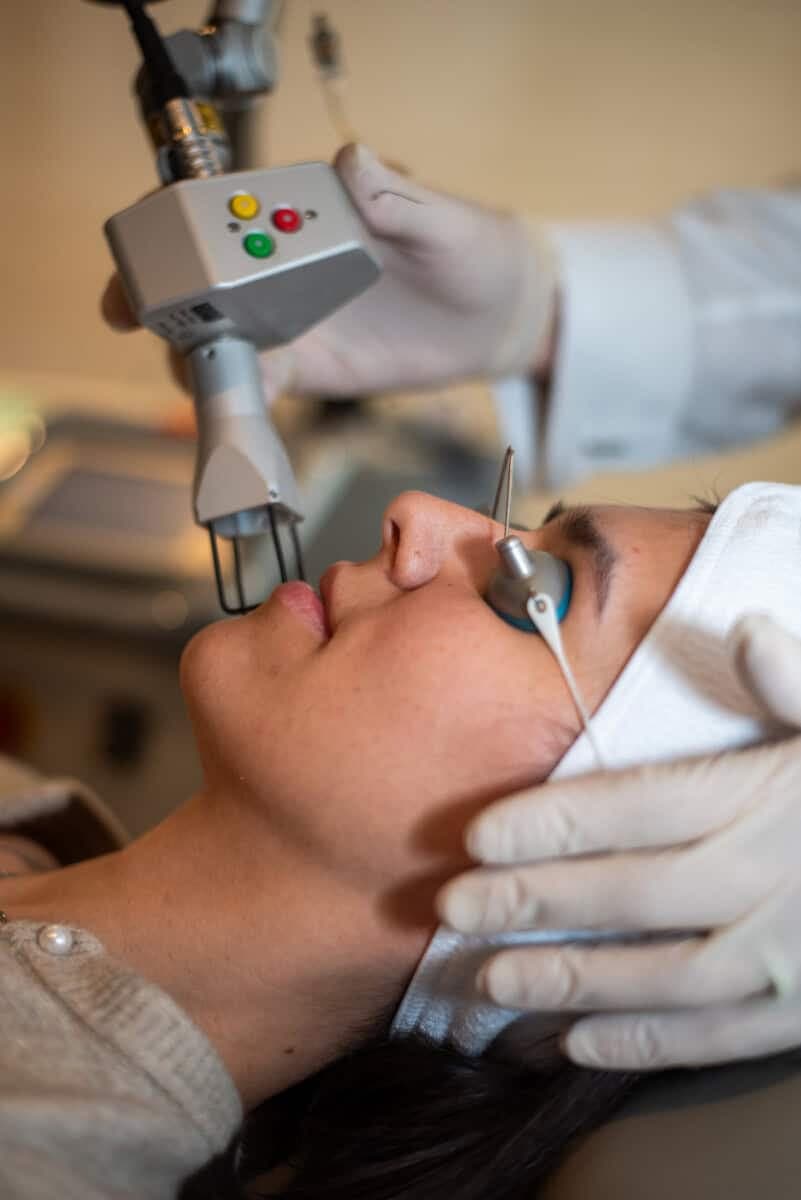
CO2 laser resurfacing uses a fractional beam to create tiny columns of controlled injury in the skin. Around each column, healthy tissue stays intact, which is why healing is faster than with older fully ablative lasers. As the skin repairs, it produces fresh collagen and a smoother surface. This is the way it improves acne scarring, fine lines and uneven texture.
Unlike injectables or energy based treatments, CO2 resurfacing demands real downtime and that is not a warning, it is a feature. The laser works by physically removing the upper layers of skin, triggering the body’s own repair process. That repair process is clinically significant. It is more extensive than the skin response seen with any other aesthetic treatment, and the results reflect that. Recovery is more involved here than with any other treatment in aesthetics, reflecting the scale of change that CO2 laser makes possible. Deeper settings produce more dramatic results with a longer healing period; lighter settings offer a more modest outcome with a quicker return to normal. At your consultation, doctor will match the treatment depth to your goals, your skin type and the downtime you can realistically accommodate.
Every recovery is slightly different. Even so, the pattern below reflects what most patients experience after a standard fractional treatment.
Immediately afterward, your skin feels hot, tight and noticeably red, rather like strong sunburn. Swelling is common, particularly around the eyes, and it often peaks on the morning of day two. During this stage, you keep the skin cool and well moisturised. Alongside this, you follow the aftercare plan your clinician gives you.
By the third day, the redness starts to settle and a gritty, sandpaper texture appears. Then the skin begins to peel and flake as the old surface lifts away. It is important that you let this happen naturally. Instead of picking, use gentle cleansing and frequent moisturiser.
Toward the end of the first week, most of the flaking finishes and fresh, pink skin emerges. Many patients feel comfortable wearing mineral makeup from around day five to seven, once the surface has closed. At this point you can usually return to work and social plans. Even so, the new skin still needs daily sun protection.
Over the following weeks, the pink tone gradually calms to your normal colour. Meanwhile, beneath the surface, collagen production is already underway. Sunscreen remains essential throughout, because new skin is especially vulnerable to pigmentation if it is exposed too early.
Although your skin looks recovered within a couple of weeks, the deeper work continues quietly. As fresh collagen matures, texture refines, pores look smaller and scars soften. For this reason, the full benefit of CO2 laser recovery is best judged at around three months. In many cases, results continue improving for up to six months.
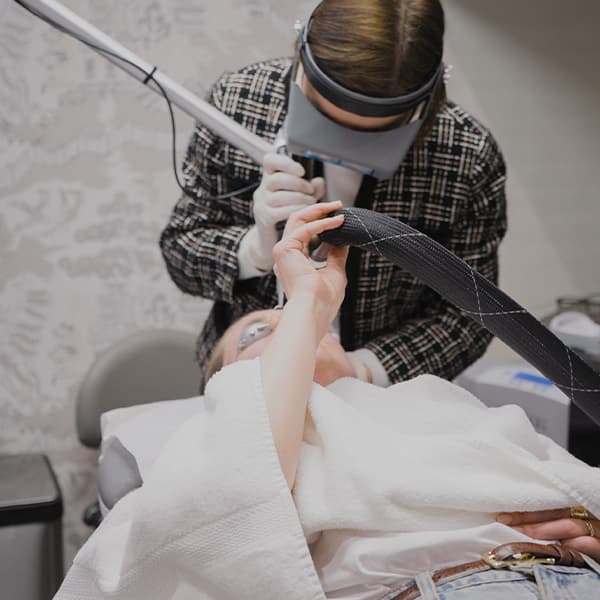
Good aftercare shortens healing and protects your result. With this in mind, a few habits make a real difference.
In practice, you will notice two phases. First, an early glow appears once the new skin settles at around week two. Second, the structural improvement in scars, lines and firmness builds steadily over the months that follow. Because of this gradual timeline, patience genuinely pays off, and we review your progress at follow-up appointments.
For the right candidate, most patients feel the trade is worth it. This is especially true for acne scarring, sun damage and deeper lines. That said, CO2 laser is not suitable for everyone. We do not treat during pregnancy or breastfeeding, over active skin infections, or after recent isotretinoin use. Some skin tones also need a tailored approach to reduce the risk of pigmentation. This is exactly why a consultation matters, and why treatment is always doctor-led.
At Dr Joney De Souza Skin & Laser, we assess your skin and explain the realistic downtime for your chosen depth. Then we set out the likely timeline before you commit. To see treatment options and current pricing, visit our CO2 laser resurfacing page and our prices list. Alternatively, book a consultation with our team.
Does CO2 laser have a lot of downtime? CO2 laser involves genuine downtime, usually seven to twenty-one days, with the most visible peeling in the first week.
Is CO2 laser worth the recovery? For acne scarring, sun damage and deeper lines, most patients feel the result justifies the healing period.
Can I exercise after CO2 laser? It is best to avoid the gym, saunas and heavy sweating for about a week while the skin heals.
How painful is CO2 laser recovery? The skin feels hot and tight for a day or two, similar to sunburn, rather than sharply painful.
When will my skin look normal after CO2 laser? Most patients look presentable within a week, with residual pinkness fading over the following two to four weeks.
CO2 laser recovery usually takes seven to twenty-one days. Lighter treatments heal closer to a week, while deeper resurfacing takes longer. Most patients return to work within seven days.
The skin feels hot and tight for the first couple of days, similar to sunburn, rather than sharply painful. Your clinician provides aftercare to keep you comfortable, and discomfort settles quickly.
Most patients can apply mineral makeup from around day five to seven, once the skin has finished peeling and the surface has closed. Always check with your clinician first.
An early glow appears at around two weeks. The deeper improvement in scars, texture and firmness builds over three to six months as new collagen forms.
Avoid sun exposure, retinoids and acids, heat such as saunas and gyms, and any picking of peeling skin. Sun protection and regular moisturiser are the priorities.
CO2 laser can be used across many skin tones, but deeper or darker skin needs a carefully tailored approach to reduce the risk of pigmentation. A consultation determines suitability.
Strong redness settles within the first week, then fades to a mild pinkness. For most patients the pink tone calms over two to four weeks.
Many patients return to work within five to seven days, once the peeling has finished. Deeper treatments may need a little longer.
Many concerns improve with a single session, although some scars or deeper lines benefit from a short course. Your clinician advises at consultation.
UltraClear generally offers a gentler recovery with less peeling, while CO2 gives a stronger single-session result. The right choice depends on your goals and your available downtime.