Age spots hold their colour through winter. Freckles fade and come back. Melasma does neither. Which you have decides whether clearance lasts a season or lasts for good.
Look at a scattering of brown marks across your cheekbones. You would be forgiven for calling all of them age spots. At Dr Joney De Souza Skin & Laser we see three quite different things under that description, and telling them apart matters more than any treatment decision that follows.
Sun spots, age spots and liver spots are all names for the same thing, which dermatology calls solar lentigines. They are the flat, well-defined brown marks that accumulate from years of ultraviolet exposure. They tend to arrive from around your forties. The name is a little unfair, since they are a record of exposure rather than of age. There is a fuller picture of the concern on our age spots page.
Freckles are different. They are largely inherited, they travel with fair skin and a tendency to burn, and they usually appear in childhood. The giveaway is the calendar. Freckles darken across a British summer and fade back by February, year after year.
Melasma is the third, and it is the one most often mistaken for the other two. It shows as larger, soft-edged patches, usually roughly symmetrical across the cheeks, upper lip or forehead. It answers to hormones and heat as much as to sunlight, and it behaves quite differently under treatment.
So here is the simplest test you can run at home. A mark that looks the same in January as it did in August is almost certainly a sun spot. One that fades every winter is a freckle. A soft-edged patch that ignores the seasons is likely melasma. Sun spots also have firmer, better defined borders than freckles. They tend to arrive one at a time rather than as a scattering.
This is the genuinely good news, and it is why treating sun damage is one of the most satisfying things a pigment laser does.
Each sun spot is a defined deposit of pigment rather than a general tendency. Clear that deposit properly and it is cleared. There is no seasonal comeback waiting for you in June, and treating a scattering across the cheekbones means that particular scattering is done.
Freckles are the opposite case, and it is worth being straightforward about it. Treatment clears the pigment currently sitting in your skin and the difference can be striking, but the tendency to produce it is written into how your skin works. Handled as a reset you choose to make, with proper protection across the summer, it is a very rewarding treatment. Sold as permanent, it would be dishonest.
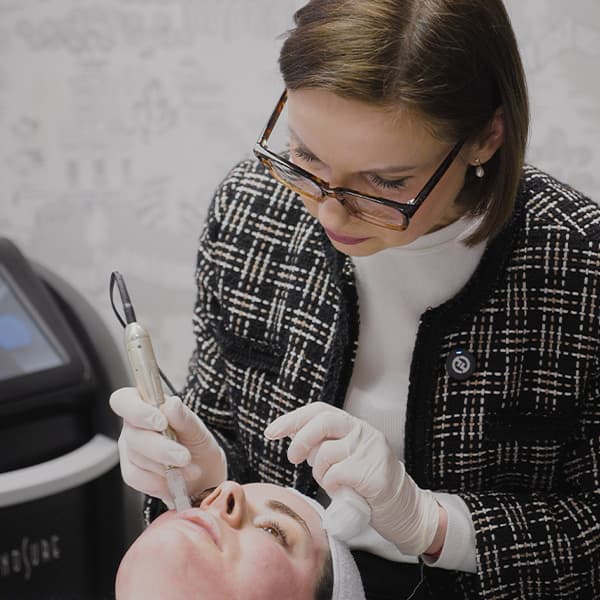
PicoSure Pro is a picosecond laser with two wavelengths. 755nm is the one brown pigment absorbs most readily and it reaches marks sitting deeper down. 532nm is absorbed right at the surface, and a sun spot with a sharp edge to it is exactly that job. Each pulse lasts around a trillionth of a second, which is faster than heat can travel. The energy shatters the pigment by pressure and leaves the skin around it cool. Your lymphatic system then carries the fragments away over the following weeks.
What patients notice first is brightening, often within days. The fuller change keeps developing across the following two to four weeks as the treated pigment leaves. Because each mark is defined, the before and after here is unusually easy to see. A spot that sat on your cheekbone for fifteen years either is there or it is not.
Sun damage collects exactly where the exposure landed. Cheekbones and temples, the chest and décolletage, the forearms and the backs of the hands.
The hands and chest are worth mentioning because they are so often forgotten. Decades of open-neck summers show on the décolletage. The backs of the hands collect far more daylight than anyone plans for, particularly through a car window. Worth knowing that UVA passes straight through ordinary window glass, which is why years of driving can leave one side of a face carrying more than the other.
A course of three sessions four to six weeks apart is the usual plan, with the clearest change often arriving between the second and third. Sessions start from £475 for a full face, with a course of three from £1,282. Smaller focal areas such as the mouth area start from £320, and face with neck, or face with neck and décolletage, are priced accordingly. The full table sits on the PicoSure treatment page.
Our system arrived with five handpieces, the 755nm zoom plus four fixed 532nm heads at 5mm, 6mm, 8mm and 10mm, which suits this concern well. A broader spot evens out tone across an area while a smaller one does concentrated work on the individual marks that need it.
Future exposure is the only thing that creates new marks. Daily SPF stops being a lecture here and becomes the thing that protects money you have already spent. Our guide to how PicoSure treats pigmentation covers the wider picture.
Everything begins with a face-to-face consultation at our Marylebone clinic, and this appointment is where the value sits.
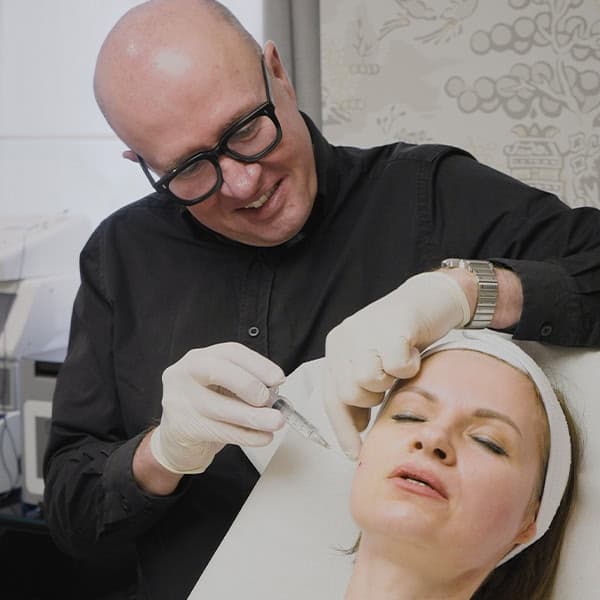
We look at your skin in good light and under magnification. Age spots, freckles and melasma can look identical across a bathroom mirror, and each one wants different settings. Where pigment is layered or hard to read by eye, VISIA skin analysis shows what is sitting below the surface, which sometimes shortens a course and sometimes lengthens it.
We go through your skin type, your sun history and what you use at home. Photographs in consistent light mean progress gets judged properly rather than from memory. You will also have a patch test before your first full session.
One thing worth raising here. If a mark has changed in size, shape or colour, bring it to your consultation and say so. Dr Joney De Souza provides the clinical oversight at the clinic. Where a mark needs a dermatologist’s opinion before any cosmetic treatment you will be told that and pointed in the right direction. That comes first, every time.
Sessions are carried out by Roma Sumskiene, our Advanced Skin and Laser Specialist, who is Level 4 qualified and has run hundreds of PicoSure sessions.
If you have spent years looking at the same marks without knowing what they are, half an hour will answer it. Book a consultation at our Marylebone clinic, or see current prices first.
Age spots, freckles and melasma each want a different plan, and identifying which you have is what makes a result last. A consultation at our doctor-led Marylebone clinic settles it in good light and under magnification, with a patch test on the day.
Questions our Marylebone team hears most about sun damage and the marks it leaves.
Nothing at all. Age spots, sun spots and liver spots are three names for the same thing, which dermatology calls solar lentigines. They are flat, well-defined brown marks that build up from years of ultraviolet exposure. The age label is misleading because they record sun rather than birthdays.
Watch them across the year. Freckles darken through summer and fade back by winter, every year, whereas a sun spot holds its colour in January just as it did in August. Sun spots also have firmer, better defined borders and they are usually larger. They tend to arrive one at a time rather than as a scattering.
A cleared sun spot tends to stay cleared, because each one is a defined deposit of pigment rather than an ongoing tendency. What creates new marks is future sun exposure, which is why daily SPF is what protects your result. Freckles are the opposite case, since the tendency to produce them is inherited.
A course of three sessions four to six weeks apart is the usual plan. Brightening is often visible after the first, with the clearest change arriving between the second and third. How deep the pigment sits and how widespread the marks are both move that number. Your practitioner confirms it at your assessment.
Then the plan changes, and identifying it before treatment starts is important. Melasma is driven by hormones and heat as well as by sunlight, so it is treated at gentler settings and more patiently. Many patients then keep it settled with a single maintenance session once or twice a year.
Yes, and both are commonly asked for. The décolletage carries decades of open-neck summers, and the backs of the hands collect far more daylight than most people expect, particularly through car windows. Both are treated as their own areas and priced accordingly.
Very little. Some warmth and pinkness for a day is typical, and treated marks may darken briefly as the pigment fragments before it lifts. The skin surface is never removed, so most patients go straight back to normal routine including work the same day.
If a mark has changed in size, shape or colour, yes, and please raise it at your consultation. Dr Joney De Souza provides the clinical oversight at the clinic. Where a mark warrants a dermatologist’s opinion you will be told that and pointed in the right direction before anything cosmetic goes ahead.
Autumn and winter suit a course well in this country, for two reasons. Treatment works on untanned skin, and the months afterwards are when sun protection is easiest to maintain. Starting a course before a summer holiday is usually worth delaying until you are back and any tan has faded.
A full face starts from £475 a session, with a course of three from £1,282. Smaller focal areas such as the mouth area start from £320. Combinations such as face with neck, or face with neck and décolletage, are priced above the full face. The complete table sits on our PicoSure treatment page.