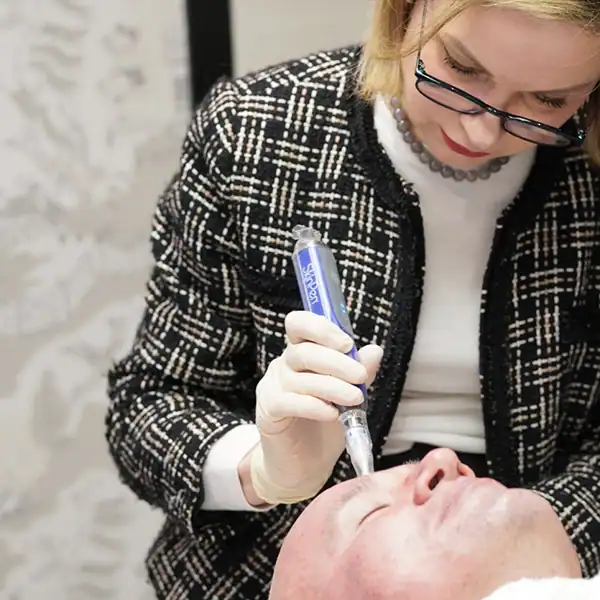
At Dr Joney De Souza Skin & Laser in Marylebone, London, patients often ask whether the microneedling benefits they read about online hold up in real life. The short answer is that microneedling does work for many people, though results depend on your skin, your concern, and the number of sessions you complete. Below, our team explains how the treatment works, what it can realistically improve, and who tends to suit it best. We also set out what to expect across a typical course.
Microneedling uses a device fitted with very fine needles. These needles create tiny, controlled micro-injuries in the upper layers of the skin. Although that sounds dramatic, the channels are microscopic and the process is precise. Your body then treats each channel as a small wound and begins to repair it.
This repair response is the key. As the skin heals, it produces fresh collagen and elastin, the proteins that keep skin firm and springy. Clinicians often call this collagen induction therapy. Over the following weeks, that new collagen gradually thickens and reorganises, which can soften texture and improve tone.
Because the injury is controlled and shallow, the surrounding tissue stays intact and supports faster recovery. Many patients prefer this gentler, stimulating approach to more aggressive resurfacing. Even so, suitability still depends on your skin type and history, which we confirm at consultation.
Microneedling is best thought of as a skin-quality treatment rather than a quick fix. Patients commonly report gradual changes across several areas, including the following:
Results may vary from person to person. Microneedling will not replace anti-wrinkle injections or dermal fillers, and it works differently from laser resurfacing. Instead, it complements a wider skin plan.
Several reviews support microneedling for skin texture and atrophic acne scars, particularly across a course of sessions. A systematic review by Hou and colleagues in Dermatologic Surgery (2017) reported meaningful improvements in acne scarring with repeated treatments. Findings still vary between studies, and individual outcomes differ, so we keep expectations realistic and tailored to each patient.
Microneedling suits many skin types and tones, which makes it a versatile option. Patients with mild to moderate texture concerns, early fine lines, or shallow acne scars often respond well. People who want a treatment with little to no downtime also tend to favour it.
However, microneedling is not right for everyone. We generally avoid treating active acne breakouts, infections, or inflamed skin. The treatment is not suitable during pregnancy or breastfeeding, and certain conditions, such as a history of keloid scarring or some skin disorders, may rule it out. A consultation confirms whether the treatment is appropriate for you and lets us plan safely.
One session can leave the skin looking refreshed, yet lasting change usually builds over a series. Many clinicians suggest a course of three to six treatments, spaced roughly four to six weeks apart, because collagen forms gradually. You may notice early improvements in glow within a week or two, while deeper changes in texture and scarring typically appear over several months.
Afterwards, your skin might look pink and feel slightly sensitive for a day or so. Most people return to normal activities quickly, although we ask you to follow simple aftercare, including sun protection. To understand the device and protocol we use, see our microneedling treatment page.
For the right candidate, microneedling can be a worthwhile, lower-risk way to improve skin quality over time. The honest answer is that commitment matters, because a single session rarely delivers the full effect. When you complete a planned course and protect your skin, the microneedling benefits tend to add up.
Ready to find out whether microneedling suits your skin? Book a consultation with the team at Dr Joney De Souza in London, where we assess your concerns and design a personalised plan. You can also review treatment costs on our prices page before you decide.
Curious about microneedling for texture, fine lines, or acne scarring? The team at Dr Joney De Souza in London will assess your skin honestly and recommend a tailored plan. Book a consultation today to discuss your concerns, understand what results you might expect, and view clear, upfront pricing before you commit.
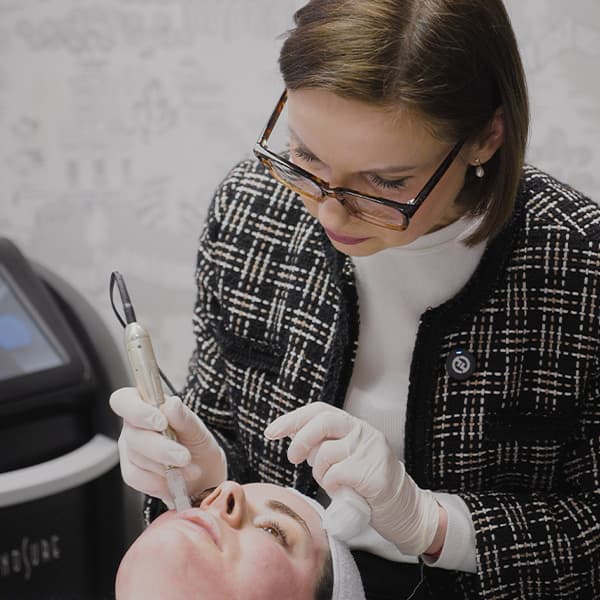
Common questions our Marylebone team hears.
Microneedling works for many patients by stimulating new collagen, which can improve texture, fine lines, and shallow acne scars. Results build gradually over a course of sessions, and outcomes vary from person to person.
Pricing depends on the area treated and how many sessions you need. You can view current costs on our prices page, and we confirm a clear plan at your consultation.
Many clinicians suggest a course of three to six sessions, spaced around four to six weeks apart. Your exact plan depends on your skin and your goals.
Some patients notice a brighter complexion within one to two weeks. Deeper changes in texture and scarring typically develop over several months as collagen matures.
There is little to no downtime for most people. Your skin may look pink and feel sensitive for a day or so, and we recommend gentle aftercare and sun protection.
Microneedling may help remodel shallow, depressed acne scars over a course of treatments. Results vary, so a consultation helps set realistic expectations for your skin.
Microneedling can soften the look of fine lines by encouraging firmer, better-hydrated skin. It is often part of a wider plan rather than a standalone fix.
Most patients describe a mild prickling sensation. We apply a topical numbing cream beforehand to keep the treatment comfortable.
We avoid treating active acne, infections, or inflamed skin. Microneedling is not suitable during pregnancy or breastfeeding, and some conditions may rule it out, so a consultation confirms suitability.
Booking is simple with Dr Joney De Souza Skin & Laser in Marylebone, London. Contact us through our website to arrange a consultation, and our team will guide you through suitability, planning, and pricing.