
A friend had one millilitre, the internet says two. Lip filler at Dr Joney De Souza Clinic in Marylebone starts from your lips and face instead, which is why less so often looks better.
You asked a friend how much filler she had, and she said one millilitre as though it were a dress size. Online, the same question gets a dozen different answers, and you still have no idea whether your own lips need half that, double it or something else entirely. Lip filler at Dr Joney De Souza Clinic in Marylebone starts from your lips rather than from that number.
| Performed by | Results | Downtime | Your plan |
|---|---|---|---|
| Dr Joney De Souza or Dr Mattia Parducci | Visible straight away, settled within two weeks | Swelling eases over two to three days | Set by the doctor at consultation |
Even the research leans on round numbers. A 2026 review pooling 16 lip filler studies and 3,692 patients found most protocols used 1 to 2 ml per session. That is an average built to show a measurable change on a scale, and it was never meant as the amount your own lips need.
Lip filler in London here begins with your lips, your face and the way the two sit together. Dr Joney De Souza (GMC 7008632) or Dr Mattia Parducci (GMC 7635663) reads all of that first, and only then decides how much gel your lips will actually need.
Filler arrives in small syringes, and it is tempting to think of a treatment as one syringe or two. That habit puts the packaging in charge of your face. A syringe holds a fixed quantity, but your lips were never measured to match it.
Some lips need very little. A lip that has lost a fraction of its definition with time often looks transformed by half a millilitre placed precisely along the border. The change is small on paper, yet the outline catches the light again and lipstick stops feathering at the edges.
Other lips need a little more, usually because the body of the lip has thinned or the two sides have drifted apart. Even then, the doctors add only what your proportions call for. If your lips look their best with less than a full syringe, less than a full syringe is what you receive.
The material itself is simple. Hyaluronic acid already occurs naturally in your skin, and it draws in moisture wherever it is placed. A few drops along the border sharpen the outline, while a little more inside the body of the lip adds softness. Because it is fully reversible, every amount can be refined later.
If your lips look their best with less than a full syringe, less than a full syringe is what you receive.
Trial volumes tend to run high because a study has to prove its point on a grading scale. In one randomised trial in Dermatologic Surgery, a softer lip gel matched the fullness of its comparator at eight weeks while using about 20 percent less product, 2.65 ml against 3.33 ml across the treatment and its optional touch-up. Lip fullness was still improved at 48 weeks.
That result points to something the doctors see every week. The gel, where it goes and how it is placed matter more than the number on the syringe. A soft product threaded along the border can reshape a mouth that a larger amount pushed into the centre would only inflate.
The starting point at this clinic is smaller still. Newcomers usually begin at half a millilitre, and the lip filler page says first-time patients are often advised to start at 0.5 ml or 1 ml. Results typically last six to twelve months, so a modest first treatment shows you how your lips carry the gel before anything more is considered.
Age changes the picture too. An MRI study of 200 adults in Plastic and Reconstructive Surgery found the upper lip of women aged 65 to 80 had lost about a fifth of its volume compared with women in their twenties. A lip that has thinned that much may need a full millilitre, placed over two visits.
The assessment starts with the border, the fine ridge where lip meets skin. When it softens with age, the outline blurs and colour bleeds beyond it. Restoring a crisp border often does more for the mouth than adding any volume inside it.
Next comes the Cupid’s bow, the double curve at the centre of the upper lip. The doctors look at its height, its symmetry and how sharply it peaks. A well-defined bow gives the whole mouth its character, and it is easy to flatten with too much gel placed in the wrong spot.
Then they weigh the balance between the upper and lower lip. In most faces the lower lip sits a little fuller than the upper, and that ratio looks natural from every angle. Where the upper lip has thinned, a small amount restores the proportion without making it the dominant feature.
Texture matters as well. Lips that feel dry and slightly deflated under the fingertip often respond to a soft, hydrating placement rather than a structural one. The gel draws in moisture, so the surface looks smoother and more supple. That softness is part of what makes a modest amount look so fresh.
Your lips are never seen on their own. They sit between your nose and chin, beneath your cheeks, and alongside the corners of your mouth. A lip that looks perfect in a close-up photograph can look heavy in a mirror if it overwhelms a smaller chin or a delicate jaw.
That is why the doctors step back before they lean in. They study your face from the front and in profile, and they watch your mouth move as you talk and smile. The right amount of filler is the amount that keeps your lips in proportion with everything around them.
Lip filler does not lift corners that a muscle pulls down. Where the corners of the mouth turn down at rest, the depressor muscle beneath them is the cause, and a tiny dose of anti-wrinkle injections relaxes it so the corners settle level. Adding more gel to the lip would only make a downturned mouth look heavier.
Where volume has gone from the cheeks or chin, dermal fillers placed there restore balance so the lips need less. If naturally thin lips are what bothers you, the plan usually builds fullness in small steps, aiming for a better version of your mouth rather than one borrowed from a photograph.
The lips are one of the most expressive parts of the face. They stretch when you laugh, press together when you concentrate and soften when you rest. Filler that respects that movement looks natural in every expression, while too much shows itself the moment you smile.
Small amounts also let the doctors work in stages. Lips swell for a few days after treatment, so the true shape only appears once that has settled. At the two-week review, the result can be refined with a touch more if it is needed, rather than overfilled on the day.
A modest result tends to age more gracefully too. Lips treated lightly fade back towards their natural shape without stretching, and when you return, the doctors build on a mouth that still looks like yours. Many people arrive expecting a full millilitre and leave having had half, with lips that look fresher, sharper and more balanced.
The first appointment opens with questions rather than a needle. Are you pregnant or breastfeeding? Is there a cold sore or any infection on your lips right now? Have you had lip filler before, which product, how much and how long ago? And are you taking anything that thins the blood, from prescribed medicine to fish oil or other supplements?
Each answer moves the plan. A cold sore postpones the visit, earlier filler is felt for before any new gel is drawn up, and blood-thinning supplements may pause for a few days if that is appropriate. Arrive with clean lips and little or no lip product, so the border can be seen clearly.
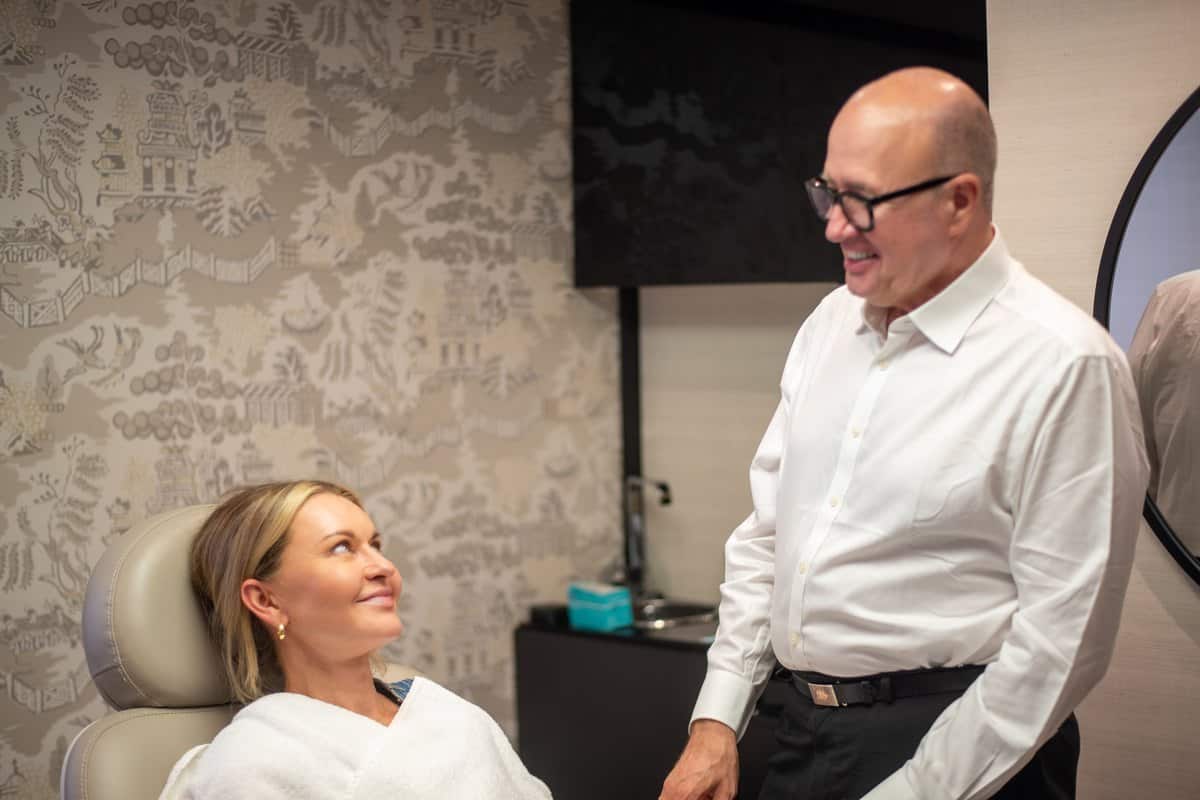
Everything starts with a consultation with Dr Joney De Souza or Dr Mattia Parducci. You sit in good daylight while your lips and face are studied, and you talk through what has started to bother you. Photographs are taken so that any change is measured against a clear starting point.
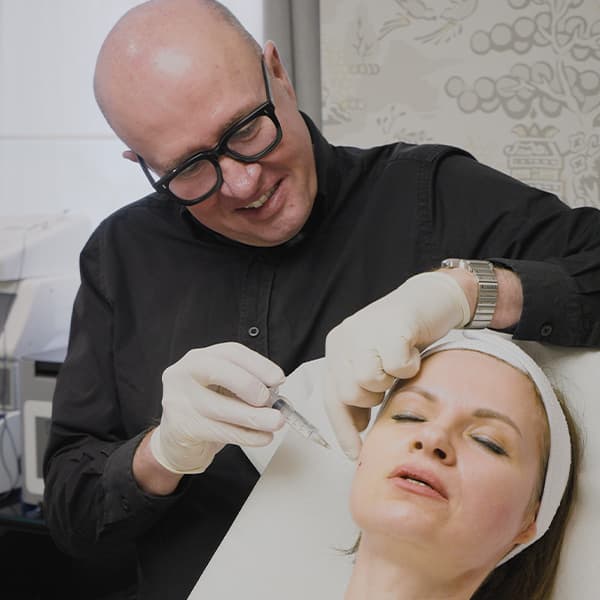
If filler suits you, numbing cream goes on first, and the treatment itself takes around 30 to 45 minutes. Fine needles or cannulas are chosen for each part of the lip. You can go back to work the same day, with some swelling that settles over the following days.
Most people describe the sensation as a series of small pinches, softened by the numbing cream and over quickly. You see your lips in a hand mirror before you leave, already fuller and more defined, and the doctors talk you through how the shape will settle across the coming fortnight.
On average, a first treatment uses a modest amount, and many people need nothing more than a small top-up at review. The consultation gives the real answer, because your proportions set the amount. Your plan and its investment are set out there too, before anything is decided.
If you have been studying your lips in the mirror and wondering what would help, come and let a doctor read them properly. Patients travel from Mayfair, Fitzrovia and across central London for this first visit. You can read more about Dr Joney De Souza or explore the lip filler treatment page before you book.
Short clips filmed at Dr Joney De Souza Clinic in Marylebone, so you can see how dermal fillers is carried out before you book.
Come and see Dr Joney De Souza or Dr Mattia Parducci, who will study your lips and face in daylight and tell you exactly how much would suit you. Telephone 020 7043 0748, or send a WhatsApp message to find a time.
These are the questions people ask most when they are trying to work out how much lip filler would suit them, answered before you sit in the chair.
Very often, yes. Half a millilitre placed along the border and the Cupid’s bow can sharpen the whole mouth, especially where the outline has softened. The change looks subtle in numbers and striking in the mirror, because definition catches the light in a way that extra volume rarely does.
Because your lips set the amount, not the packaging. If the proportions look right with less, adding the rest would only push the lips past their natural balance. Dr Joney and Dr Mattia stop at the point where the mouth looks its best and keep any refinement for the review.
Look at the edges first. If lipstick bleeds past the outline or the bow has flattened, definition is usually the answer. If the lip looks thin even with a crisp edge, gentle volume inside the lip helps. Most people need a little of each, which is decided face to face.
Yes, a little. Lips swell for the first few days, and the gel settles as the tissue calms. The shape you see at two weeks is the true result, which is why the review appointment sits then. Any small refinement is added once the swelling has gone.
Often it can. A small amount placed on the lower or flatter side brings the two halves into closer balance. Perfect symmetry is not the goal, because no natural face has it. The aim is a mouth that looks even when you speak and smile, not only when it is still.
Lip filler is performed by Dr Joney De Souza or Dr Mattia Parducci, both GMC-registered doctors. Whichever doctor sees you reads your lips, sets the amount and holds the needle, so the judgement made at the first appointment is carried straight through to the treatment itself.
Lip filler typically lasts six to twelve months. Lips move constantly, so gel there fades a little sooner than in the cheeks. A light treatment fades gently back towards your natural shape, and a small top-up keeps the definition crisp when you feel the edges begin to soften.
That is often the best way to begin. A modest first treatment shows you how your lips carry the gel, and the review gives a chance to refine. Many people find the first amount is all they wanted, while others add a touch more on the next visit.
Hyaluronic acid filler is fully reversible. An enzyme called hyaluronidase dissolves it gently, so any result can be softened or undone. Because the doctors work in modest amounts from the start, adjustments are rarely needed, and the review appointment is there to catch any small refinement early.
It supports them. A tiny amount placed along the border lifts the skin above it, so vertical lines gather less lipstick. The finest lines etched into the skin itself are a surface question, and they respond to a skin treatment alongside filler. Our lip filler page shows how the doctors plan treatment for the whole mouth.
