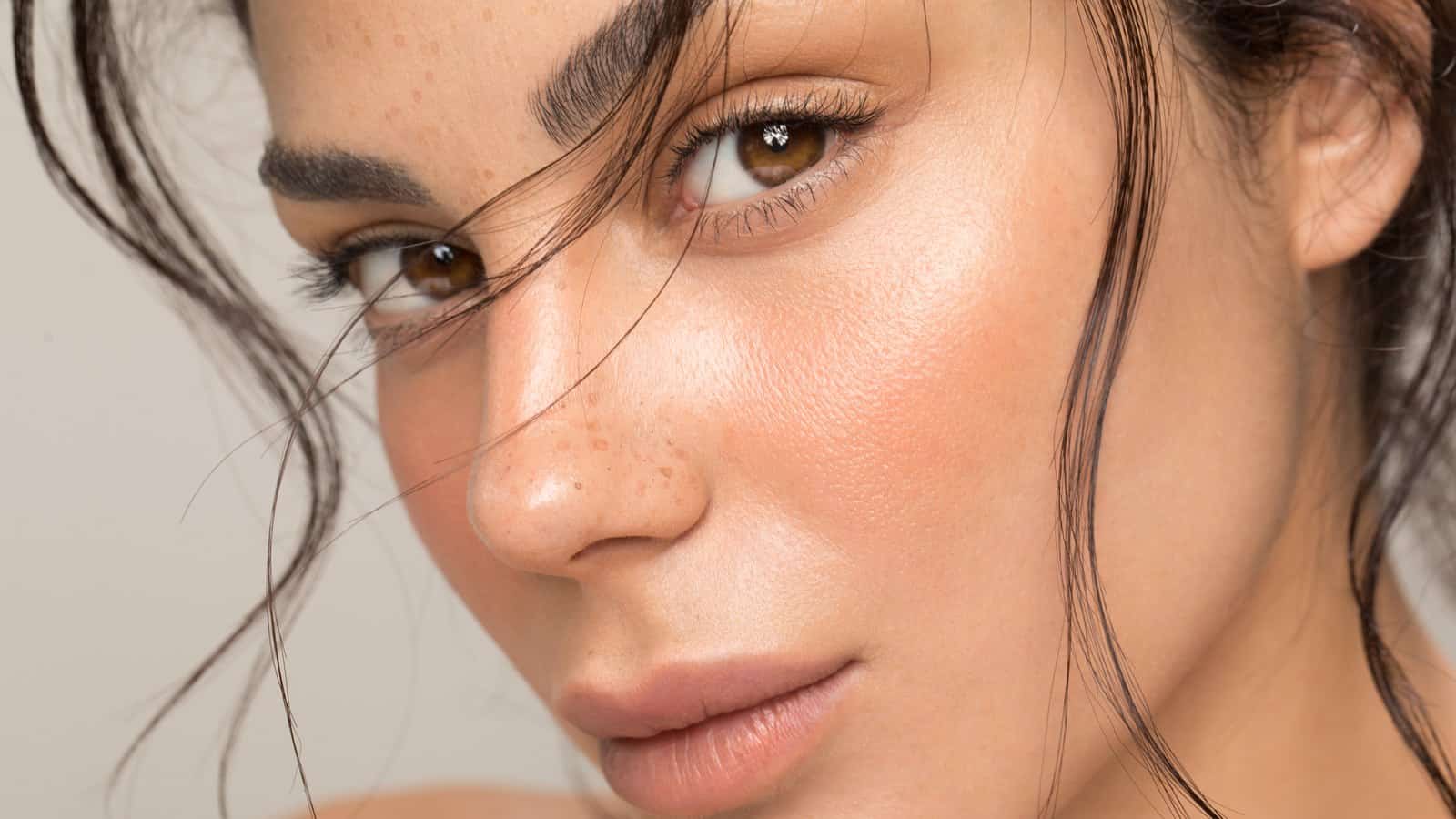
Eyeshadow gone by lunchtime and a tired look after a good night of sleep. A mini brow lift in Marylebone raises a low outer brow by millimetres and opens your eyes.
You flip down the sun visor in a car park at lunchtime to check your make-up, and the eyeshadow you put on at eight has vanished. The tail of each brow has drifted lower than it used to sit, and the outer corner of your upper lid now carries a soft hood that swallows the colour by midday. A mini brow lift with anti-wrinkle injections at Dr Joney De Souza Clinic in Marylebone was made for that face.
| Performed by | Appointment | Downtime | Results |
|---|---|---|---|
| Dr Joney De Souza or Dr Mattia Parducci | About 15 minutes | None, straight back to your day | Begin in three to five days, settle at two weeks |
Nothing is pushed upwards. The frontalis across the forehead lifts the brow while the ring of muscle around the eye draws its tail down. Quieten the downward pull and the forehead wins. Every mini brow lift is given by Dr Joney De Souza or Dr Mattia Parducci.
The change is measured in millimetres, and researchers have put a ruler to it. In a small group of 11 women aged 30 to 60, doses placed between the brows and along the outer rim beneath each brow raised the centre of the brow by an average of 1.86 mm on the right and 3.06 mm on the left.
Look closely at your brows in an old photograph and then in a recent one. The inner ends have usually stayed put while the outer third has slipped. The arch flattens, and the line of the brow slants faintly towards the temple, giving the face a weary expression that you never actually feel.
The reason is anatomy. The frontalis thins out as it reaches the side of the brow, so the tail has the least support. Directly beneath it sits the upper outer edge of the orbicularis oculi, the circular muscle that closes your eye when you blink or laugh.
Each squint into sunshine tugs the brow tail a fraction lower, thousands of times a day for years. Skin softens and the small fat pads around the eye thin with time, so the outer lid starts to fold over itself. Concealer gathers in that crease, and a winged flick of liner now bends halfway along.
Between the brows, two more depressors join in. The corrugators draw the inner brows together and the procerus pulls them down. A heavy frown often travels with a low brow, and people who spend long days reading screens tend to notice both changes in the same year.
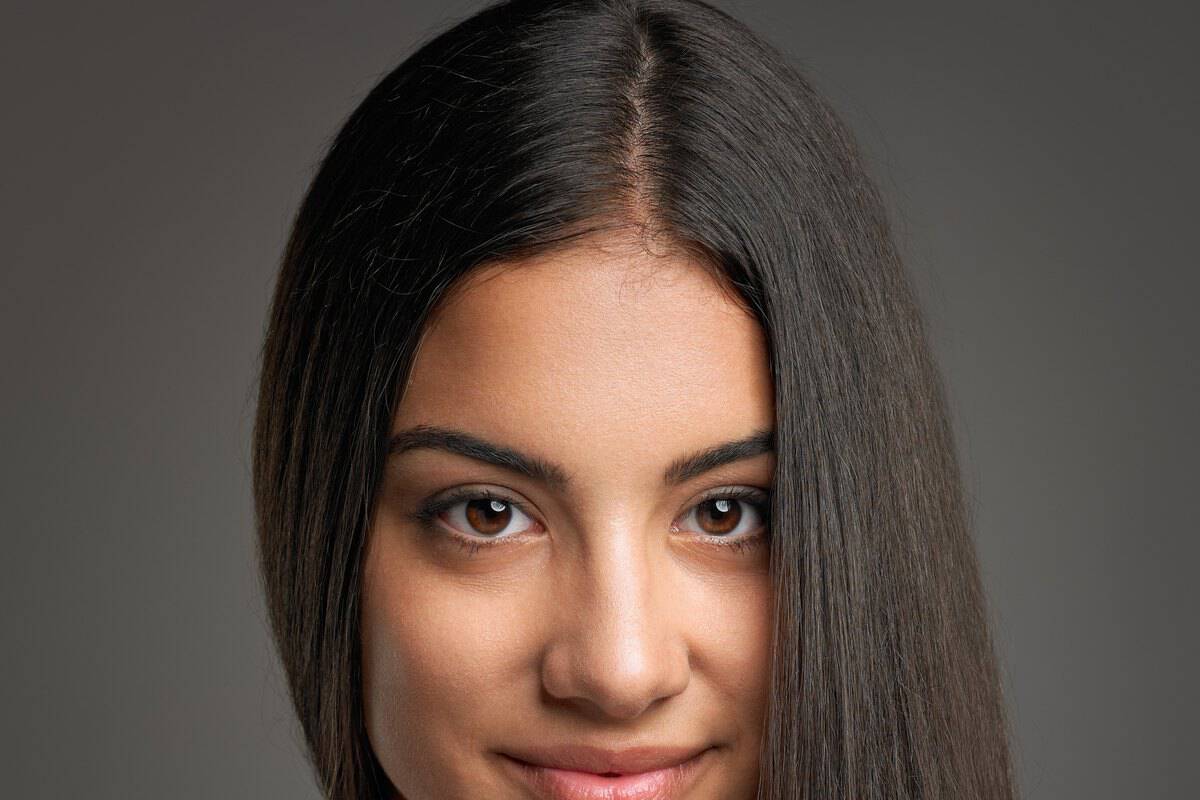
The 2000 study came from the Cleveland Clinic in Ohio. Each brow received one dose between the brows and four small doses along the bony rim below the brow. Both brows rose significantly, at rest and when the women raised them, and the authors called the treatment a safe and effective temporary browlift.
A second analysis looked at the frown muscles alone. In photographs of 79 women from a Vancouver trial, treatment between the brows lifted the outer brow first. The centre and inner brow followed, with the lift peaking at 12 weeks after treatment.
Taken together, the studies explain the plan. Relaxing the muscles under the tail lifts the outer brow. Relaxing the frown muscles helps the inner and central brow rise in step. A lift of two or three millimetres sounds small, and on a face it uncovers a strip of lid that catches the light again.
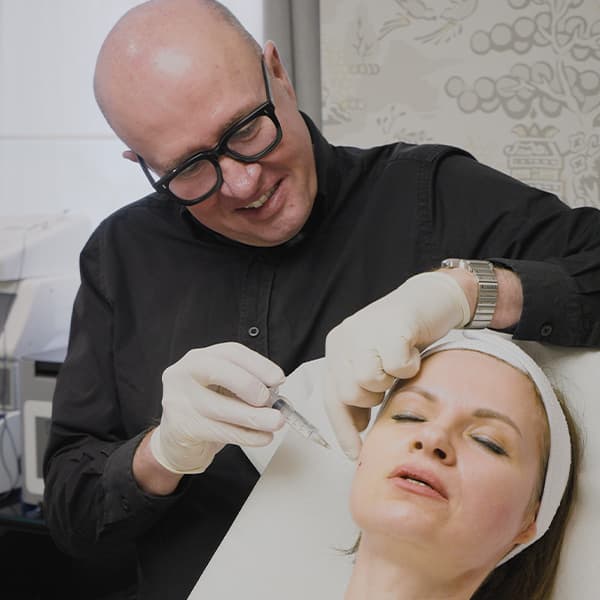
Your appointment begins with movement rather than the needle. You are asked to raise your brows, frown hard, close your eyes tightly and smile. The doctor watches how each muscle bunches and where the brow tail is pulled. The injection points are then marked on clean skin.
For most faces the main points sit just under the tail of the brow. They target the upper outer fibres of the orbicularis oculi, and relaxing those few fibres lets the frontalis lift the tail freely. Where the inner brow is heavy too, a little treatment between the brows helps the whole line rise evenly.
The needle is very fine. Most people describe a brief pinch at each point, and there is no anaesthetic cream to wait for. From mapping to mirror the treatment takes about fifteen minutes, which is why many people book it into a lunch break.
The doses are deliberately small, because the goal is a lift of millimetres, never a startled arch. Your forehead keeps its movement and you can still raise your brows in surprise. A small top-up at review is kinder than taking too much movement away on the first day.
Anti-wrinkle injections are a prescription-only medicine, so treatment follows a face-to-face assessment with a doctor. Dr Joney De Souza (GMC 7008632) is the founder and Medical Director, and Dr Mattia Parducci (GMC 7635663) works alongside him. Either doctor assesses your brows and holds the needle.
You are asked when you last had anti-wrinkle injections and where, whether you are pregnant or breastfeeding, and which medicines you take. The doctors also ask whether one brow has always sat lower, and whether your lids feel heavier by evening. Both answers change where the points go on each side.
You are photographed from the front and both sides with your brows at rest. Those images matter more than usual here, because a change of millimetres is easy to miss in a mirror and easy to see side by side.
You walk out with a few faint pink dots, and any tiny bumps settle within an hour or two. Most people go straight back to the office. For the rest of the day you avoid rubbing the area, skip the gym and stay upright for a few hours.
For the first couple of days you see no change at all, which surprises some people. Around day three to five the tail of the brow starts to sit higher. Eyeliner goes on more easily because there is more lid showing, and the fold at the outer corner begins to smooth.
By about two weeks the lift has settled. Judge it in daylight against the photograph taken before treatment. The brow line reads straighter, the arch has a little more spring, and the eye looks wider awake.
The review at two to three weeks is part of the plan. Few faces are perfectly symmetrical, so one side sometimes lifts a fraction less than the other. A tiny top-up evens them. The result then holds for around three to four months before the brow gradually drifts back.
The brow line reads straighter, the arch has a little more spring, and the eye looks wider awake.
A mini brow lift raises the brow by millimetres. It does not tighten loose skin on the upper lid, and loose skin is often what forms a deep hood. Ultherapy does that, using focused ultrasound at the SMAS beneath the brow, and Dr Joney De Souza or Dr Mattia Parducci performs it.
Ultherapy results build over two to three months and keep improving to six months. Some people have both, with the injections opening the outer eye within days while the deeper lift develops. If Dr Joney believes another approach would suit your eyes better, he will tell you at your first visit.
A mini brow lift often sits alongside other areas on the same day. Many people with a low brow also see vertical lines between the brows and fanning creases at the outer eye. The same squinting habit is behind all three, so treating them together gives one even, rested look.
When several areas are combined, the doses are balanced so the outer brow lifts while the frown and the outer eye soften in step. Our anti-wrinkle injections page shows how each area works, and softening fine lines around the eye helps make-up sit smoothly across the lid.
Your first visit is with Dr Joney De Souza or Dr Mattia Parducci in Marylebone, close to Harley Street and an easy walk from Baker Street and Bond Street stations. They study your brows at rest and in motion, check how much skin sits over the lid and show you exactly where the points will go.
If your brows suit the treatment, it can usually be done at the same visit. Most people need a single appointment and the review, then a refresh every three to four months. The consultation gives the real answer for your own face, and the plan and its investment are set out before anything is injected.
Patients come in from Regent’s Park, St John’s Wood and across central London, often in a lunch hour. You can read more about Dr Joney De Souza before you book. If your eyes look more tired than you feel, a small lift at the brow is often the gentlest change you can make.
Short clips filmed at Dr Joney De Souza Clinic in Marylebone, so you can see how anti-wrinkle injections is carried out before you book.
If your eyes look more tired than you feel, come and let Dr Joney De Souza or Dr Mattia Parducci watch your brows move. They will show you how much lift is realistic. Call the clinic on 020 7043 0748 to book your brow lift, or message us about it on WhatsApp.
These are the questions people ask most often when they first notice a lower brow and a heavier lid, answered by the team who perform the treatment every week in Marylebone.
Usually only a few, and that is the point. In a 2000 study of 11 women, the centre of the relaxed brow rose by an average of 1.86 mm on one side and 3.06 mm on the other. Larger lifts tend to look surprised, so both doctors aim for the smallest change that brightens the eye and keeps your expression recognisably yours.
Not when the doses are placed with care. A surprised look comes from over-treating the forehead so the brows peak sharply in the middle. A mini brow lift works mainly beneath the brow tail and leaves the forehead free. Any slight peak is smoothed at review with a tiny extra dose.
They help when the hood is caused by a brow that has dropped. Lifting the tail draws the skin of the outer lid upwards, so more lid shows and eyeshadow stays put. Where the hood is mostly loose skin, Dr Joney De Souza or Dr Mattia Parducci will suggest the treatment most likely to give you a visible change.
Yes, they are two names for the same idea. Both describe relaxing the muscles that pull the brow down so the forehead muscle can raise it. Neither involves a peel or anything applied to the skin surface. At our clinic we simply call it a mini brow lift, and it takes only a few minutes in the chair.
Around three to four months for most people. The muscle under the brow tail slowly regains its strength, and the brow drifts back gradually rather than dropping overnight. Many regular patients find the effect stretches a little longer over time, as the squinting habit itself begins to soften.
Yes, and the two work well together. The muscles behind the vertical 11 lines also pull the inner brow down, so relaxing them adds to the lift. Booking both at once means one appointment, one review and a brow that settles evenly from the centre outward.
Leave the treated points bare for the rest of the day so you are not pressing or rubbing over them. From the next morning your usual routine is fine. Many people find that within a week their liner and eyeshadow go on more cleanly, with a little more flat lid to work with.
The doctors prefer to wait. Re-treating too soon gives the muscle no chance to recover, so most people return around three to four months later, when the outer brow has begun to drift down again. Booking at that point keeps the lift looking steady through the year.
Often very well, since most people have one brow that sits lower or arches less. The dose on each side can differ, so the lower brow receives slightly more help. Photographs taken before treatment let the doctor compare both sides precisely at the review two to three weeks later.
Aim for at least three to four weeks before the day. The lift begins to show at day three to five and settles at around two weeks. That leaves time for the review and any small top-up, so your brows sit happily in their new position long before the photographer arrives.
