
Deeper lines from nose to mouth under the office lights? Nasolabial folds treatment at Dr Joney De Souza Clinic in Marylebone often starts at your cheek, not at the line itself.
You notice the lines most in the lift mirror at work, under hard overhead light. The folds from your nose to the corners of your mouth look deeper than they did, and two softer creases have started below the corners too. Nasolabial folds treatment at Dr Joney De Souza Clinic in Marylebone often starts somewhere you might not expect, at the cheek above them.
| Performed by | Results | Downtime | Your plan |
|---|---|---|---|
| Dr Joney De Souza or Dr Mattia Parducci | Visible straight away, settled within two weeks | Swelling eases over two to three days | Set by the doctor at consultation |
The reason is anatomy. Surgical research on the ageing midface shows the fold deepens as the deep fat pads of the cheek above it deflate, and softens when volume is restored to those pads. One of its authors, the plastic surgeon Rod Rohrich, had earlier mapped the separate fat compartments of the face with Joel Pessa. So before filler goes near the fold, the doctors look at the cheek.
The fold runs from the side of the nose to the corner of the mouth, with the cheek sitting just above it. When the cheek loses support it sits lower and casts more shadow across the fold. Restore a little of that support and the shadow lifts, so the line softens without anything placed inside it.
The fat of the face is not one sheet. It is divided into separate compartments, some close under the skin and some deep against the bone. With age the deep compartments of the cheek tend to lose volume, while some of the superficial ones hold theirs or even grow.
The Wan and Rohrich review describes what follows. As the deep medial cheek fat deflates, the superficial fat above it loses its platform and slips a little lower. The fold below grows harsher, because the tissue on its upper side now hangs over it rather than sitting beside it.
A 2020 review in Seminars in Plastic Surgery makes the practical point. Deepening of the nasolabial fold comes with deflation of the cheek, and filling the cheek compartments lifts the fold. The authors advise treating the cheek before the fold itself, so the fold is not overcorrected.
That is the reasoning behind the clinic’s cheek-first approach. A line by the mouth is often a volume question one level up, and the answer sits where the support was lost.
Everyone has nasolabial folds, because they are part of a smile, and a face without them would look blank. What changes with time is how deep they look and how much shadow they cast. You see it most in photographs taken from the side, where the fold reads as a groove rather than a soft curve.
A line by the mouth is often a volume question one level up, and the answer sits where the support was lost.
Marionette lines run down from the corners of the mouth towards the chin. They tend to arrive later, alongside a softer jawline or the first hint of jowls. At rest they give a face a slightly downturned look that its owner rarely feels inside.
Both lines deepen for several reasons at once. The cheek settles lower over the fold, the skin loses collagen and bounce, and tissue along the jaw loosens. Each change adds depth to the lines below it, which is why one syringe rarely tells the whole story.
For some people a slim face or simple genetics mean the folds have always been part of their look. Knowing which story is yours is the point of the first visit, and it is why two friends with similar folds can leave with different plans.

Treatment around the mouth is planned and performed by Dr Joney De Souza (GMC 7008632) or Dr Mattia Parducci (GMC 7635663). Filler here is always in a doctor’s hands, and both doctors work to the rule that less is more.
The face is studied at rest, smiling and talking, from the front and in profile. The cheeks, the jawline and the skin get as much attention as the line. Side light matters, because a fold that looks shallow face-on often throws a long shadow once the light comes from the window beside you.
Then comes a short test. A fingertip lifts the cheek gently upwards and outwards while you watch the fold in the mirror. If the line softens, support from above is the answer, and you have seen the logic of your own plan before anything is booked.
The medical questions come next, and each one has a purpose. Are you pregnant or breastfeeding, and are you on any medicine or supplement that thins the blood? Have you had filler in the cheeks or around the mouth before, and do you know the product? Pregnancy and breastfeeding mean treatment waits, and earlier filler changes how much new gel is needed.
It is your chance to say what bothers you too. Some people mind the shadow in profile, others the downturned look at rest, or the way foundation settles into the crease by mid-afternoon. Photographs from five or ten years ago show the change over time better than a single day can.
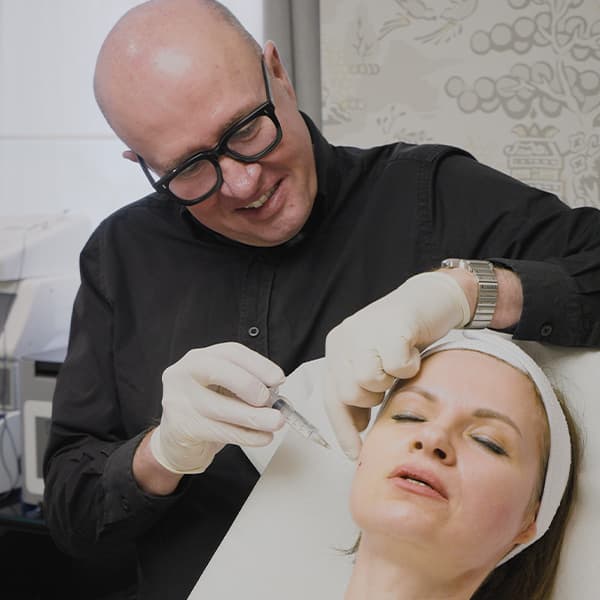
Absorbable fillers are approved for moderate to severe facial wrinkles and folds, the nasolabial fold included, according to the US Food and Drug Administration. At the clinic, hyaluronic acid dermal filler placed at the cheek, beside the fold or beneath a marionette line does that work, and the change is visible straight away.
A face that moves this much shows overcorrection quickly, so restraint matters more around the mouth than almost anywhere. The goal is a lighter shadow and a smile that still looks like yours. When you laugh, the cheek should rise and the fold should crease in the same place, just less deeply.
Where the filler goes matters as much as how much. Filling straight into a fold can flatten a natural feature and leave the mouth looking heavy. Sometimes a small amount in both places is right, and the fingertip test shows you why.
Numbing cream goes on for about 20 minutes, and the treatment takes 30 to 45 minutes in all. You feel small pinches and a sense of pressure as the gel goes in. Most people carry on with their day, and small marks or swelling usually settle within one to three days.
The area can feel full at first while the shape refines over one to two weeks. Filler on the face lasts six to eighteen months depending on the area and product, and a review at about two weeks lets the doctor see the settled result with you.
Marionette lines sit in a different part of the face from the fold. The area below the mouth corner moves with every word and is pulled downward by the tissue along the jaw. Support therefore usually goes beneath and beside the line rather than into it, sometimes towards the jaw itself.
Gel firmness matters here. A gel that suits the cheek may feel too stiff beside a mouth that talks all day, so the doctors match the gel to the movement. The result should leave the corner of your mouth resting level rather than turned down.
Once the cheek above has been supported, the marionette line often needs less than people expect. The two areas share the same lower face, so a change in one is often visible in the other within the first fortnight.
Filler restores volume. It does not tighten loose tissue along the jaw, and when that tissue drags the marionette area downward, more gel only adds weight. Laxity calls for tightening, and the sagging jawline page shows how Ultherapy, Morpheus8 and Endolift are matched to the depth of that looseness.
The clinic’s dermal filler guidance says the same about skin quality. Where thin, crepey skin around the mouth is the main issue, filler is not the right tool. Profhilo improves hydration and springiness instead, spreading beneath the skin from a few small injection points, so fine lines around the lips look softer.
For broader volume loss across the lower face, Sculptra prompts the skin to build its own collagen over two to three months. Many plans combine two of these in a sensible order, and plenty need just one.
Your first visit is with Dr Joney De Souza or Dr Mattia Parducci. A VISIA skin analysis photographs texture, pigment and the condition of the skin around your mouth in detail no mirror offers. From there you agree what bothers you most and which story is driving it.
On average a fold or a marionette line needs one filler appointment with a review, while skin quality and tightening plans run as short courses. The consultation gives the real answer once your face has been watched in movement. Aftercare is covered before you leave:
The clinic sits in Marylebone, close to Harley Street, and patients come from Fitzrovia, Regent’s Park and across central London. If the lines beside your mouth have started to bother you, read more on the dermal fillers page, then come in and watch what a fingertip at the cheek reveals.
Short clips filmed at Dr Joney De Souza Clinic in Marylebone, so you can see how dermal fillers is carried out before you book.
A few minutes with a doctor who reads the whole face tells you more than a year of mirrors. Sit down with Dr Joney De Souza or Dr Mattia Parducci: send the team a WhatsApp message, or ring 020 7043 0748 to arrange a time.
These are the questions people bring when the folds and creases around their mouth start to catch their eye. Anything not answered here, the doctors will cover face to face in Marylebone.
A camera flattens the face and often catches you from slightly to the side, where the fold casts its longest shadow. In the mirror you see yourself face-on, usually in softer light, and the brain is kind about familiar features. Profile shots taken near a window show the true depth most clearly.
The aim is to soften them rather than erase them. A fold is part of how a smile creases the cheek, and a face without one looks oddly blank. A good result lightens the shadow while your laugh still creases in the same place, just with less depth sitting there at rest.
It depends on what is creating the line. When the deep cheek fat has deflated, a small amount at the cheek lifts the tissue that hangs over the fold, and a 2020 surgical review advises treating the cheek first to avoid overcorrecting the fold. When the fold itself has hollowed, a little filler along it works better. Many faces need both.
They are often treated with a slightly different approach. Marionette lines sit in an area that pulls downward and moves with speech, so the support usually goes beneath and beside the line, sometimes towards the jaw. The product is chosen for how firmly it needs to hold in that spot.
It feels a little firm and full for the first few days, and gentle pressure may find the gel while swelling settles. Over one to two weeks it softens and blends into the surrounding tissue. If anything still feels uneven at the review, it is smoothed or adjusted then.
Facial filler lasts six to eighteen months on the clinic’s figures, depending on the area and the product. Areas that move constantly, such as the corners of the mouth, often sit towards the shorter end of that range. Many people book a small top-up as the result softens rather than waiting for the line to return fully.
Profhilo works on the skin rather than the structure beneath it. It suits fine lines, crepey texture and a dry, tired look around the lips, and the lower face treatment is usually given as two sessions a month apart. A deep fold caused by lost support usually still needs filler or cheek support.
Often, yes. When loose tissue along the jaw drags downward, it deepens the crease below the mouth corner. Tightening that tissue with a treatment such as Ultherapy or Morpheus8 takes some of the pull away. The marionette line then looks shallower without anything placed inside it at all.
The same day for most people. You may have a few pinprick marks or a little puffiness that make-up covers once the skin has settled for a few hours. Skip strenuous exercise for 24 hours and saunas or hot yoga for 48, and avoid pressing on the area.
Not always, but often it is the more natural fix. If lifting your cheek gently with a fingertip makes the fold soften, the cheek is part of the story. Adding a little support there treats the cause, and the line by your mouth improves as a result.
