
A V-neck in a shop mirror, and your neck looks older than your face. Polynucleotides at Dr Joney De Souza Clinic in Marylebone rebuild that thin skin so it looks smoother and firmer.
Your face has been looked after for years, with serums, SPF and the odd facial. Then you catch yourself in a shop mirror wearing a V-neck, and the skin of your neck looks finer and more crinkled than the face above it. Polynucleotides for a crepey neck at Dr Joney De Souza Clinic in Marylebone are built for exactly that moment.
| Performed by | Course | Downtime | Your plan |
|---|---|---|---|
| Dr Joney De Souza or Dr Mattia Parducci | Three sessions, two to four weeks apart | Small raised dots settle within a day | Set by the doctor at consultation |
Part of the reason is light. In a study of 298 women, sun exposure appeared to account for 80 percent of the visible signs of facial ageing. Your neck takes the same light every summer, and it rarely gets the same sunscreen your face does.
They are purified fragments of salmon DNA, placed in tiny amounts just beneath the surface, where they prompt your own cells to rebuild. They add no volume and no weight, so nothing looks puffy on skin that is naturally thin. The skin grows denser and more hydrated over a few weeks, and the fine crepe smooths from within.
Neck skin is thinner than the skin on your cheeks and has fewer oil glands to keep it supple. It also moves constantly. Every turn of the head and every glance at a phone folds it. Over the years those folds settle into fine horizontal lines that sit like necklaces around the throat.
Then there is the sun. The front of the neck and the décolletage catch light every time you wear an open collar, yet sunscreen often stops at the jaw. The collagen there breaks down over many summers. The surface then takes on a fine, crinkled texture that shows most clearly when you lean forward.
You notice it in particular moments, such as a photograph taken from slightly above or the second you tilt your chin to fasten a necklace. The skin creases in soft, tissue-like folds that do not quite smooth out when you lift your head again.
That texture is the key detail. It is a skin quality issue rather than a sagging one, so the answer lies in thickening and hydrating the skin itself. Polynucleotides were designed for that job, and the neck is among the areas the doctors treat with them most often.

Inside the dermis sit fibroblasts, the cells that weave collagen and elastin. In crepey neck skin they have slowed down, so the scaffold thins and the surface wrinkles more easily. The clinic uses PhilArt polynucleotides, produced with a high purification process called PN-HPT, to give those cells a fresh repair signal.
Your skin does the rebuilding. The fibroblasts respond by laying down new collagen and elastin while the skin holds more water. Your neck looks smoother and feels more substantial under the fingertips. Because the treatment contains no hyaluronic acid, there is no bulk to see beneath the skin.
As the dermis thickens, the horizontal lines soften and the crinkled look when you turn your head becomes far less obvious. The skin also catches the light more evenly. In daylight and under the warm lamps of a restaurant, the neck looks brighter and healthier.
The neck has its own small body of evidence. A 2024 review in the International Journal of Molecular Sciences summarises a neck case study. It found that polynucleotide injections improved elasticity, reduced wrinkles and firmed the skin in people with neck ageing. It is early research, and it points the same way as what doctors see in clinic.
In daylight and under the warm lamps of a restaurant, the neck looks brighter and healthier.
Expert protocols treat the neck as its own area. An Italian consensus report on PN-HPT recommended a lower-concentration product for the neck and décolletage, given every 14 or 21 days for three or four sessions. The thinner the skin, the gentler the formulation, which suits a part of the body where so little sits between surface and dermis.
That guidance lines up with the course in Marylebone, three sessions two to four weeks apart, with a fourth where the crepe runs deep. The research sets the rhythm, and the doctor sets the detail from your neck.
Your appointment lasts about 45 minutes. Dr Joney De Souza (GMC 7008632) or Dr Mattia Parducci (GMC 7635663) looks at your neck from the front and the side. You are asked to turn and tilt your head, which shows how the skin folds. The décolletage is checked too, since it often shares the same sun damage.
Before treatment you are asked about your medical history and any fish or salmon allergy. Blood-thinning medicines, supplements and earlier neck treatments come up too. Where it is clinically safe, aspirin, ibuprofen, fish oil and vitamin E pause for 48 hours beforehand to keep bruising low.
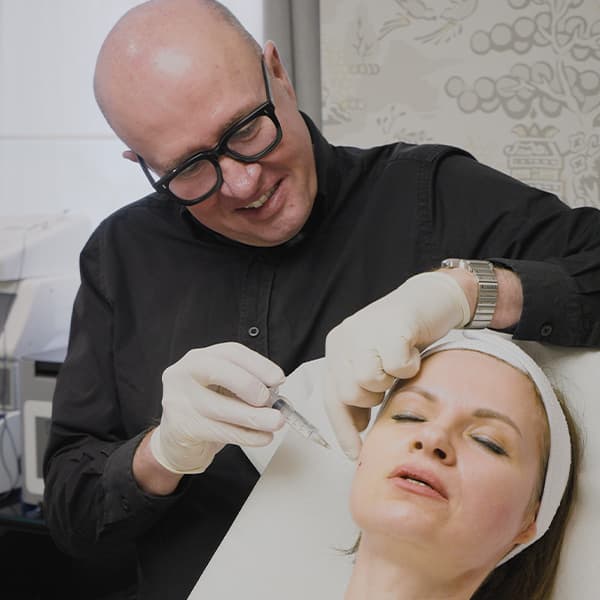
A topical numbing cream is smoothed over the area and left for about 30 minutes. A very fine needle or a cannula then places small amounts into the mid-to-deep dermis. On the neck a cannula is often the doctors’ choice, because it covers a wide area through just a few entry points.
The injecting takes 15 to 20 minutes, depending on whether you are treating the neck alone or the neck and chest together. You feel a light pressure and the occasional scratch. Small raised blebs line the treated area for a few hours, and they settle over the following 24 to 48 hours.
A soft scarf or a higher collar makes the journey home feel discreet, though most people go straight back to work. For a day, keep make-up and active creams such as retinoids off the neck. For 48 hours, skip hard exercise, saunas, swimming pools and strong sun.
The first sign is hydration. Within days of the first or second session, the neck feels smoother under your hand and looks a little brighter in the mirror. That early freshness comes from water the skin is now holding, and it arrives while the collagen is still developing.
The more substantial change arrives between four and eight weeks. The necklace lines look shallower, the crinkled texture under the chin softens, and the skin sits more smoothly when you look down at your phone. Open collars start to feel comfortable again, and the neck finally matches the face above it.
The improvement lasts up to six to nine months, and a single top-up every six to nine months keeps it going. Protect the result with daily sunscreen carried down past the jaw to the chest each morning, so the sun does not undo the new collagen. The difference shows by summer.
The best match is skin that has thinned but not dropped. It crinkles when you look down and feels papery between finger and thumb. Foundation settles into the necklace lines by the afternoon. Those signs point to a dermis that has lost substance, and that is the layer the treatment rebuilds.
Sun history counts for more than age. Someone who has worn open collars through thirty summers may show more crepe at forty than a careful sunscreen user does at sixty. The doctors read the skin itself and plan from that.
Sensitive skin does well here too. The product carries no hyaluronic acid and no weight, so it suits a neck that reacts to rich creams. Many people treat the neck after a course on the face, once they notice the two no longer match in photographs.
Polynucleotides do not tighten loose skin under the jaw or lift a neck that has started to hang. They thicken and smooth the surface, so crepe responds while laxity stays where it is. Where sagging is part of the picture, the doctors look at Ultherapy, focused ultrasound that reaches the deeper supporting layer without touching the surface.
Ultherapy is carried out by Dr Joney De Souza or Dr Mattia Parducci. Polynucleotides then refine the skin over the lifted layer. Vertical bands that stand out when you talk come from the platysma muscle, and anti-wrinkle injections relax them. Profhilo adds faster hydration while the collagen builds.
Neck skin is thin, mobile and full of fine structures, so it rewards careful hands. Only a doctor injects polynucleotides at the clinic, either Dr Joney De Souza or Dr Mattia Parducci. Both treat necks often and choose between needle and cannula on the day.
The clinic sits on Blandford Street in Marylebone, close to Harley Street and a few minutes from Regent’s Park, so a session pairs easily with lunch in central London. Your first appointment covers the consultation and, in most cases, your first session. Many people add the décolletage, so the skin stays even from jaw to chest.
If your neck has started to tell a different story from your face, come in and let the doctors bring the two back in line. Read more on our polynucleotides page, or explore polynucleotides in London for the full list of areas treated.
Short clips filmed at Dr Joney De Souza Clinic in Marylebone, so you can see how polynucleotides is carried out before you book.
Book a visit with Dr Joney De Souza or Dr Mattia Parducci, who will study the skin of your neck and chest and plan a course to smooth it. Phone 020 7043 0748, or drop us a WhatsApp message today.
People considering polynucleotides for the neck usually ask about necklace lines, tech neck, sagging and the décolletage. These are the answers our doctors in Marylebone give most often to those questions.
They soften them noticeably. Horizontal necklace lines form where thin neck skin folds day after day, and polynucleotides thicken that skin so the folds sit less deeply. Very deep lines often improve further with a combination plan, which Dr Joney or Dr Mattia will map out with you after looking at your neck.
Yes. Tech neck describes the fine creases that form across the front of the neck from tilting your head down for hours. Because these creases sit in thin, tired skin, rebuilding collagen and hydration makes them far less visible. Raising your screen a little helps the result last longer too.
Polynucleotides improve skin quality rather than lifting loose tissue. They make crepey skin thicker, smoother and brighter. If the neck also sags under the jaw, the doctors often pair them with Ultherapy, which works on the deeper supporting layer. Either Dr Joney De Souza or Dr Mattia Parducci carries out that treatment.
It can be, and many people choose to. The chest often shows the same sun damage and fine crepe as the neck, so treating both gives a smooth, even look in an open collar. The injection map simply continues below the collarbones, so the visit runs a little longer rather than doubling.
Most people are surprised by how comfortable it is. A numbing cream sits on the skin for about 30 minutes first, and a cannula often means fewer entry points. You feel pressure and the occasional scratch while the injecting takes place. The neck feels a little tender for a day afterwards, and that is all.
Leave jewellery off for the first day so nothing rubs the tiny entry points while they close. A light chain is fine from the following day. Heavy statement pieces and tight chokers can wait until the blebs have fully settled, which usually takes no more than 48 hours.
Three is the usual course, two to four weeks apart, and deeper crepe sometimes gains from a fourth. An Italian expert consensus recommended three or four sessions for the neck, every 14 or 21 days, with a gentler concentration than the face receives. Photographs from the same angle at each visit show the progress.
Yes, when vertical bands are part of the picture. Those bands come from the platysma muscle, and anti-wrinkle injections relax them so they stand out less when you talk or tense. Polynucleotides then improve the crepey skin around them. Doctors plan the timing between the two, so each treatment works at its best.
There is no fixed age. Some people start in their thirties when the first crinkling appears above a low neckline, while others come in their sixties after years of sun. The condition of the skin decides the plan, and earlier treatment usually needs fewer sessions to keep it looking smooth.
Yes, every day. Ultraviolet light drives most visible skin ageing, around 80 percent on the face according to a 2013 study, and the neck sits in the same light. A broad-spectrum SPF 30 or higher from jaw to décolletage protects the new collagen. Wait until the morning after treatment before rubbing anything into the injection points.
