
Eight hours of sleep and the eyes still look tired? Polynucleotides at Dr Joney De Souza Clinic in Marylebone rebuild the thin, crepey skin under your eyes so they look rested again.
You slept eight hours, drank the water and patted on the eye cream, yet the bathroom mirror still shows a fine, papery crepe beneath each eye. Concealer slips into it by eleven o’clock. Polynucleotides for the under-eye area at Dr Joney De Souza Clinic in Marylebone are made for precisely that skin.
| Performed by | Course | Downtime | Your plan |
|---|---|---|---|
| Dr Joney De Souza or Dr Mattia Parducci | Three sessions, two to four weeks apart | Small raised dots settle within a day | Set by the doctor at consultation |
The evidence is young but encouraging. In a real-world study of 61 people with dark circles, treated in five countries, three polynucleotide sessions two to three weeks apart left their photographic grades significantly improved three months after the last one.
The idea is gentle. Instead of filling a hollow or stretching anything tight, the treatment asks the skin to become better at being itself. Over a course it grows denser, holds more moisture and reflects light more evenly, so tired eyes start to look rested.
Under the eyes, the skin is only a fraction of the thickness of your cheek, and it has very few oil glands to keep it supple. Every blink and smile folds it hundreds of times a day. With time the collagen scaffold thins, and the surface starts to wrinkle like silk crushed in a hand.
Thin skin also lets colour through. A 2018 review in Annals of Dermatology lists thin, translucent skin over the orbicularis oculi muscle among the main causes of dark circles, because it lets the small vessels beneath show. The same review names pigment, tear trough shadows and fat that pushes forward as the other common causes.
You will recognise the signs in photographs taken from slightly below or under a ring light. The fine lines look deeper than they feel, and a shadow appears in the inner corner where the skin is at its thinnest. Those are the changes that respond to rebuilding the dermis rather than covering it.
Screens play their part as well. Hours of focusing on a laptop keep the muscles around the eyes busy, and the tiny squint you make at a bright phone folds the lower lid again and again. That constant movement wears the collagen down a little faster than anywhere else on the face.
The clinic uses PhilArt, a polynucleotide produced through a high purification method called PN-HPT, and it has a dedicated formulation for this area called PhilArt Eye. It contains no hyaluronic acid, so it draws no extra water into a puffy lower lid and adds no volume to the hollow.
Fibroblasts are the cells that knit collagen and elastin, and in thin under-eye skin they have become sluggish. Polynucleotides give them fresh building blocks and a prompt to start repairing. The new collagen they lay down is your own, so the skin moves and creases exactly as before, only with more substance.
As the dermis thickens, two things happen at once. The crepe smooths, because there is more structure beneath the surface, and the shadow lightens, because less of the colour underneath shows through. People often say their eyes look brighter, though nothing has been added to the area at all.
The new collagen they lay down is your own, so the skin moves and creases exactly as before, only with more substance.
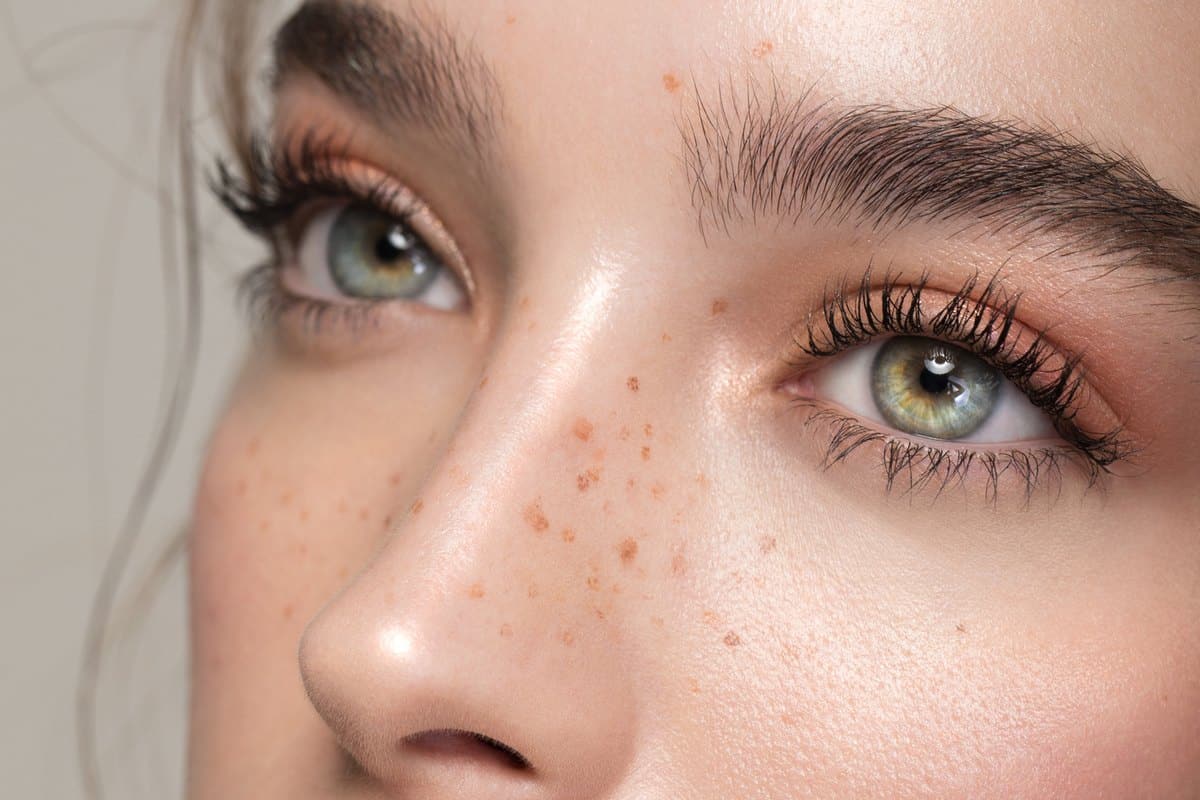
The researchers followed 55 women and 6 men, with an average age of about 41, across the UK, Italy, Malaysia, Turkey and Indonesia. Each person had a PN-HPT eye gel placed into the skin around the eye at the first visit. The second session followed two to three weeks later, and the third after another two to three weeks.
Photographs were graded one month and three months after the final session, and the improvement held at the later point. Doctors used a needle in some patients, a cannula in others and both in a few. In this group the cannula patients scored better at both review points, a detail worth knowing when the choice comes up in the chair.
That timing echoes an earlier Italian consensus report on PN-HPT, which recommended three or four sessions for the eye area, every 14 or 21 days. It sits close to the course Dr Joney De Souza Clinic runs, three sessions two to four weeks apart. The research and the plan you are offered point the same way.
The appointment takes about 45 minutes. Dr Joney De Souza (GMC 7008632) or Dr Mattia Parducci (GMC 7635663) looks at your eyes from the front, from the side and in different light. He gently pinches the skin to see how thin it is. He asks how your eyes look on a good morning and a bad one.
Before anything else you are asked about allergies, fish and salmon in particular, any blood-thinning medicines and supplements, and treatments you have had around the eyes before. Where it is safe to do so, aspirin, ibuprofen, fish oil and vitamin E are paused for 48 hours beforehand, which keeps pinprick bruising low in skin this fine.
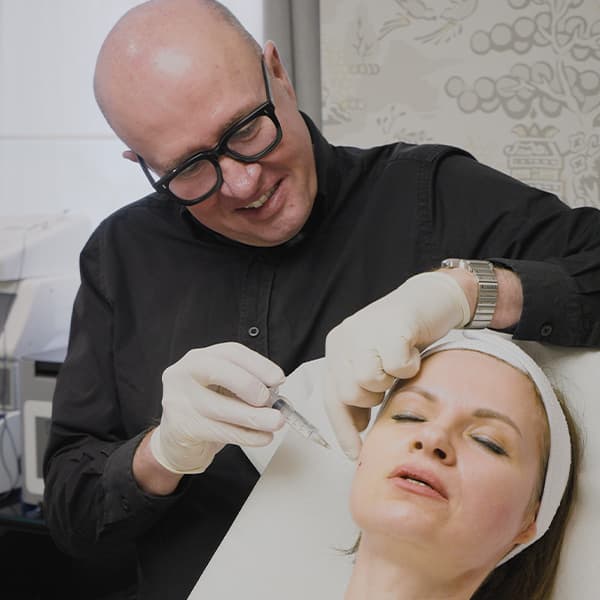
A numbing cream is then smoothed along the lower lid and left for about 30 minutes. The product is placed in the mid-to-deep dermis in small amounts with a very fine needle or a cannula. A cannula is a blunt-tipped tube that glides beneath the skin through a single tiny entry point. The injecting takes around 15 to 20 minutes.
You feel pressure and a light sting at each point. Small raised blebs follow the line of the lower lid for a few hours, then settle over the next day or two. For the first day keep eye make-up and active creams away from the treated skin, and for 48 hours skip the gym, saunas and strong sun.
Within a few days the skin under your eyes looks a little more hydrated, smoother to the touch and less crinkled when you smile. The bigger change arrives between four and eight weeks, as new collagen thickens the area. Concealer starts to glide on rather than gather, and you need less of it.
Results last up to six to nine months, and a top-up every six to nine months keeps the skin thick and luminous. Friends rarely spot the treatment itself. What they notice is that a photograph from a birthday dinner no longer shows heavy shadows beneath your eyes.
The best results come where thinness is the main problem. The skin looks crinkled when you smile, feels papery when you touch it, and shows a faint blue tint in the inner corner. Concealer settles into fine lines by mid-morning. Those signs point to a dermis that has lost substance, which is the layer this treatment rebuilds.
Age matters less than the skin itself. Some people come in their early thirties after years of screens and short nights. Others arrive in their fifties, when the lower lid has thinned more noticeably. Both groups respond, because the fibroblasts in the dermis still answer a repair signal at any adult age.
Puffy eyes are a good match too. PhilArt Eye draws no water into the lid, so it suits people who wake with swelling and want to avoid anything that adds weight. Sensitive or reactive skin around the eyes also does well, because the treatment calms and strengthens the surface as it thickens.
Polynucleotides do not fill a tear trough or flatten a bag of fat that has pushed forward under the eye. They change the quality of the skin, so a deep groove that casts a shadow keeps its shape. Where the hollow is the main story, tear trough filler restores the support from beneath on the day.
The two work well in sequence. A doctor sometimes restores the volume with filler and then uses polynucleotides to improve the thin skin lying over it. If colour is your main worry, the clinic’s page on dark circles sets out the full range of approaches.
The under-eye rewards precision, because millimetres matter in skin this fine. Every polynucleotide injection here is given by a doctor, either Dr Joney De Souza or Dr Mattia Parducci. Both treat this area often and choose the needle or cannula for your eyes on the day.
You will find the clinic on Blandford Street in Marylebone, close to Harley Street and a few minutes from Bond Street and Oxford Circus. It is easy to reach from anywhere in central London on a lunch break. Its 4.9 Google rating rests on more than 270 patient reviews collected over the years.
Your first appointment includes the consultation and usually the first treatment, and the number of sessions follows your skin. If your eyes look more tired than you feel, read more on the polynucleotides page and come in to see how much brighter they can look with polynucleotides in Marylebone.
Short clips filmed at Dr Joney De Souza Clinic in Marylebone, so you can see how polynucleotides is carried out before you book.
Let Dr Joney De Souza or Dr Mattia Parducci look closely at the skin beneath your eyes and plan a course that brightens it. Call 020 7043 0748, or message us on WhatsApp to choose a time.
People considering polynucleotides for the eyes tend to ask about bruising, puffiness, dark circles and how the treatment sits alongside tear trough filler. Here are the answers our doctors give most often, with sources linked.
They lighten the kind caused by thin skin, where the vessels beneath show through as a bluish shadow. In a 2026 study of 61 people, photographic grades of periorbital darkening improved significantly over three sessions. Circles cast by a hollow or by fat that has pushed forward need a different plan, which the doctors map at your first visit.
No. PhilArt Eye contains no hyaluronic acid, so it does not draw extra water into the lower lid. That is one reason doctors like it for people who puff easily. Expect a little swelling at the injection points for a day or so, which settles quickly with a cool compress.
Both work well, and the doctors choose on the day. A cannula is blunt-tipped and slides beneath the skin from one small entry point, which suits some eyes. A fine needle gives very precise placement point by point. Your skin thickness and the spread of the crepe guide the choice.
Many people have no bruise at all, and a small one usually fades within a week. The skin here is fine and the vessels sit close, so a pinprick mark is not unusual. Arnica, a cool compress and a colour-correcting concealer handle it well, and it rarely stops anyone going to work.
Yes, and the pairing is popular. Filler restores volume where a hollow has formed, while polynucleotides improve the quality of the thin skin lying over it. Doctors often stage them rather than doing both at once. The order, and the gap between them, depends on how deep the groove is and how thin the skin over it looks.
There is no set age. Some come in their early thirties when the first crepe appears and concealer begins to crease. Others start in their fifties when the skin has thinned more noticeably. What matters is the condition of the skin, which the doctors judge by eye and by gently pinching it.
The under-eye is sensitive, but numbing cream makes a real difference. Most people describe a series of small stings and some pressure rather than pain. Choosing a cannula can reduce the number of entry points. The whole injecting step lasts around 15 to 20 minutes, and it is over sooner than you expect.
Three is the usual course at the clinic, two to four weeks apart. An Italian consensus report recommended three or four sessions for the eye area, every 14 or 21 days, so a fourth is sometimes added when the skin is very thin. A single top-up every six to nine months then holds the result.
Yes, you can usually wear them the same day, since the product is placed below the lid rather than near the eye itself. Insert them gently without pulling down on the lower lid, which is tender for a day. If you prefer, glasses for that evening keep things simple.
They can soften the crepe that sits between those lines, though they do not stop the muscle that folds the skin when you smile. The thin skin at the outer eye improves in texture over a course, so fine lines look shallower in daylight. Where movement is the main cause, the doctors may suggest pairing them with anti-wrinkle injections for crow’s feet.
