The spot healed months ago and the mark it left is still there. That is post-inflammatory hyperpigmentation, it is pigment rather than scarring, and pigment is the one thing a pico laser was built to clear.
One of the most common frustrations we hear at Dr Joney De Souza Skin & Laser is not acne itself. It is about what acne leaves behind. The breakout cleared months ago and the brown or grey shadow where it used to be has barely faded.
That shadow has a name, post-inflammatory hyperpigmentation, and the good news is contained in the name. It is pigment, not scarring. Nothing is dented or missing. Your skin simply responded to inflammation by producing extra melanin in that spot. The melanin is still sitting there long after the cause has gone.
The distinction matters more than any other point in this article, because it decides what will work. A textural scar is a change in the shape of the skin and needs remodelling. Post-inflammatory pigmentation is a change in the colour of the skin, and colour is exactly what a pigment laser targets.
Acne is the usual culprit, though the same process follows anything that inflames the skin. A scratch, an insect bite, a burn, an ingrown hair, eczema, even a previous cosmetic treatment that was too aggressive. Wherever inflammation goes, pigment can follow.
Left alone these marks do fade, but the timescale is the problem. Months is normal and a year or more is common, and every new breakout in the same area resets the clock. Sun exposure deepens what is already there. That combination is why so many people conclude the marks are permanent when they are simply slow.
Post-inflammatory hyperpigmentation is not evenly distributed across the population, and it is worth being straightforward about that. Skin with more melanin is more inclined to answer inflammation by making more pigment. These marks are more common, more noticeable and more persistent in deeper complexions.
The Fitzpatrick scale is the framework clinics use here. It sorts skin into six types by how it behaves under ultraviolet light, rather than by how it looks. Types I and II burn readily and rarely tan. Types III and IV tan more easily and burn less. Types V and VI very rarely burn and tan deeply. The higher your type, the more pigment your skin has available to deposit when something provokes it.
For years that made laser a cautious conversation for deeper skin, and the caution was real. Older Q-switched lasers delivered much of their effect as heat, and heat spreading sideways into surrounding skin is precisely what provokes more pigment. Treating post-inflammatory hyperpigmentation with a device that could cause post-inflammatory hyperpigmentation was a genuine problem.
Picosecond technology changed that calculation. A pulse lasting a trillionth of a second outruns heat entirely, breaking pigment apart by pressure while the surrounding skin stays cool. Less heat means less inflammation, and less inflammation is the whole point when this is the condition you are treating.
Being candid about where that leaves things: PicoSure Pro works at 755nm, the wavelength most strongly absorbed by melanin. That is what makes it effective. It is also why deeper skin is treated with more conservative energy over a slightly longer course. The platform carries a shorter 532nm wavelength too, absorbed right at the surface, and on deeper skin we deliberately leave it alone. Having a tool and knowing when not to reach for it are the same skill. For Fitzpatrick V and VI in particular, your assessment and patch test decide what is appropriate. There are cases where we will recommend a different route, or a slower one. That answer comes from seeing your skin, never from a rule.
PicoSure Pro is a 755nm picosecond laser, and the mechanism is satisfying in its simplicity. Each pulse shatters the concentrated pigment into fragments fine enough for your lymphatic system to carry away. The mark then leaves through your own circulation over the following weeks.
Five handpieces come with the system, the 755nm zoom plus four fixed 532nm heads at 5mm, 6mm, 8mm and 10mm. Post-inflammatory marks are usually scattered rather than uniform, so that range earns its keep. A smaller spot concentrates energy on individual marks while a broader pass evens out the tone around them.
What patients notice first is brightening, often within days of a first session. The fuller change keeps developing across the following two to four weeks as the fragmented pigment clears. That is why we assess results four weeks after a session rather than on the day.
A course of three sessions four to six weeks apart is the usual plan, with the clearest change often arriving between the second and third. Your own number depends on how deep the pigment sits and how quickly your body clears it. Sessions start from £320 for a focal area, with a full face from £475 and a course of three from £1,282. The breakdown by area sits on the PicoSure treatment page.
Two things protect the result once you have it. Daily SPF, because ultraviolet light deepens any pigment that is left and encourages new marks. And keeping active breakouts under control, since each one can start the process again. Our guide to how PicoSure treats pigmentation covers the wider picture.
Everything begins with a face-to-face consultation at our Marylebone clinic, and this appointment does more work here than in almost any other treatment we offer.
We look at your skin in good light and under magnification. Post-inflammatory pigmentation, melasma and sun damage look identical across a bathroom mirror. Each one wants a different approach. Where pigment is layered or hard to read by eye, VISIA skin analysis shows what is sitting below the surface.
We go through your Fitzpatrick type and how your skin reacts to sun. We also cover any marks left behind by previous treatment, and what you use at home. A history of pigment change is useful information rather than a barrier, because it tells your practitioner to start gently and build. Photographs in consistent light mean progress gets judged properly rather than from memory.
You will also have a patch test before your first full session. A small, discreet area is treated at the settings we intend to use, which shows how your skin responds before anything happens across a whole face.
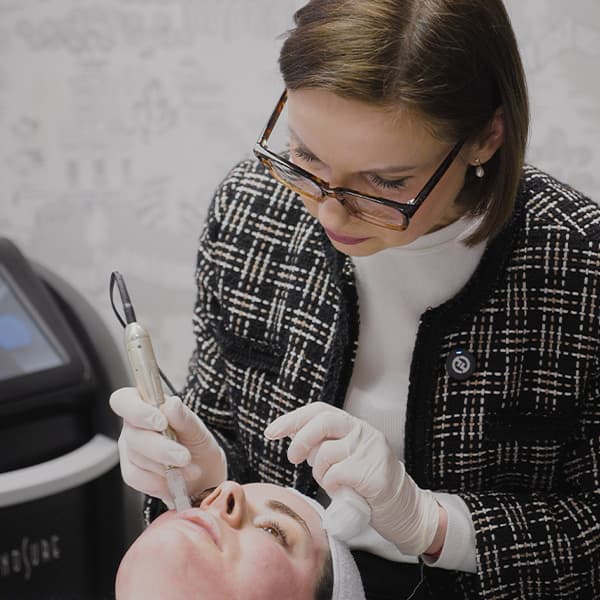
Sessions are carried out by Roma Sumskiene, our Advanced Skin and Laser Specialist, who is Level 4 qualified and has run hundreds of PicoSure sessions. Dr Joney De Souza provides the clinical oversight, so your settings are a medical decision rather than a default. If a mark needs a dermatologist’s eye before any cosmetic treatment, you will hear that at your assessment.
Waiting for marks to fade on their own can take longer than you would like. Book a consultation and you will leave knowing what they are, and what can be done. Current prices are here.
Post-inflammatory marks, melasma and sun damage look similar in the mirror and behave differently under treatment. A consultation at our doctor-led Marylebone clinic identifies which you have, in good light and under magnification, before any plan is made.
Questions our Marylebone team hears most about the marks left behind after a breakout.
It is the flat brown or grey mark left behind after skin has been inflamed. Your skin responds to the inflammation by producing extra melanin in that spot, and the pigment remains long after the original cause has healed. Acne is the most common trigger, though scratches, bites, burns, eczema and previous treatments can all do it.
No, and the difference decides what will help. Post-inflammatory pigmentation is a change in colour, so a pigment laser targets it directly. True acne scarring is a change in texture, meaning the skin is dented or raised, and that needs a resurfacing or remodelling treatment instead. Many patients have some of both, which your assessment separates.
Usually yes, but slowly. Months is normal and a year or more is common, and any fresh breakout in the same area restarts the process. Sun exposure deepens what is already there. Treatment shortens that timeline and evens out the tone. It is not doing something your skin could never manage alone.
Skin with more melanin has more pigment available to deposit when something provokes it. The same breakout tends to leave a more noticeable and more persistent mark. It is also why keeping heat and inflammation low during treatment matters so much. A picosecond pulse that outruns heat is a genuinely useful tool here.
In many cases yes, and picosecond technology is a large part of why that answer has changed. What decides it is an assessment rather than a rule. Your Fitzpatrick type, your history of pigment change and how you respond to a patch test all feed into the settings. Deeper skin generally suits more conservative energy across a slightly longer course.
A course of three sessions spaced four to six weeks apart is the usual plan. The clearest change often arrives between the second and third. Your own number depends on how deep the pigment sits, how widespread the marks are and how quickly your body clears the fragments. Your practitioner confirms it at your assessment.
Many patients notice brightening within days of the first session. The fuller change keeps developing over the following two to four weeks as the fragmented pigment leaves through your lymphatic system. That is why we review results four weeks after a session, rather than on the day.
It helps, and we will talk about timing at your consultation. Treating pigment while fresh breakouts keep appearing means chasing a moving target. Each new spot can leave its own mark. Getting the acne settled first usually makes the pigment work faster and the result longer lasting.
Tell us, because it is genuinely useful information. A tendency towards post-inflammatory pigmentation tells your practitioner to begin at conservative settings and build, and it makes the patch test more informative rather than less. It is a reason to plan carefully, not a reason to be turned away.
Pricing follows the area treated. A focal area such as the mouth or eye area starts from £320. A full face is from £475, and a course of three from £1,282. Face and neck together, or face, neck and décolletage, are priced accordingly, and the full table sits on our PicoSure treatment page.