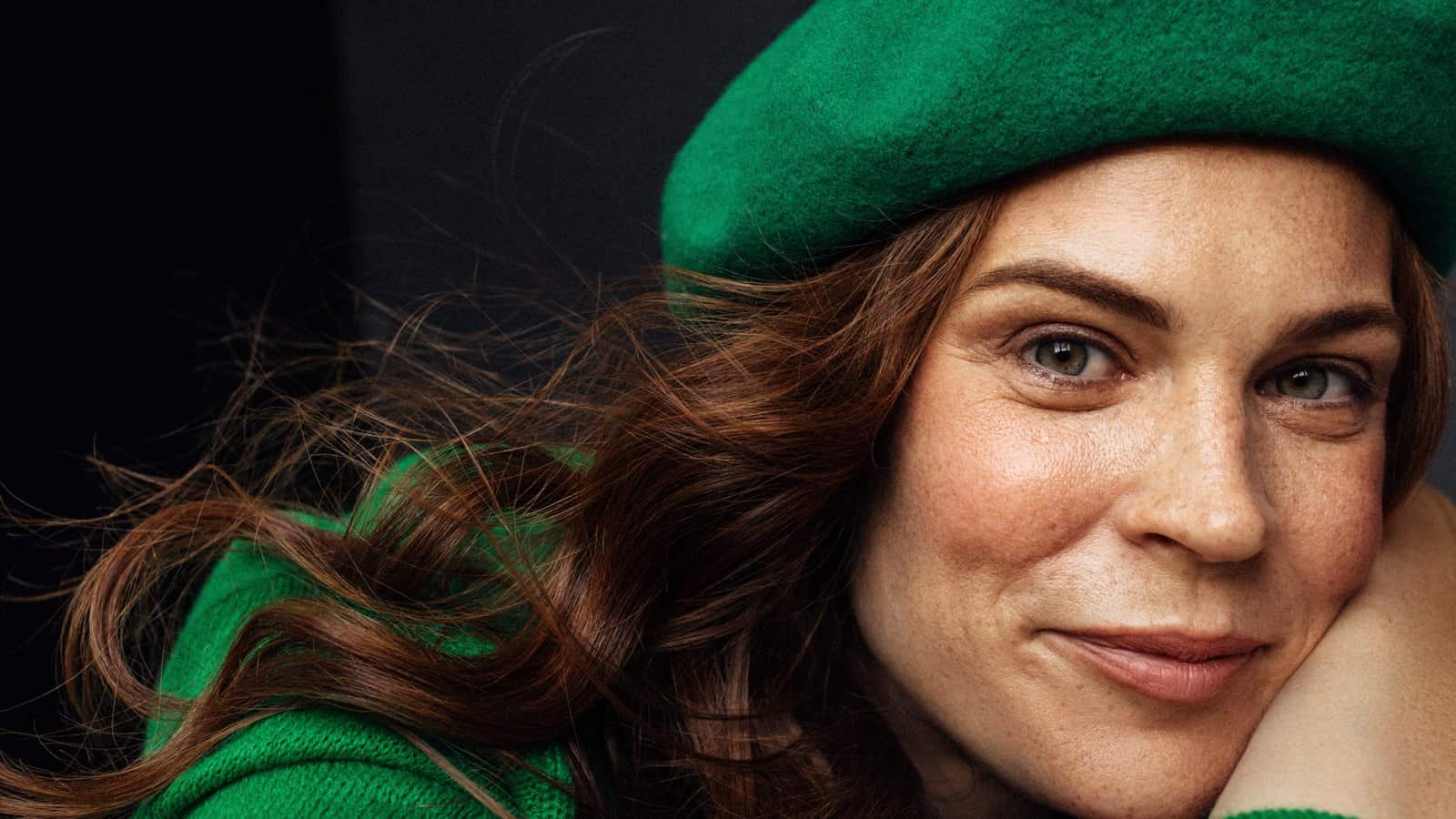
Your cheeks feel rougher after a summer outdoors, and foundation catches where it used to glide. See how UltraClear at Dr Joney De Souza Clinic in Marylebone renews sun-tired skin this autumn.
You spent the summer outdoors, and October is showing you the evidence in the mirror. Your cheeks feel rougher under your fingertips, and foundation catches where it used to glide. The light by the window finds a surface that has lost its spring clarity, and that is the skin UltraClear at Dr Joney De Souza Clinic in Marylebone was brought in to renew.
| Performed by | Treatment | Downtime | Your plan |
|---|---|---|---|
| Dr Mattia Parducci or Dr Joney De Souza | 3DMIRACL, UltraClear depth or Laser Coring, chosen for the concern | From none to fourteen days, by depth | Set by the doctor at consultation |
Much of that is the sun’s work rather than the calendar’s. UV exposure appears to be responsible for 80 percent of the visible signs of facial ageing, according to a 2013 study of 298 women. Pigmentation problems were more common among the sun-seekers at every age, and differences in wrinkles and texture showed clearly after 50.
UltraClear is a cold fibre laser, and what matters is where its energy goes. Acclaro, the manufacturer, states that 95 percent of each pulse removes a microscopic column of tired tissue, with only 5 percent left as warmth. That heat stays inside each tiny channel instead of spreading sideways. The untouched skin between the channels heals quickly and starts laying down fresh collagen.
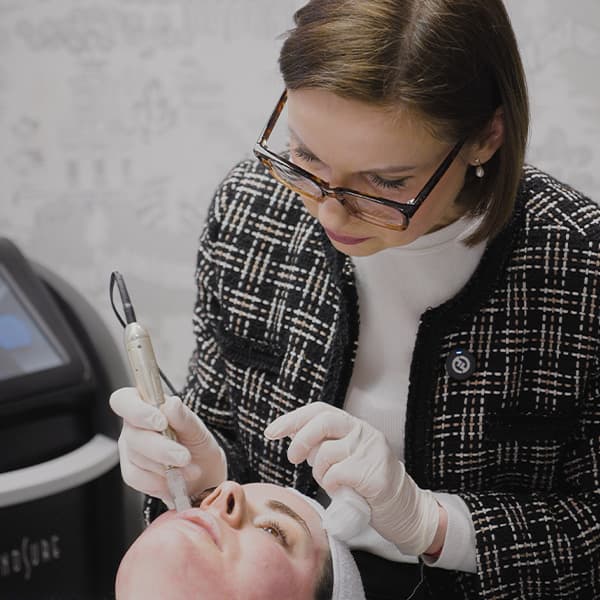
Every UltraClear plan here is led by a doctor. Dr Joney De Souza (GMC 7008632), the clinic’s founder and Medical Director, shares the consultations with Dr Mattia Parducci. The handpiece itself is usually held by Dr Mattia, GMC 7635663. He also treats at the sister clinic in Oxford, where UltraClear is part of his week.
Skin keeps a record of every bright afternoon. Long weekends in parks, lunches on terraces and evening walks by the canal all add to it, and the record tends to surface in October. None of it calls for guilt, because a warm summer well spent is part of a good life.
Sun shows on the face in two ways. Colour arrives as freckles that begin to join up and brown marks that outlast the tan. Texture arrives more slowly, as a drier and coarser surface with pores that look wider beside the nose. The skin reflects light less cleanly than it did in April.
Texture is the part people tend to miss, because it hides in plain sight. It shows in photographs taken in side lighting, where the cheek reads matte and faintly crinkled rather than smooth. It shows again when make-up settles into the surface by mid-afternoon. UltraClear in London is built for exactly that kind of change.
Long sunny weeks dry the outer layer and leave older cells lingering on the surface. That is why the skin feels coarse and looks tired even once any pinkness has long gone. A good moisturiser softens the feel for a few hours. Renewing the surface itself is a job for resurfacing, and that is where the autumn plan begins.
Timing shapes the result as much as the laser does. Resurfaced skin is new skin, and it is happiest when the light around it is soft. The NHS notes that UK sun is strongest between 11am and 3pm from March to October, so an autumn start puts the first months of healing outside that window. Freshly treated skin then has month after month of gentle light in which to settle, brighten and build.
The rhythm of an UltraClear course suits that window well. Sessions of the mid-depth treatment are spaced three to four months apart, and collagen keeps building for three to six months after each one. Start in October and the renewal is still working through the winter. The skin that greets the first warm weekend of spring is the reward.
Resurfaced skin is new skin, and it is happiest when the light around it is soft.
Autumn suits the diary too. The summer holidays are over and the party season is still weeks away. A few days of flushing and flaking after a deeper session sit easily in a quieter month. Dr Joney’s instinct for doing less, and doing it well, applies to timing as much as technique.
UltraClear is really three treatments sharing one handpiece, and the concern decides which one you have. Light sun dullness, deeper roughness and etched texture each call for a different depth. The doctor chooses the setting from what your skin shows at consultation, never from a preference for more or less recovery.
3DMIRACL. The lightest of the three is a twenty to thirty minute visit with no formal downtime. Skin feels warm afterwards, a little like the end of a sunny afternoon, and the brightness shows within days. For a face that simply looks flat after summer, it brings back clarity and a fresher, more even tone.
UltraClear depth. For sun-roughened texture and fine lines, the mid-depth treatment reaches into the dermis under topical numbing. The three to seven days that follow bring a flush and then a light flake, after which smoother, more luminous skin shows through. Two or three sessions, spaced three to four months apart, make up a typical plan.
Laser Coring. The deepest option lifts micro-columns of tissue away entirely, and your skin fills each tiny space with new tissue of its own. Pinpoint bleeding on the day is expected, and healing runs seven to fourteen days. It was designed with scarring in mind, so for summer texture alone the two lighter depths usually carry the work.
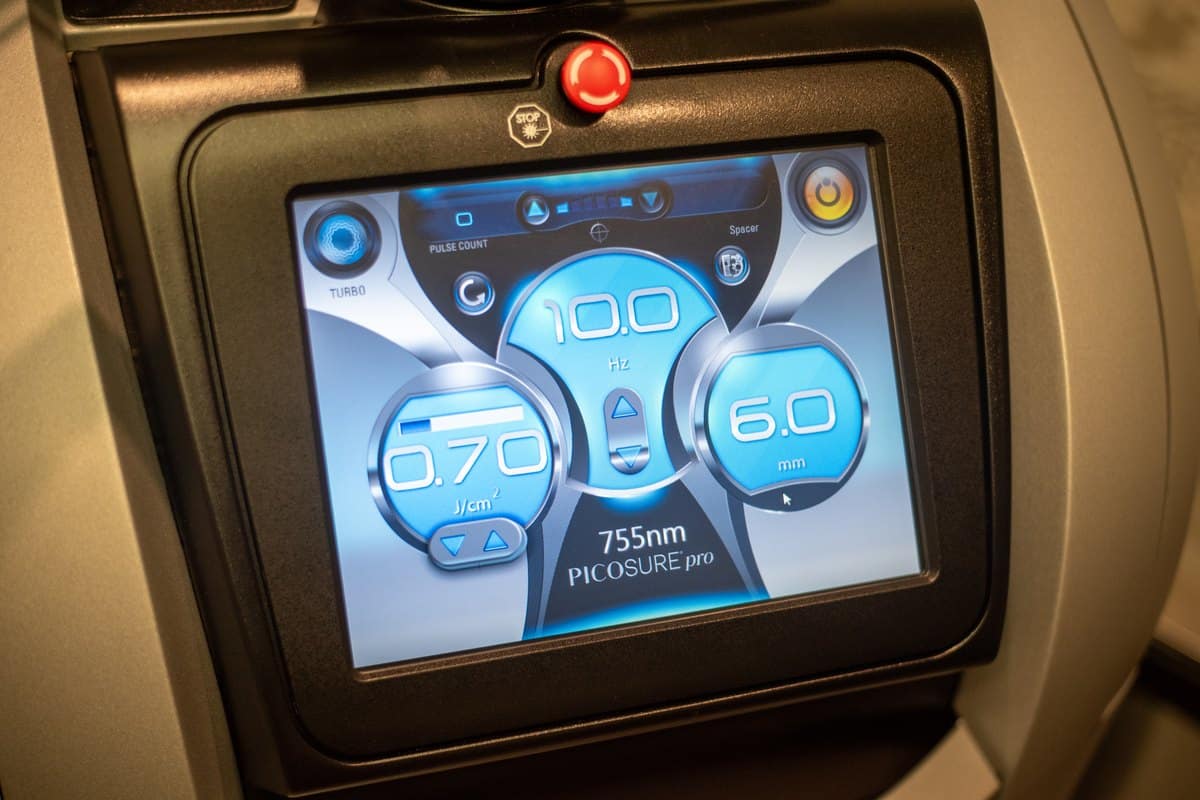
Because so little heat travels beyond each channel, healing is shorter than after a CO2 laser. The skin around every treated point stays calm, which is a large part of the appeal for anyone with a busy autumn ahead. Our article on UltraClear and CO2 sets the two lasers side by side, and the guide to UltraClear downtime walks through each day of the healing week.
The deeper settings were tested on exactly this kind of skin. In a 2024 study in Lasers in Surgery and Medicine, people aged 44 to 80 with advanced sun damage had three full-face and neck sessions six to eight weeks apart. Blinded doctors rated the photographs on a standard improvement scale, and the authors reported less discomfort and downtime than with conventional fractional ablative lasers.
Redness, swelling, pinpoint bleeding and light crusting lasted five to seven days in that study, which matches the healing week described above. It is also why the doctors place deeper sessions in the calmer weeks of autumn rather than the fortnight before a winter holiday. The neck was treated alongside the face throughout, the same pairing many autumn plans here use.
Some summers leave colour as well as texture, and UltraClear does not clear that brown on its own. Freckles that have joined up and sun spots that stayed after the tan are treated with PicoSure. Its picosecond pulses break pigment apart by pressure rather than heat. Your body then clears the tiny fragments over the following weeks, and the brown marks fade with them.
PicoSure sessions are carried out by Roma Sumskiene, the clinic’s laser and skin specialist, to protocols set by Dr Joney De Souza and Dr Mattia Parducci. A full face takes about 45 minutes after half an hour of numbing. A course of three, spaced four to six weeks apart, suits most pigment. Each visit lifts more of the brown spots that summer scattered across the cheeks.
When both lasers belong in the autumn plan, the order is set around your skin. Pigment is often cleared first so the resurfacing refines an already even tone, and UltraClear then smooths the surface. The pigmentation guide is a helpful read beforehand if you are unsure which kind of brown mark the summer gave you.
Your autumn plan begins in a consultation room in Marylebone with Dr Joney De Souza or Dr Mattia Parducci. A skin consultation includes VISIA imaging, which photographs the face under different kinds of light. It maps sun damage sitting below the surface, well beyond what the mirror shows on a grey morning.
Before any laser is booked, the doctors run through the standard checks. Have you had isotretinoin in the past year? Do you take hormone treatment? Is a summer tan still on your face, do you tend to get cold sores, and has your skin ever formed a raised or thick scar? After months outdoors the tan question matters most, because sun is avoided in the week before treatment and a fading tan often sets the start date.
From those images the doctor chooses the UltraClear depth and decides whether PicoSure belongs in the plan. A patch test comes first where your skin tone calls for one. You leave knowing which appointment comes when across autumn and winter, and what each healing week will look like on your own face.
Perhaps there is one photograph from the summer that started all this, a holiday shot where your cheek looked flatter and coarser than you remembered. Bring it with you. Seeing exactly what caught your eye in that picture helps the doctors match the depth of UltraClear to the skin you hope to see in the spring.
UltraClear treats the face, the face and neck, or the face, neck and décolletage, so the skin a summer neckline exposed is not left behind. Courses of three suit many plans. How many sessions you need depends on what the summer left behind, and the consultation gives the real answer, along with the plan and its investment.
The clinic sits in Marylebone, close to Harley Street and a short walk from Baker Street. Patients come from Fitzrovia, Regent’s Park and across central London, and the clinic’s 4.9 Google rating rests on more than 270 reviews. If this summer left your skin rougher and duller than you would like, read more on the UltraClear treatment page and come and meet the doctors.
Short clips filmed at Dr Joney De Souza Clinic in Marylebone, so you can see how UltraClear is carried out before you book.
Come and meet Dr Mattia Parducci or Dr Joney De Souza, see your sun damage mapped on VISIA, and leave with an UltraClear plan for the winter ahead. Call 020 7043 0748 or send us a message on WhatsApp, and we will find you a time.
October brings the same thoughtful questions about rough texture, faded tans and the right moment to resurface. These are the answers to the ones we hear most often, from settings and healing to how soon the glow returns.
Waiting for the tan to settle is usually wise. Resurfacing behaves most predictably on skin that has returned to its natural tone. The first visit therefore looks at how much summer colour remains. For many people that points to an October or November start, which still leaves the winter for new collagen to form.
For most sun-roughened skin the choice sits between 3DMIRACL and the mid-depth UltraClear treatment. 3DMIRACL refreshes a dull, flat surface with almost no recovery. The deeper setting is kept for coarse texture with fine lines running through it. Laser Coring is rarely needed for summer change on its own, since its real strength lies in scarring.
Within a few days most faces look fresher, with a clearer and more reflective surface by the weekend after the visit. The warmth fades the same evening, and make-up goes back on the following morning. Because the treatment is so light, sessions repeat every four to six weeks. The glow builds a little further with each visit.
Expect a pink flush for the first day or two, much like a mild sunburn, then fine flaking around day three or four. By the end of the week the flaking has passed and the new surface looks smoother and brighter. A Thursday appointment puts the most visible days over a weekend at home, which suits a busy diary.
It comes down to the wavelength. At 2910 nm, UltraClear is absorbed so strongly by water in the skin that almost all of its energy removes tissue instead of heating it. CO2 spreads more warmth sideways into surrounding skin, which lengthens recovery. Our UltraClear and CO2 comparison sets out the difference.
Often, yes. When summer has left distinct brown marks alongside rough texture, clearing the colour first lets each resurfacing session refine a more even surface. Roma Sumskiene carries out the PicoSure sessions to the doctors’ protocols. The two lasers are spaced so the skin is fully settled between them. Some faces need only one of the two.
If your chest saw as much sun as your face, it deserves the same care. The skin on the décolletage is thin, so roughness and fine crepey lines show there early, and UltraClear smooths it in the same visit as the face and neck. Treating all three together keeps the tone even, so an open collar next spring frames skin that matches your cheeks.
The surface change shows once the healing week is over, and the deeper reward arrives slowly after that. Fresh collagen goes on organising itself beneath the skin for months, so an October session reaches its best somewhere between January and April. The smoothest, most even version of your skin tends to arrive just as the days lengthen again.
UltraClear is used across a wide range of skin tones. Its cold fibre design keeps heat tightly contained, which matters for skin that darkens easily. Deeper skin tones have a patch test before the fuller resurfacing settings, and that small area is checked before the face is planned. The UltraClear page shows results across different skin types.
Keep the routine simple and kind. A gentle cleanser, a plain moisturiser and a broad-spectrum SPF every morning protect the new surface. Keep the SPF going even on grey December days when the sun feels far away. Leave strong acids and retinoids aside for the days set out on your aftercare sheet, and message the clinic with any question while your skin settles.
