Rather than focusing only on correction, modern aesthetic medicine places increasing emphasis on prevention. This article explores how lasers and injectables work at different stages of ageing, and how treatment decisions evolve over time.
As aesthetic medicine has evolved, so too has the way ageing is approached. Rather than focusing only on correcting visible changes once they appear, there is now greater emphasis on maintaining skin quality, supporting facial structure, and intervening at the right moment rather than simply reacting later.
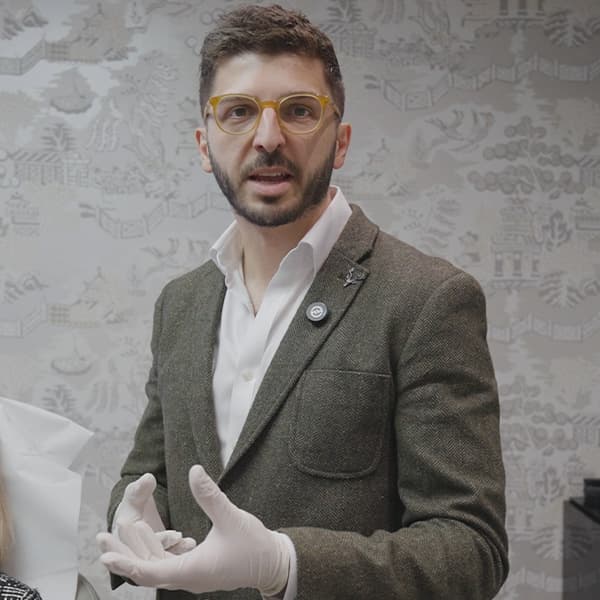
At his London clinic, Dr Joney De Souza often frames treatment planning around the concepts of prevention and correction. These are not opposing ideas, but complementary ones. Understanding how lasers and injectables are used at different stages can help patients make more considered, long-term decisions about their skin.
This article explores how ageing develops over time, how lasers and injectables are typically used, and why treatment choice should be guided by individual skin behaviour and anatomy rather than age alone.
Facial ageing is gradual and layered. It does not begin with wrinkles, and the pattern differs from person to person. In earlier adulthood, changes tend to be subtle. They are often limited to the skin itself.
These early signs may include reduced hydration or uneven tone. You might notice mild textural change or a general loss of brightness. At this stage, facial shape and structure are usually well preserved.
Over time, ageing begins to affect deeper layers. Areas of the face may lose support. Contours can soften, and shadows may appear where structure has changed. These deeper shifts influence facial balance, not just surface appearance.
Ageing affects different layers at different times. So a treatment that suits one stage may be less suitable at another. This is where the distinction between prevention and correction becomes clinically meaningful.
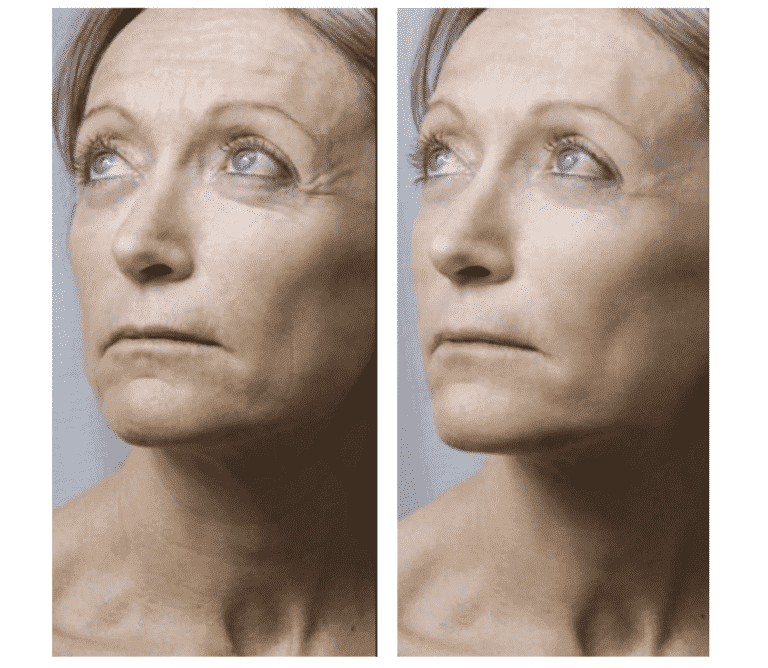
In aesthetic medicine, prevention does not mean stopping ageing altogether. Instead, it means supporting skin function and quality. It addresses early changes before they become more pronounced. This can reduce the need for more invasive treatment later.
Preventative approaches are typically skin-focused. They aim to improve resilience, stimulate collagen, and keep tone and texture even.
These treatments are not age-specific. Some patients benefit in their late 20s. Others do not need them until later, depending on genetics, lifestyle, and skin health.
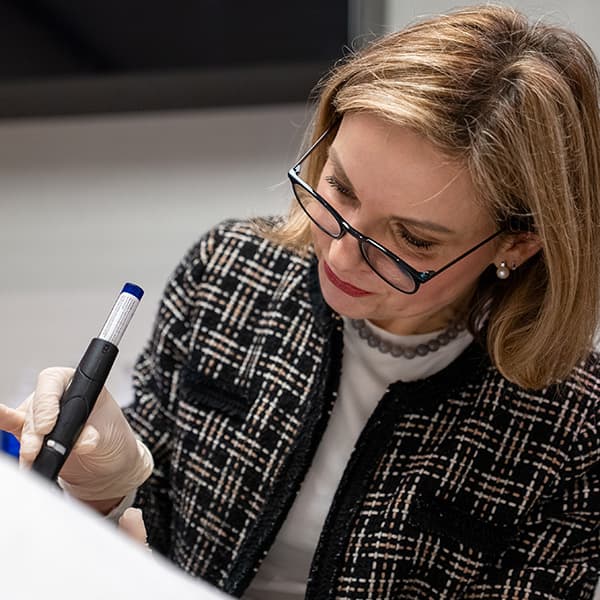
Laser treatments are often central to preventative aesthetic strategies. They work by interacting directly with the skin’s biology. Each laser delivers controlled energy into specific layers of the skin.
This energy can stimulate collagen and improve pigment regulation. It also enhances overall skin texture, without altering facial shape or volume.
Treatments such as PicoSure are commonly used for early pigmentation, sun damage, and subtle textural changes. They work at a cellular level. This helps improve skin quality while preserving natural facial anatomy.
More advanced fractional lasers, such as UltraClear, may help when early textural changes or fine lines appear. These treatments create microscopic zones of stimulation. That process encourages skin renewal and collagen remodelling. It often allows more flexibility around downtime than traditional resurfacing.
| Laser-based prevention is often considered for patients who |
|---|
Have good underlying facial structure |
Are noticing early changes in skin tone, texture, or clarity |
Prefer gradual improvement rather than visible intervention |
Want to maintain skin quality alongside good skincare and sun protection |
Correction becomes relevant when ageing changes are no longer limited to the skin surface. Injectable treatments are often associated with correction because they work within deeper layers of the face. At this stage, skin quality may still matter, but deeper structural changes begin to influence appearance. Corrective treatments aim to address loss of support, volume changes, and altered skin behaviour, while still respecting natural facial proportions. Correction should never mean overfilling or chasing youth, but restoring balance in a measured way.
As structural changes develop, collagen-stimulating injectables may be considered. One example is Radiesse. These treatments encourage the body’s own collagen production over time. They support firmness and skin architecture rather than adding immediate volume.
In experienced hands, collagen stimulators are used with restraint and precision. They are not universal solutions. Each case requires careful assessment of facial anatomy, skin thickness, and ageing pattern.
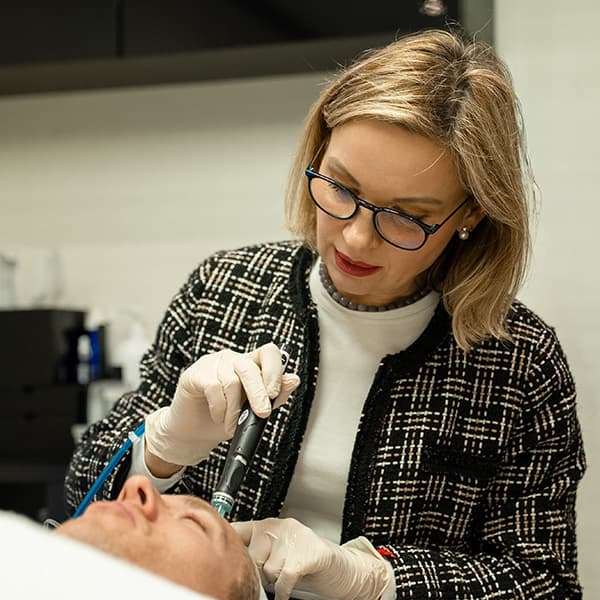

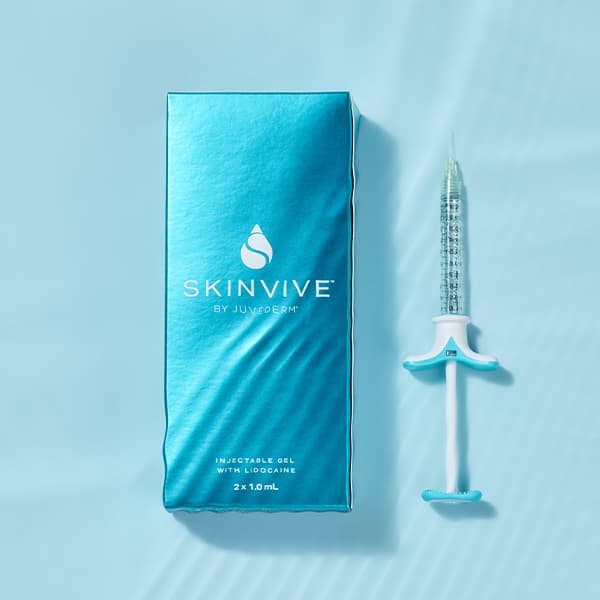
Not all injectables are corrective in the traditional sense. Treatments such as Skinvive and Profhilo improve hydration, elasticity, and skin quality rather than add volume.
They are sometimes used alongside lasers. This suits patients still in a preventative or early transitional phase. It helps most where skin dehydration or loss of elasticity is becoming apparent.
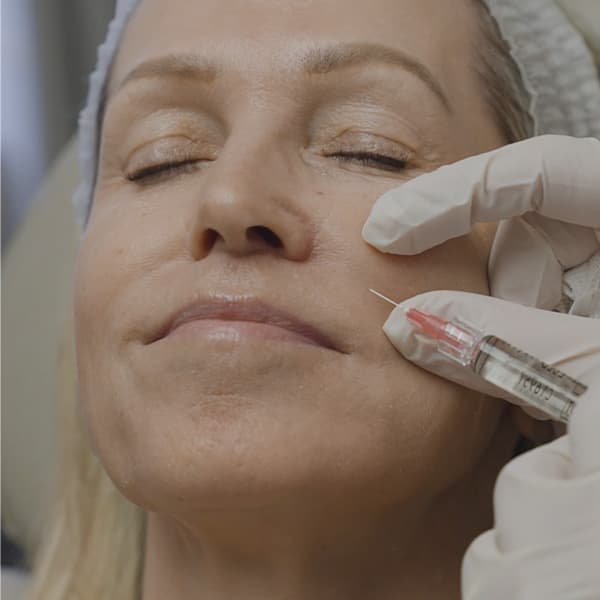
Over-treatment rarely stems from a single procedure, but rather from the absence of a clear long-term strategy. It often arises when volume-based injectables are introduced too early, despite skin-focused treatments being more appropriate, or when injectables are relied upon in isolation without addressing underlying skin quality. Problems can also occur when individual concerns are treated in separation, without consideration of overall facial balance, or when treatments are repeated routinely without reassessing their ongoing suitability. A preventative mindset does not equate to constant intervention; in many cases, doing less—but doing it thoughtfully—results in more natural, balanced, and sustainable outcomes.
Chronological age is a poor guide to treatment choice. Two patients of the same age can differ widely. Their skin quality, structural support, and lifestyle factors may not match. Life stage is better read through skin behaviour, changes, and patient priorities.
Some patients prioritise prevention well into midlife. Others need corrective input earlier, due to genetics or environmental exposure. Consultation and assessment remain central. Treatment decisions should be revisited over time, not fixed to a single plan.

One common misconception is that patients must choose between lasers and injectables. In reality, they address different layers and serve different purposes.
Lasers primarily improve skin quality. Injectables can influence hydration, collagen production, or structural support. The effect depends on the product and technique used.
At Dr Joney De Souza’s clinic, treatment planning often combines both. Each approach is introduced gradually and reviewed over time. Lasers may come earlier, followed by selective injectable treatments as needs evolve. Consultation and reassessment guide every step.

Preventative treatments may be considered when early changes appear. These can affect skin quality, pigmentation, or texture. There is no fixed age. Suitability depends on individual skin assessment.
Lasers are often used earlier. They target skin quality without altering facial structure. Injectables may be introduced later, depending on how ageing progresses.
In some cases, maintaining skin quality and structural support may delay the desire for surgical intervention. However, this varies and cannot be guaranteed.
PicoSure is commonly used for pigmentation and early skin quality concerns, while UltraClear may be considered for more advanced textural changes and collagen stimulation.
Yes. Combination approaches are common and often more effective when planned carefully and introduced gradually.
Radiesse is considered a collagen stimulator. It supports collagen production rather than acting purely as a volume filler.
Patients with certain skin conditions, recent sun exposure, or specific medical factors may need alternative approaches. Assessment is essential.
Frequency varies depending on treatment type, skin response, and long-term goals. Maintenance is usually tailored rather than fixed.
No. Prevention focuses on supporting skin health over time, not constant intervention. Periods of observation are often appropriate.
Our patients return to us year after year for natural, balanced results. Every review reflects our commitment to precision, safety and a personalised approach to aesthetic care.
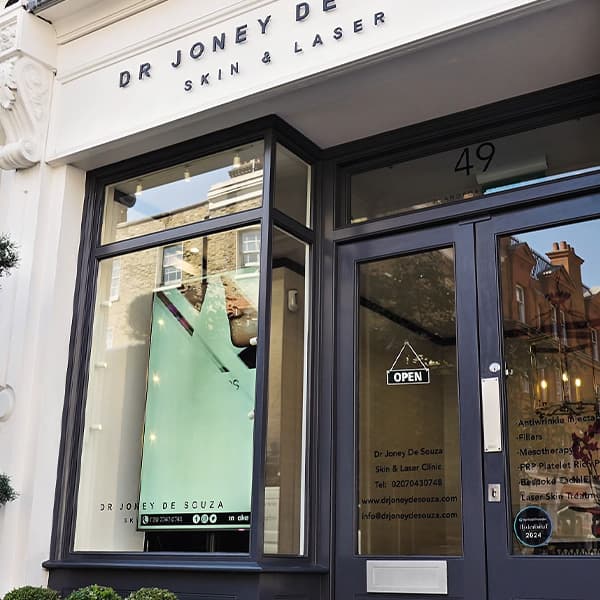
The Dr Joney De Souza Skin & Laser Clinic is based at 49 Blandford Street in Marylebone. It takes a refined, personalised approach to aesthetic medicine and skin health.
The clinic offers a carefully curated range of advanced treatments. These include Skinvive by Juvéderm. Each is designed to improve skin quality, hydration, and radiance while preserving natural facial expression.
Every treatment receives the same attention to detail and clinical integrity. The focus is long-term skin health, not short-term cosmetic change. Through thorough consultation and tailored planning, patients are guided towards subtle, effective solutions. These support healthy, luminous skin over time.