
Late at night, scrolling Ultherapy before and after photos and unsure which show real change? Here is how to read them, and where to look on the jaw, brow and chin, from Dr Joney De Souza Clinic.
At the end of a haircut the stylist holds up a mirror behind you, and you catch your jaw from an angle you rarely see. Later you scroll through Ultherapy before and after photos, stretching each jaw on the screen between finger and thumb. Some pairs look astonishing and others look identical, and you cannot tell which show a real change. That uncertainty is where Ultherapy at Dr Joney De Souza Clinic in Marylebone likes to begin.
| Performed by | Sessions | Downtime | Your plan |
|---|---|---|---|
| Dr Joney De Souza or Dr Mattia Parducci | One for most people | Mild tenderness, back to your day | Set by the doctor at consultation |
A good result from Ultherapy in London is meant to look subtle in a photograph. Dr Joney De Souza or Dr Mattia Parducci performs the treatment, and both doctors (GMC 7008632 and 7635663) will show you how to read a pair properly.
Six months after a single treatment of the face and upper neck, blinded reviewers judged 67 percent of the women in a 2014 study to look improved. They worked from photographs alone, taken the same way before and after, and that detail is the key to reading any image you find online.
The lift itself starts beneath the surface. Ultherapy uses micro-focused ultrasound with a live image, so the doctor sees the SMAS, the supporting layer a surgeon tightens in a facelift, before any energy lands. Tiny points of warmth then prompt your own collagen to rebuild that layer, while the skin on top stays untouched.
An Ultherapy lift is measured in millimetres, not in new features. The jowl in front of the jaw angle sits a little higher and the shadow under the chin grows shorter. The tail of the brow rises just enough to show more of the upper lid. Each change is small, and together they read as a fresher face.
That is why the strongest pairs of images rarely shout. You see the same person in the after photograph, with the same nose and smile lines, simply firmer in outline. Your eye has to settle on the jaw before it finds the difference.
Photographs that look dramatic usually have something else going on. A brighter flash flattens every fold, a raised chin stretches the neck smooth, and a little contour along a sagging jawline draws a line the skin never made. None of that is a lift, and all of it disappears once the camera is put away.
A natural result shows itself differently in real life. Friends say you look well, or ask whether you have been somewhere warm, without being able to name the change. Your collar sits against a firmer neck, and the side of your face catches the light along a cleaner edge.
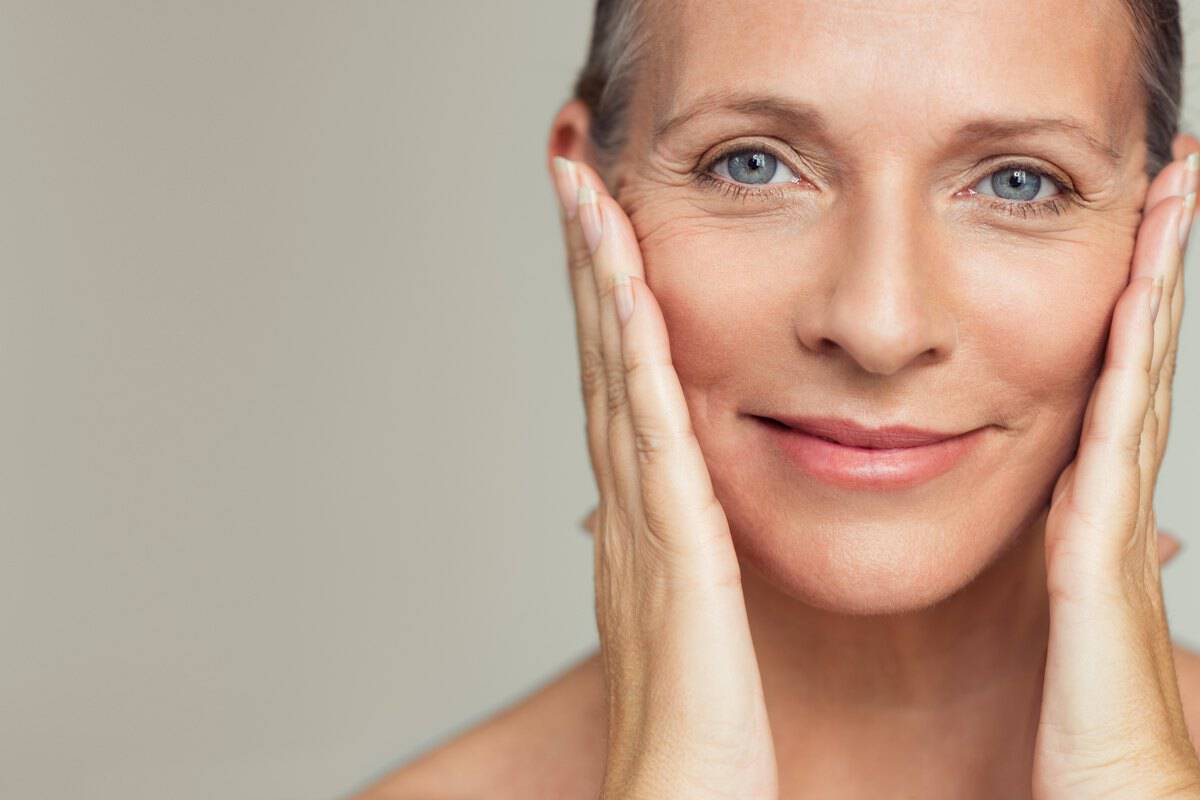
Early research on focused ultrasound lifting was built on careful photography. In a 2010 study in the Journal of the American Academy of Dermatology, a Northwestern University team photographed 35 patients from the front and side at set points up to 90 days. Three physicians who were not authors then compared the pairs without knowing which came first.
Friends say you look well, or ask whether you have been somewhere warm, without being able to name the change.
They judged 86 percent of those patients to show a clinically significant brow lift at 90 days. Measured against fixed landmarks on the face, the average rise in eyebrow height was 1.7 mm. That is the true scale of a lift from ultrasound: less than two millimetres at the brow, yet enough to show more of the upper lid.
The 2014 study by Fabi and Goldman tracked the change further out. Treating physicians rated 81.3 percent improved at 90 days and 77.7 percent at 180 days, and the women themselves reported improvement at similar rates. Age and skin type made no measurable difference, which helps explain why results look alike across very different faces.
Those numbers set a fair expectation for any image you study. A real result is measured in millimetres, months after the session, and reads as a fresher version of the same face.
Before you judge any pair, check that both photographs were taken in the same way. Light, angle and expression change a jawline far more than most people expect. A fair comparison keeps everything still except the face itself. These five details are the ones to check first.
Chin position catches people out more than anything else. Drop your chin by a centimetre and the soft tissue under the jaw folds into a crease, while lifting it by the same amount stretches that crease flat. A fair pair shows the head at the same tilt, often with the ear lined up in both frames.
Hair and clothing matter as well. Hair pulled back in one image and loose in the other changes how the jaw is framed. A high collar can hide the neck entirely. When the setting is identical, whatever has changed in the face is the treatment, and that is the change worth studying.
Time since treatment is the detail most often missing. A photograph taken a week after the session mostly shows the face you arrived with. The deeper rebuilding has barely started by then. Look for after images labelled at three months or later, and ideally at six, when the full lift has had time to settle.
Once the photographs are fair, three places tell you almost everything. They are the jaw line, the brow and the skin under the chin. According to Merz Aesthetics, the maker, the device is FDA-cleared to lift the eyebrow and the skin on the neck and under the chin.
The jaw line. Trace the edge from just below the ear to the point of the chin. Before treatment it often softens into a gentle curve where the jowls gather, while afterwards it runs straighter and catches more light along the bone. What you notice is a crisper border between face and neck rather than a new shape.
The brow. Look at the tail of the eyebrow and the strip of eyelid beneath it. A lift of a few millimetres shows more of the upper lid, so the eye looks more open face on. Eyeshadow has more room to sit as well. It is one of the most satisfying changes to spot once you know where it lives.
Under the chin. In a side profile, study the angle where the chin meets the neck. Soft fullness turns that angle into a slope, and as the supporting tissue firms, the angle sharpens and the skin beneath looks smoother. A shallower depth is set here, since the layers are thinner than they are along the jaw.
The neck itself is worth a glance too. Where it was treated, the skin between the collarbones and the jaw looks firmer in daylight. The change tends to show best in a photograph taken beside a window in soft morning light.
The reason a good result is gentle is also the reason it keeps improving. Each point of ultrasound warmth tells your skin to repair, and that repair is fresh collagen and elastin. Collagen matures slowly, so the firmness gathers over months instead of appearing on the day.
Some people feel a slight tightness straight after treatment, which is the tissue contracting where the energy landed. It feels promising under the fingertips, yet it is not the result you will photograph. The first visible improvement usually shows from around three months, and the full lift is in place at about six months.
That slow arrival is a gift for anyone who would rather nobody noticed the work. Nobody meets a sudden new face across the breakfast table, because the change keeps pace with your tissue. Results vary with the area treated, the number of lines delivered and how your collagen responds, which is why no two pairs look alike.
Once it has settled, the result typically lasts a year or more, and many people keep it fresh with a yearly top-up. If you are curious how deep lifting compares with lasers that work closer to the surface, our article on Ultherapy and laser skin tightening looks at both.
Ultherapy works on the supporting layer, so it does not clear brown spots, broken capillaries or the fine crinkled texture that a ring light picks up across the cheek. Those surface details show in every photograph, and they are the job of a resurfacing laser. UltraClear renews the outer layers, usually in the hands of Dr Mattia Parducci.
When both are needed, the two work at different depths and suit each other well. The lift firms the outline of the jaw and brow, and the resurfacing brightens the skin that sits over it. Photographs taken in window light then show a sharper edge and a clearer, more even surface in the same frame.
Your first step is a consultation with Dr Joney De Souza or Dr Mattia Parducci at the clinic in Marylebone, close to Harley Street. You sit in good daylight, front on and then in profile, as you lower your chin and turn slowly. You are asked whether you are pregnant, whether there are metal implants in the area to be treated, and which medicines and conditions are on your record.
This is also the moment to take your own before photograph, and it pays to take it well. Pull your hair back, wash off your make-up, and stand facing a window with the phone held level at eye height. Take one image face on and one in true profile, and label both with the date.
Repeat those exact photographs at three months and again at six, in the same spot and at the same hour of the day. Light moves around a room as the day passes, so matching the hour keeps the shadows comparable. Laid side by side, your own pair will tell you more than any stranger’s ever could.
One session is the plan for most people, with a top-up a year or so later. The consultation gives the real answer, since how far the supporting layer has relaxed decides the number of lines and the areas treated. Your plan and its investment are set out at that first visit, so you leave knowing exactly what is involved.
If you have been studying strangers’ jawlines on your phone late at night, come and let our doctors show you what your own could look like. Patients come from Baker Street, Regent’s Park and across central London for this unhurried appointment. With a 4.9 Google rating from more than 270 reviews, the clinic is glad to welcome you, and the Ultherapy treatment page carries the full detail.
Short clips filmed at Dr Joney De Souza Clinic in Marylebone, so you can see how Ultherapy is carried out before you book.
Bring the before and after images that caught your eye, and Dr Mattia Parducci or Dr Joney De Souza will show you what a natural lift could look like on your own jaw and brow. Call the clinic on 020 7043 0748, or reach the team on WhatsApp.
These answers cover what people ask once they start comparing images, from the angle and light that tell the truth to how long after treatment a photograph becomes worth trusting.
Usually because something besides the face has changed between the two frames. A stronger light, a lifted chin or a touch of bronzer along the jaw can sharpen an outline in seconds. When the setting is matched, a genuine Ultherapy result looks firmer and more defined, yet still entirely like the same person.
Wait at least three months before you compare, then take a second set at around six months. Earlier images mostly capture your starting point, since new collagen needs time to mature inside the treated layer. Photographing at both stages lets you watch the lift develop instead of judging it too soon.
Not at all. Subtle is the aim, because the lift comes from your own tissue firming rather than from anything added. People tend to read it simply as you looking well. If you ever doubt the change, a matched side profile from before treatment usually settles the question quickly.
Bare skin gives the fairest record. Foundation evens out shadows and bronzer can draw a jaw line that is not really there, which makes any later comparison unreliable. Clean skin suits the treatment day too, since the clinic asks you to arrive without make-up for the numbing cream.
A true side profile tells you the most about the jaw and the skin under the chin, because the angle between them is easy to compare. For the brow, a face-on photograph in soft window light shows how much upper eyelid sits beneath the eyebrow. Take both if you treated the brow and lower face together.
They can, with a little care. A front camera held close to the face exaggerates whatever sits nearest the lens and changes how the jaw looks. Ask someone to take the photograph from at least arm’s length, with the phone held level, and use the same spot and the same hour each time.
That early tightness comes from the treated tissue contracting where the ultrasound energy landed. You may notice it under your fingertips within a day or so, while the camera picks up very little. The visible lift follows later, as collagen and elastin rebuild the supporting layer over the months after your session.
Yes, quite noticeably. A 2014 study of 103 adults found the lower face responded less often when BMI was over 30, and a shift in weight alters the fullness under the chin either way. If your weight changes between photographs, mention it when you compare them, so the change from treatment can be read fairly.
Where the neck is treated, it shows best in profile and natural light, with a smoother throat. The firmer line beneath the jaw is usually the first thing you spot. Ultherapy can treat the décolletage in the same visit, so a lower neckline photograph can join your comparison.
Most people enjoy the lift for a year or more. Your face carries on ageing naturally, but from a firmer starting point. Photographs taken a year on still compare well with your original before image. A yearly top-up session keeps the jaw and brow looking crisp in pictures.
