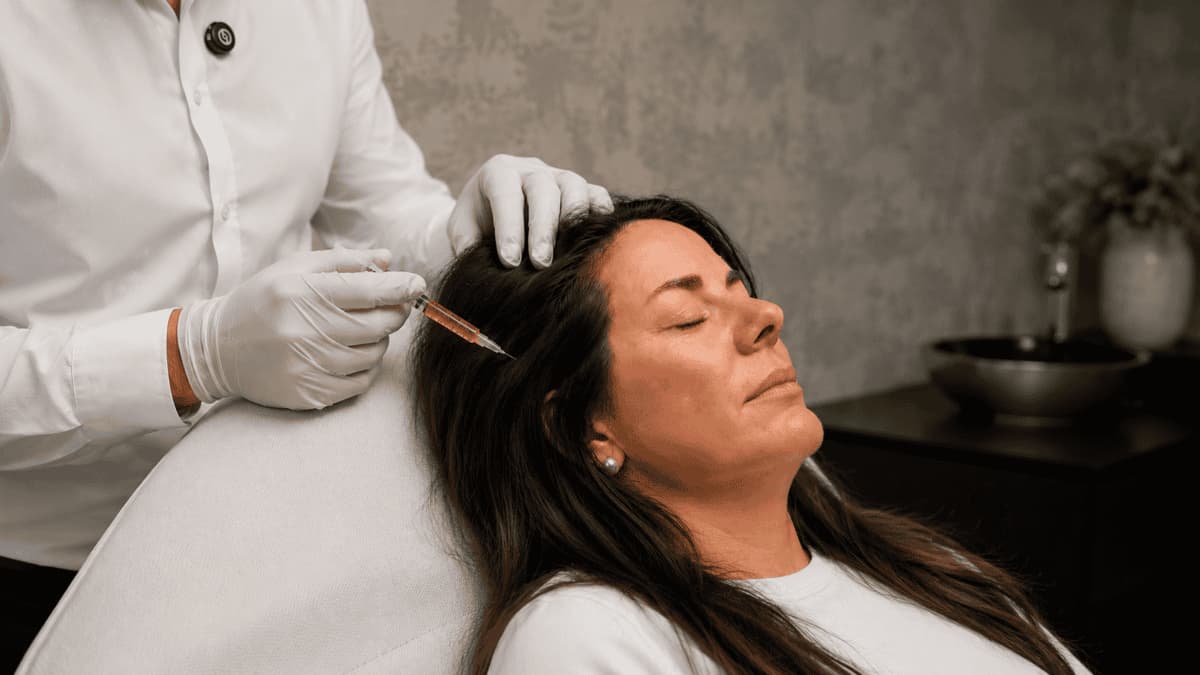
At Dr Joney De Souza Skin & Laser in Marylebone, our patients often ask how the two regenerative blood treatments compare. The phrase PRF vs PRP comes up in almost every consultation. Both therapies use a small sample of your own blood to stimulate the skin, yet they work in subtly different ways. This guide explains what platelet-rich fibrin actually is, how it differs from platelet-rich plasma, and what each one tends to suit.
PRF stands for platelet-rich fibrin. We draw a small amount of your blood, then spin it gently in a centrifuge. Importantly, we use no anticoagulant. Because of this, your blood begins to form a natural fibrin scaffold during the spin.
This fibrin mesh traps platelets, white blood cells and growth factors. The result is a soft, gel-like material rich in the cells that drive skin repair. Once we place it back into the treatment area, that scaffold slowly releases its growth factors over several days. Many patients value this gradual, sustained activity.
The slow-release nature of PRF matters. Rather than delivering everything at once, the fibrin holds onto growth factors and lets them work over time. As a result, the surrounding tissue receives a steady prompt to produce collagen and new blood vessels. Over weeks, many people notice firmer, fresher-looking skin, though results may vary from person to person.
PRP stands for platelet-rich plasma. The process starts the same way, with a simple blood draw and a spin in the centrifuge. However, an anticoagulant is usually added so the blood stays liquid. This keeps the platelets suspended in plasma rather than locked inside a fibrin scaffold.
Because PRP is liquid, we can inject it smoothly or apply it after microneedling. It delivers a concentrated burst of growth factors quickly. You can read more about this option on our PRP treatment page.
So how do you weigh PRF vs PRP? The differences are practical rather than dramatic. Both come from your own blood, and both are well tolerated. Still, a few points set them apart.
Researchers have described this gradual release as one of PRF’s defining features. Choukroun and colleagues, writing in the journal Oral Surgery, Oral Medicine, Oral Pathology in 2006, set out the early framework for platelet-rich fibrin and its sustained growth-factor activity.
Neither treatment is automatically better. Instead, each suits different goals and skin types. PRP often appeals to patients who want a smooth, injectable option or a boost paired with microneedling. PRF, by contrast, may suit people who prefer a longer, slow-release effect and a more natural preparation without additives.
Common reasons our London patients explore these treatments include:
During your visit, we assess your concerns, your medical history and your skin. Then we recommend the approach that fits you best. To compare options side by side, visit our PRF treatment page.
The appointment is straightforward. First, we take a small blood sample, much like a routine blood test. Next, we spin it in the centrifuge for a few minutes. Then we prepare the PRF or PRP and apply it to the treatment area, often after numbing cream for comfort.
Afterwards, you can usually return to your day with little to no downtime. Mild redness, swelling or pinpoint bruising can occur, and these typically settle within a day or two. Many patients book a short course of sessions spaced a few weeks apart, since results build gradually rather than overnight.
Because these treatments use your own blood, the risk of an allergic reaction is low. Even so, they are not right for everyone. We do not recommend them during pregnancy or breastfeeding, and certain blood conditions or medications may affect suitability. A thorough consultation confirms whether PRF or PRP is appropriate for you, and we will always be honest if neither is the right choice.
Ultimately, the PRF vs PRP question rarely has a single answer. The best option depends on your goals, your skin and your preferences, and that decision is made together at consultation. To explore which treatment suits you, book a consultation with our team in London, or review treatment details and current fees on our prices page.
Curious whether PRF or PRP fits your skin goals? The team at Dr Joney De Souza Skin & Laser in London will assess your concerns, explain both options clearly and recommend the right path for you. Book a consultation today, or view full treatment details and current fees before you decide.
Common questions our Marylebone team hears.
PRP uses an anticoagulant and stays liquid, delivering growth factors quickly. PRF uses no anticoagulant and forms a fibrin scaffold that releases growth factors slowly over several days.
Fees depend on the treatment area and the number of sessions you need. You can see current pricing on our prices page, and we confirm a tailored quote at your consultation.
Most appointments take around 45 to 60 minutes. This includes the blood draw, a short spin in the centrifuge and the treatment itself.
There is usually little to no downtime. Some patients notice mild redness, swelling or pinpoint bruising, which typically settles within a day or two.
Results build gradually as collagen develops, so many patients notice changes over a few weeks. Results may vary depending on your skin and your goals.
Many patients have a short course of sessions spaced a few weeks apart. We agree the right plan for you at your consultation.
Neither is automatically better. PRP suits a fast, smooth delivery, while PRF suits a slower, natural release. The right choice is decided together at consultation.
Both treatments can support tired or hollow-looking under-eye areas for some patients. A consultation confirms whether the area and your skin are suitable.
Because both use your own blood, the risk of allergic reaction is low. They are not suitable during pregnancy or breastfeeding, and certain conditions may affect suitability, which a consultation confirms.
You can book with Dr Joney De Souza Skin & Laser in Marylebone through our contact page or by getting in touch with our team. We will arrange a consultation to confirm which treatment suits you.