
The heating comes on and within a fortnight your skin feels tight after every shower. Here is why injectable skin boosters in Marylebone hydrate from within and keep you glowing all winter.
The clocks go back, the heating comes on, and within a fortnight your skin feels tight after every shower. Foundation catches on small dry patches across the cheeks, and the glow you had in September has drained away. That thirst sits below the surface, where creams cannot reach, and it is what skin boosters at Dr Joney De Souza Clinic in Marylebone were designed for.
| Performed by | Course | Downtime | Your plan |
|---|---|---|---|
| Dr Joney De Souza or Dr Mattia Parducci | Two to three treatments, four to six weeks apart | Small bumps flatten by the next morning | Set by the doctor at consultation |
Winter is hard on skin in a very physical way. Cold wind outside strips moisture from the surface, and warm, dry air indoors keeps pulling more of it out. Fine lines that barely showed in summer look deeper, and the skin looks flatter under the grey light of a December morning. Richer moisturisers help for an hour or two, then the tightness creeps back.
The science backs up what your skin is telling you. Low humidity and low temperatures weaken the skin barrier overall, one 2016 review concluded, and cold, dry air leaves skin more reactive to irritants. That is why a face that felt calm in early autumn can feel tight and touchy by December.
What sets an injectable skin booster apart is where it puts the water. Instead of coating the surface, it places hyaluronic acid within the skin itself, where it holds moisture like a sponge holds rain. Your skin is hydrated from the inside out, and it stays that way through months of radiators, wind and cold.
Think about how your face feels after a brisk walk through Regent’s Park in January. The cheeks sting slightly, the skin around the nose flakes, and your lips feel papery. That is moisture leaving the outer layer faster than your skin can replace it. Then you step into a heated office and the dry air finishes the job.
Over a whole season, that constant tug leaves its mark. Skin loses its spring when you press it, and the fine lines around the eyes and mouth become more noticeable. Make-up sits on top rather than melting in. Under overhead lighting the face looks tired even after a full night’s sleep, simply because dehydrated skin reflects light less evenly.
Many people respond by piling on heavier creams and facial oils. Those feel lovely, but they mostly work at the surface and wash away by evening. The deeper layers of the skin, where plumpness and bounce really come from, stay exactly as thirsty as they were. That is where an injectable makes such a satisfying difference.
The American Academy of Dermatology puts the problem simply. With the drop in temperature and the lack of humidity, skin has a hard time holding on to moisture. Its dermatologists suggest a cool-mist humidifier in the bedroom through winter, and moisturiser applied straight after washing to trap the water already in the skin.

The skin booster used at the clinic is Teosyal Redensity 1, an award-winning skin enhancer. It combines hyaluronic acid with amino acids, vitamins, minerals and antioxidants in one fine gel. It sits between a dermal filler and mesotherapy, adding no volume at all while feeding the skin with ingredients it uses to stay healthy. Teoxane describes the gel as a non-crosslinked hyaluronic acid at 15 mg/ml with high fluidity. It spreads evenly through the skin rather than holding a shape.
Hyaluronic acid already lives in your skin, and it is famous for holding many times its own weight in water. Placing it within the skin gives your face a reservoir that keeps drawing moisture in through the dry months. The amino acids and antioxidants support the skin’s own renewal, so the improvement is more than a temporary drink.
The result is a face that looks naturally dewy rather than shiny. Fine dehydration lines soften, pores look less obvious, and the skin feels smoother when you run your fingertips across your cheek. Because nothing changes shape, nobody can tell you have had treatment. They simply see someone who looks surprisingly fresh for the middle of winter.
Redensity 1 suits all skin types and tones. It works especially well on dryness, crepey patches, fine lines and dullness. It is also a strong choice for people in their twenties and thirties who want to keep their skin looking good as the years go on. Older skin enjoys the same lift in hydration and radiance.
Fine dehydration lines soften, pores look less obvious, and the skin feels smoother when you run your fingertips across your cheek.
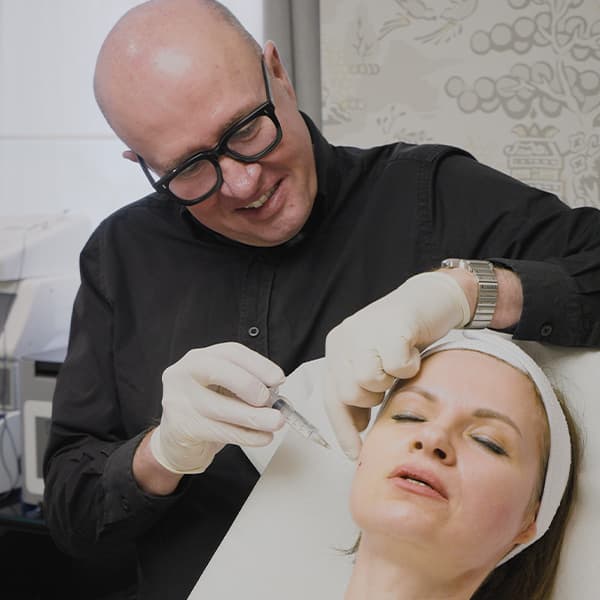
A session takes between 30 and 45 minutes. Your skin is cleansed first, and a topical anaesthetic goes on for extra comfort if you would like it. The gel itself also contains lidocaine, a gentle local anaesthetic, so the treatment feels easier as it goes on. Fine micro-injections then place tiny amounts of product across the area.
Dr Joney De Souza or Dr Mattia Parducci performs every skin booster injection at the clinic. They work methodically across the cheeks, forehead and anywhere else that looks dry, placing the gel just where the skin needs it. You feel a series of quick, light pricks and very little else, and the whole treatment passes quickly.
Afterwards you may see small bumps, slight redness or mild swelling at the injection points. These usually settle within a few hours or by the next day. An ice pack helps if you would like it. You can return to work straight away, perhaps with a scarf pulled up against the cold on the walk back to Baker Street.
For a day or so, avoid strenuous exercise and excessive heat, so no hot baths or saunas that evening. Apply a good moisturiser and SPF afterwards. Winter sun is lower but it still reaches your skin, and protecting newly hydrated skin helps the result last longer.
Hydration and a subtle glow often appear within a few days. By the end of the first week the skin feels softer and less tight after cleansing. The full improvement in radiance, texture and firmness then develops over the following weeks, as the ingredients settle and the skin responds.
The usual plan is a course of two to three treatments spaced four to six weeks apart. Results last six to nine months, depending on your skin, your lifestyle and how much sun it sees. That means a course started in October carries your skin comfortably through Christmas parties, January wind and the first cold spring mornings.
The neck dries out in winter just as much as the face, especially under wool collars and polo necks, so many people treat both at once. Your plan and its investment are set out at the consultation, once the doctor has felt how the skin on your cheek and neck moves under a fingertip.
Redensity 1 is one of several injectable hydration treatments at the clinic, and each one has its own personality. Profhilo uses a highly concentrated hyaluronic acid placed at five points each side, in two sessions four weeks apart. It suits skin that has started to lose its firmness as well as its moisture.
Skinvive places micro-droplets of smooth hyaluronic acid into the superficial layers of the cheeks, usually in one session, for a glassy glow that lasts up to six months. Redensity 1 adds its blend of amino acids, vitamins and antioxidants, which makes it a natural choice when the skin looks tired as well as dry.
A skin booster does not fade the brown marks a summer outdoors leaves behind. PicoSure does. Its sessions are carried out by Roma Sumskiene, laser and skin specialist, to a plan the doctors set. Many people run the two side by side through the colder months, the booster for hydration and the laser for tone.
The doctors choose between them by looking at your skin under good light and feeling its texture. If dryness is the main story, a skin booster usually leads. If laxity is joining in, Profhilo may suit you better. Either way, the aim is the same, which is skin that looks rested and bright when the days are at their shortest.
Your first visit is a consultation with Dr Joney De Souza or Dr Mattia Parducci. They look at your skin in daylight and with VISIA skin imaging where it helps, check your medical history and ask about allergies or pregnancy. Then they recommend the injectable that suits your skin, along with the number of sessions, before anything is booked.
Before the first injection you are asked whether you could be pregnant and whether you have any allergies. You are also asked what you take day to day, from prescriptions to supplements. Recent peels, retinoids and other injectables come up too, because winter skin that is already dry needs a calm start. The answers set the timing of your first session.
A course of two or three sessions is the average starting point, and the consultation gives the real answer for your skin. Starting in October or November means the glow has built by the time invitations arrive. The clinic sits in Marylebone, close to Harley Street and a short walk from Bond Street, which makes lunchtime visits easy from anywhere in central London.
If your skin has felt tight and dull since the heating came on, do not wait for spring to fix it. Come and see the doctors at Dr Joney De Souza Clinic, which holds a 4.9 Google rating from more than 270 reviews. Let skin boosters in Marylebone carry your glow right through the cold months.
Short clips filmed at Dr Joney De Souza Clinic in Marylebone, so you can see how skin boosters is carried out before you book.
If your skin has felt tight and tired since the heating came on, book a visit with Dr Joney De Souza or Dr Mattia Parducci. They will choose the right hydration for your skin. Telephone 020 7043 0748, or chat with the team on WhatsApp.
Cold weather brings its own questions about injectable hydration, from flaking cheeks to party timing. Here are the ones people ask most when their skin starts to feel the chill.
They work all year, but winter is when many people feel the difference most. Dry indoor heating and cold wind dehydrate the skin quickly, so restoring hydration from within makes a striking change. Winter also means less strong sun on freshly treated skin. Starting in autumn lets the result build in time for the darkest and driest months.
They improve it from beneath by restoring the water the skin has lost, and flaking at the surface usually calms as hydration returns. At home, the American Academy of Dermatology suggests moisturiser applied straight after washing, a cream rather than a lotion, and warm rather than hot water. Together they keep the outer layer comfortable while the booster works deeper down.
Aim to start about six to eight weeks ahead. Hydration often shows within a few days. The full improvement in radiance and texture develops over the following weeks, and a course usually involves more than one session. Planning ahead gives you time for the whole course and for the glow to settle beautifully before the day.
Redensity 1 hydrates fine, dry skin across the face, and many people notice dehydration lines softening as the skin plumps. The area beneath the eye is delicate and has its own needs, so the doctors look closely before treating it. If another treatment such as polynucleotides would suit that area better, they will tell you at your appointment.
Yes, Redensity 1 can treat the hands as well as the face, neck and décolletage. Hands take the brunt of cold weather, frequent washing and dry air, and the skin on the back of them thins and crinkles. Injectable hydration restores some softness and smoothness, and the doctors confirm suitability once they have seen the backs of your hands.
Cold weather makes no difference to the treatment itself. The gel contains lidocaine, a local anaesthetic, and a topical numbing cream can be applied beforehand. Most people feel quick, light pricks and nothing more. Skin that is very dry or chapped on the day may feel a little more sensitive, so a few days of gentle moisturising beforehand helps.
The clinic uses Teosyal Redensity 1, an award-winning skin enhancer. It contains hyaluronic acid with amino acids, vitamins, minerals and antioxidants, and also includes lidocaine for comfort. It was designed to improve hydration, radiance and texture without adding volume, which is why it suits faces that want to look fresher without looking different.
It is best to keep your skin bare for the first day so the tiny injection points can settle. After that you can return to your usual make-up. Many people find foundation sits more smoothly once the hydration builds, because there are fewer dry patches for it to cling to. Apply SPF underneath as usual.
Skin boosters focus on hydration, radiance and texture rather than treating redness directly. Well-hydrated skin does tend to feel calmer and more comfortable in cold air. If redness is your main concern, the doctors will look at the cause and recommend the most suitable treatment, which may be a laser rather than an injectable.
Keep it simple for the first day or two, then return to a gentle routine built around a rich moisturiser and daily SPF. Strong acids and retinoids can wait a few days while the tiny injection points settle. The boosters hydrate from within, and a good barrier cream holds that water in at the surface, so the two together keep the winter glow going for longer.
