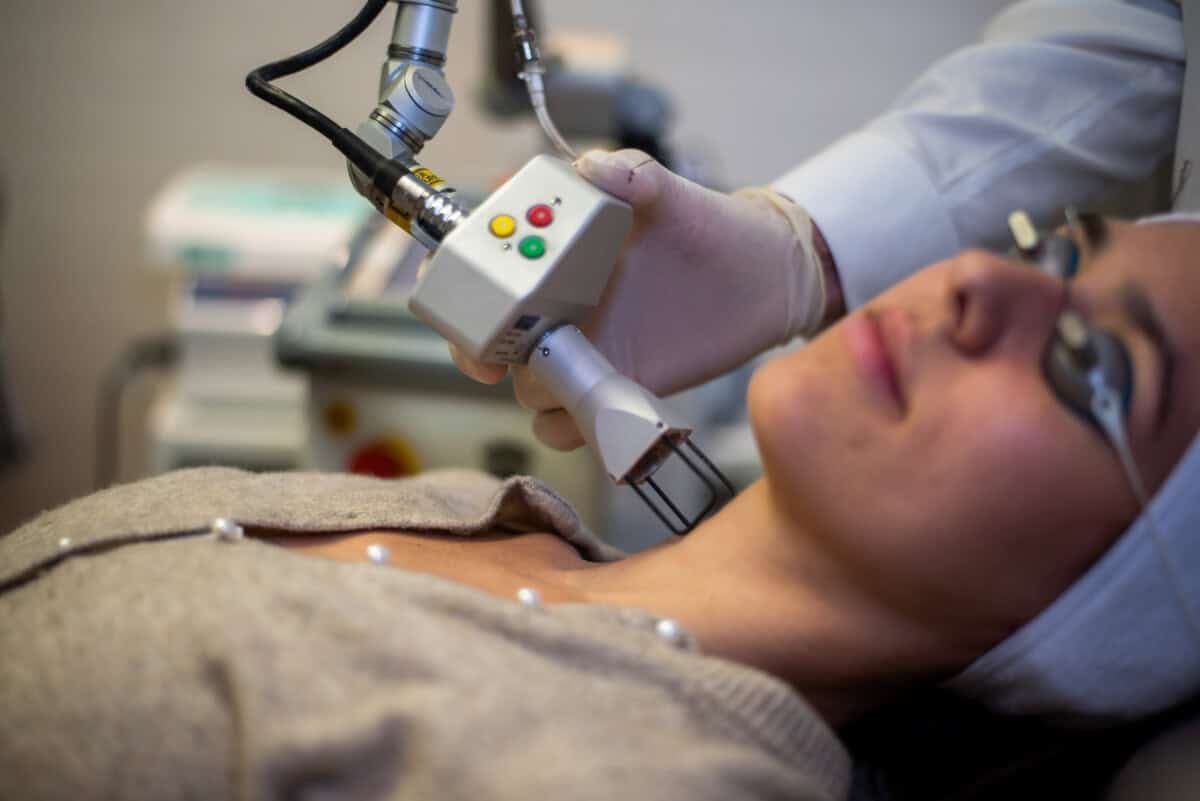
At Dr Joney De Souza Skin & Laser in Marylebone, patients weighing up resurfacing often ask the same thing: is CO2 laser safe? It is a sensible question, because CO2 laser is a powerful treatment. The reassuring answer is that, in trained hands, the published evidence is strong. Below, we review what dermatology studies report, the side effects to expect, and how we keep risk low.
At Dr Joney De Souza, our CO2 treatment uses the Deka SmartXide DOT fractional CO2 laser. It is worth being clear that this is fractional resurfacing, not fully ablative CO2. We are often asked for fully ablative CO2, which we do not offer, because the fractional approach gives meaningful results with a safer, more manageable recovery. At your consultation, we explain exactly how the laser is set for your skin.
Key takeaways
Fractional CO2 laser has been studied widely in dermatology. A 2017 review in Dermatologic Surgery followed 107 patients across a range of skin tones. Adverse events occurred in 15 percent of patients, and all were temporary. Importantly, the study reported no infections and no permanent loss of pigment.
CO2 laser works by resurfacing the skin, so some healing is expected. Research on photoaged skin confirms that results scale with the energy used. For this reason, your clinician balances strength against safety for your skin. To understand the treatment itself, see our CO2 laser resurfacing page.
Honesty matters with a resurfacing laser. After CO2 treatment, most reactions are expected and temporary. Typically, these include the following.
Generally, redness and crusting settle within roughly a week. Rarer issues, such as infection or scarring, are uncommon and largely preventable. This is why careful screening matters before treating acne scarring or sun damage.
Safety depends on far more than the device. At our Marylebone clinic, several steps protect you.
As a result, the great majority of patients heal smoothly. Moreover, your plan is always matched to your goals and downtime.
CO2 laser is not suitable for everyone. We avoid treatment during pregnancy or breastfeeding. Equally, it is unsuitable over active infections, with recent isotretinoin use, or with a tendency to keloid scarring. A consultation confirms whether it is right for you.
At Dr Joney De Souza Skin & Laser, every CO2 treatment is doctor-led and carefully planned. To learn more, visit our CO2 laser resurfacing page and our prices list. Alternatively, book a consultation.
At Dr Joney De Souza Skin & Laser in Marylebone, every treatment is doctor-led and tailored to you. To discuss your goals and see current pricing, explore the treatment page or book a consultation with our team.
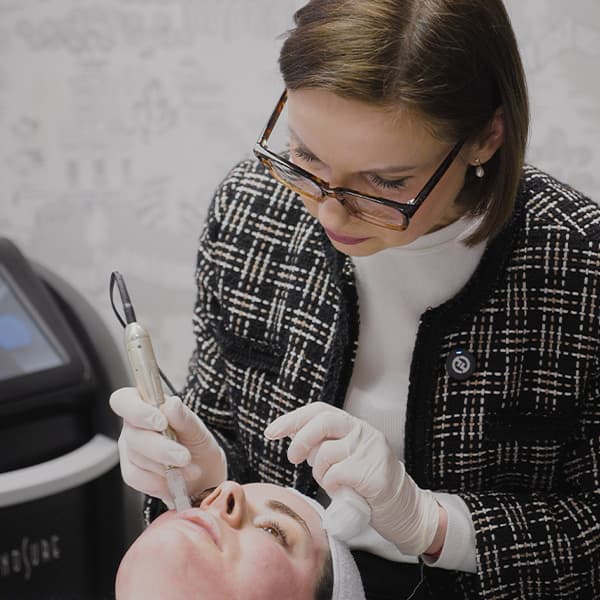
Common questions our Marylebone team hears about this treatment.
Clinical studies describe fractional CO2 laser as safe and effective when performed by a trained doctor, with mostly mild and temporary side effects.
Expect redness, swelling, light crusting and peeling as the skin renews. These effects are temporary and usually settle within about a week.
Scarring is uncommon. It is largely preventable through correct settings, careful screening and following your aftercare closely.
Yes, with care. Studies in skin of colour show good results, although conservative settings are used to lower the risk of temporary pigmentation.
Redness and crusting generally settle within around a week, and any residual pinkness fades over the following two to four weeks.
Infection is uncommon. Where appropriate, we prescribe antiviral cover and give clear aftercare to keep the healing skin protected.
CO2 laser is avoided during pregnancy or breastfeeding, over active infections, after recent isotretinoin, or with a tendency to keloid scarring.
A numbing cream is applied first, so the treatment is well tolerated. Afterward the skin feels hot and tight for a day or two.
Choose a doctor-led clinic, share your full medical history, and follow the aftercare and sun-protection advice you are given.
Modern fractional CO2 lasers treat only a fraction of the skin at a time, which shortens healing and lowers the risk compared with older fully ablative devices.