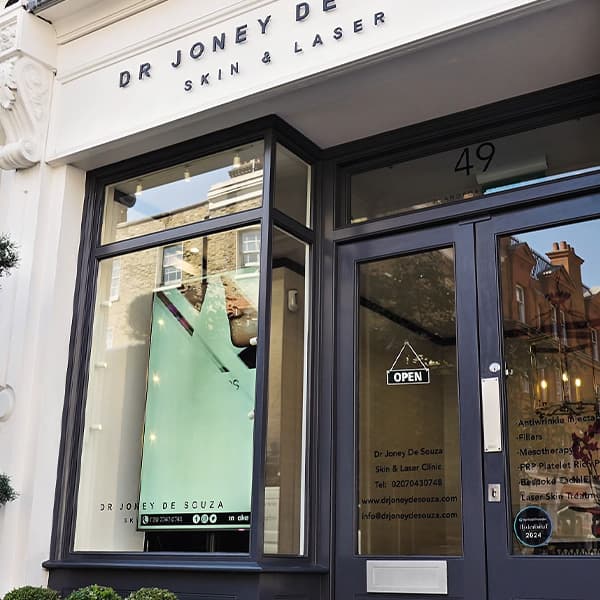
Interest in injectable treatments that improve skin quality rather than alter facial shape is growing. This article explains the difference between polynucleotides and skin boosters such as Profhilo, focusing on mechanism, outcomes and suitability.
Written by the team at Dr Joney De Souza 2nd of February 2026
Interest in injectable treatments that improve skin quality rather than alter facial shape has grown steadily over recent years. Patients are increasingly well informed. Many arrive at consultation already aware of terms such as skin boosters, regenerative injectables, and polynucleotides.
What is less clear, however, is how these treatments differ and what they are designed to do. Deciding which approach may be appropriate is also harder.
At Dr Joney De Souza’s clinic in Marylebone, injectable treatments are considered tools within a wider skin health strategy. They are not solutions in isolation. Understanding how treatments work, and what they are intended to improve, is essential before any decision is made.
This blog explains the difference between polynucleotides and hyaluronic-acid-based skin boosters such as Profhilo. The focus is on mechanism, outcomes, and suitability rather than preference or promotion.
Skin quality describes how the skin looks, feels, and functions over time. Several factors shape it. These include hydration, collagen density, elastin integrity, vascular supply, inflammation, and the skin’s ability to repair itself.
As skin ages, changes occur at multiple levels. Collagen production slows, elastin fibres fragment, and cellular repair mechanisms lose efficiency. Environmental stressors such as ultraviolet exposure, pollution, and inflammation accelerate these changes further.
Injectable skin quality treatments support the skin at a biological level. In the polynucleotides vs skin boosters comparison, some focus mainly on hydration and biomechanical support. Others aim to stimulate repair and regeneration within the skin itself.
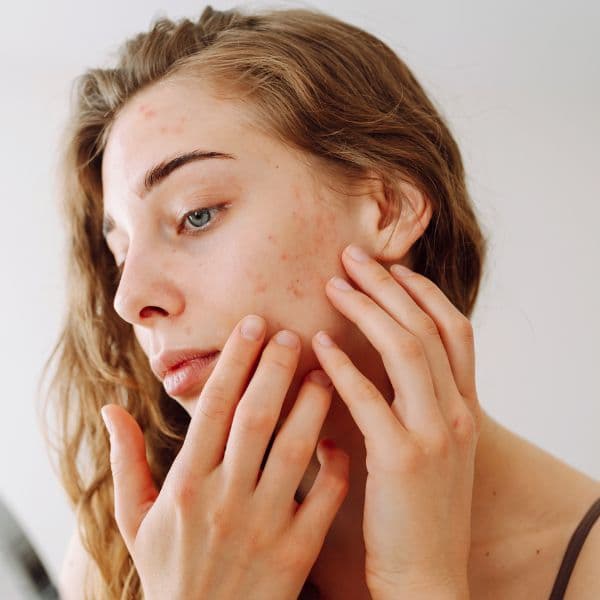
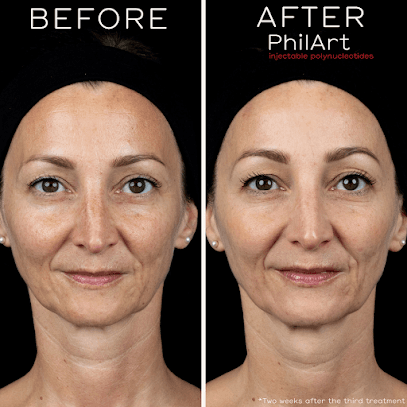
Polynucleotides are injectable compounds derived from purified DNA fragments. This DNA usually comes from salmon. That source is where the ‘Salmon Sperm Facial’ trend came from. In aesthetic medicine, they are valued for regeneration and repair, not volume or contouring.
Once injected into the skin, polynucleotides act at a cellular level. They help create an environment that supports fibroblast activity, collagen synthesis, and tissue repair. These compounds also have anti-inflammatory properties, which matter in skin that appears stressed, sensitised, or prematurely aged.
Rather than providing an immediate visible change, polynucleotides work gradually. Their role is to improve skin function over time, supporting improved texture, elasticity, and resilience. This regenerative focus means results tend to develop progressively rather than appearing instantly.
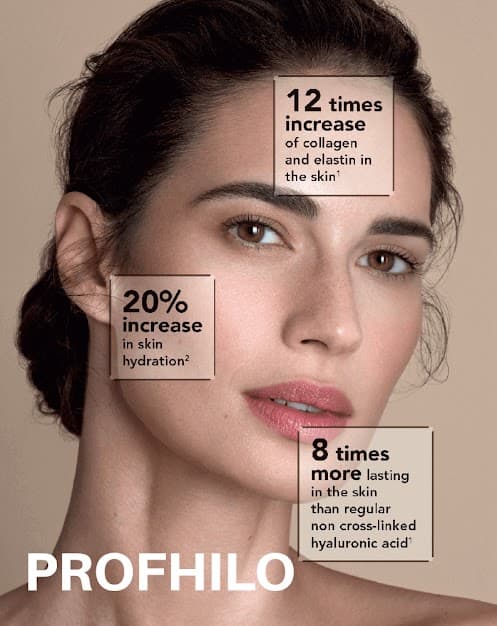
Profhilo is a hyaluronic-acid-based injectable classified as a skin booster. Unlike traditional dermal fillers, it is not designed to add structure or volume (the particles are not ‘cross-linked’). Instead, it spreads within the skin to improve hydration.
Hyaluronic acid attracts and retains water, which helps improve skin suppleness and surface smoothness. Profhilo also has a secondary effect: it stimulates collagen and elastin production. Its primary role, though, remains hydration and skin quality enhancement.
Patients often notice changes in skin luminosity and softness relatively quickly after treatment. The effect is typically described as improved skin texture and hydration rather than regeneration or repair.
The distinction between polynucleotides and Profhilo is best understood as regeneration versus hydration. Polynucleotides focus on improving the biological health of the skin. They aim to support repair processes, reduce inflammation, and encourage long-term improvements in skin structure by eliminating free radicals.
Profhilo focuses on optimising the skin’s hydration environment. By improving water content and tissue support, it can enhance skin smoothness and radiance. The change is most visible in skin that appears dehydrated or crepey.
Neither approach is inherently superior. They simply address different aspects of skin quality. Each may be used at different stages of ageing or in different skin types.
With Profhilo, improvements in hydration and skin texture are often noticeable within days. Treatment is usually delivered in a short course, with maintenance depending on skin condition and lifestyle factors. This is the true injectable moisturiser. It makes your skin feel properly hydrated.
Polynucleotides tend to produce more gradual results. Changes in skin texture, elasticity, and overall quality develop over a longer timeframe as regenerative processes take effect. This slower progression reflects their biological mode of action.
Neither treatment stops ageing. Instead, both aim to support healthier skin ageing when used appropriately and as part of a broader treatment plan.
| Polynucleotides | Profhilo | |
|---|---|---|
Procedure time | 45 minutes | 45 minutes |
No. of treatments | 3 sessions spaced 2 to 4 weeks apart | One treatment every 6 months |
Duration of results | May last up to 6 - 9 months. We recommend a top up after 9 months | Results may last up to 6 months |
In some cases, polynucleotides and Profhilo may feature in the same treatment plan. They are used at different stages or in different areas. Combination approaches are common in skin health planning, provided each treatment has a clear purpose.
Combining treatments does not mean using interventions indiscriminately. It requires careful assessment, spacing, and an understanding of how different products interact within the skin. At the Dr Joney De Souza clinic, combination treatments need a clear clinical rationale. The patient must also understand the intended outcome.
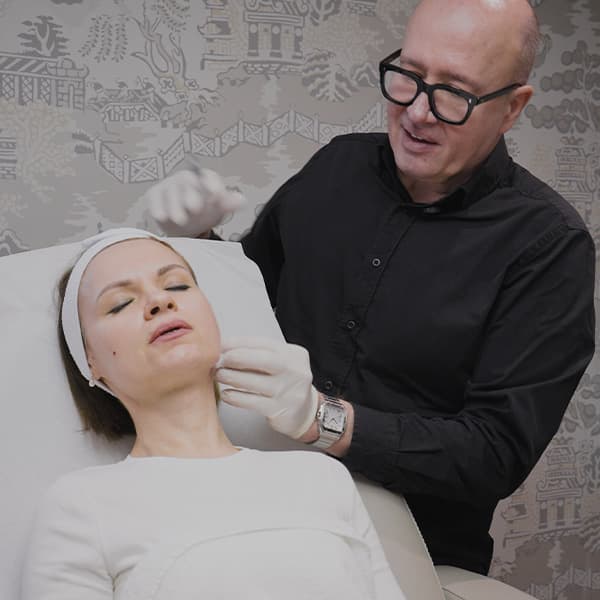
Profhilo may be considered for patients whose primary concern is dehydration, dullness, or early loss of skin suppleness. It is often used in patients seeking subtle improvement without any change to facial shape.
Polynucleotides may be considered for skin that shows signs of stress, inflammation, or reduced regenerative capacity. This can include delicate areas such as the under-eyes, neck, or skin affected by sun damage or acne scarring.
When weighing polynucleotides vs skin boosters, suitability depends on skin quality, medical history, and patient expectations. A detailed consultation is essential to determine which approach, if either, is appropriate. Injectable treatments are not always the answer. Other options include Endolift for skin tightening, or PicoSure where pigmentation is the real concern.


Polynucleotides are not better or worse than Profhilo. They simply work differently. Polynucleotides focus on regeneration and repair, while Profhilo primarily improves hydration and skin suppleness.
No. Polynucleotides do not add volume or alter facial contours. They are not fillers and are used to support skin quality rather than shape.
Results vary depending on skin condition, age, and lifestyle. Improvements develop gradually and may be maintained with periodic treatments following assessment.
Profhilo results typically last several months. Maintenance treatments may be considered depending on skin quality and individual ageing patterns.
They can be combined in some treatment plans, provided there is a clear clinical indication and appropriate spacing between treatments.
Discomfort is usually mild and short lived. Sensation varies depending on treatment area and individual sensitivity.
No. Profhilo is classified as a skin booster. It does not provide structural support or volume in the way dermal fillers do.
Patients with certain medical conditions, active skin infections, or unrealistic expectations may not be suitable. Assessment is essential.
Polynucleotides are sometimes considered for delicate areas such as the under-eye, depending on anatomy and skin quality.
Downtime is usually minimal, though temporary swelling or small injection marks can occur.
Treatment protocols vary, but a course of sessions is often recommended to support regenerative processes.
Both treatments aim to improve skin quality without altering facial shape. Outcomes should appear subtle and natural when appropriately selected.
Our patients return to us year after year for natural, balanced results. Every review reflects our commitment to precision, safety and a personalised approach to aesthetic care.
Polynucleotide and Skin Booster Experts in London
The Dr Joney De Souza Skin & Laser Clinic sits at 49 Blandford Street in Marylebone. It is known for a refined, personalised approach to aesthetic medicine and skin health. The clinic offers a carefully curated range of advanced treatments, including Skinvive by Juvéderm. These are designed to improve skin quality, hydration and radiance while preserving natural facial expression.
Every aesthetic treatment gets the same attention to detail and clinical integrity. The focus stays on long-term skin health, not short-term cosmetic change. Through thorough consultation and tailored treatment planning, patients are guided towards subtle, effective solutions. These support healthy, luminous skin over time.