Skin rejuvenation with the PicoSure Pro laser is an advanced approach to pigmentation with very little downtime. It helps improve pigmentation and melasma, and supports clearer, brighter skin for the years ahead.


Clearer, brighter, more even skin is exactly what PicoSure laser is built for. It lifts stubborn pigmentation and dark spots without stripping the surface or taking you out of your day. Also known as pico laser, it leaves your natural skin tone looking fresher and more luminous.
Has pigmentation been hard to shift, with little downtime to spare? PicoSure is a gentle laser for pigmentation that fits into a London lunch break.
Most patients come to us with one or more of these concerns:
PicoSure suits a wide range of skin tones. That includes medium and darker complexions, which carry a higher risk of side effects with older lasers. Your specialist always carries out a consultation and patch test before your first session, to confirm suitability and set expectations. You can also read how PicoSure targets pigmentation before you book.
Related concerns: this treatment helps with pigmentation and age spots.

PicoSure is a picosecond laser that sends ultrashort bursts of energy into the skin. Each burst lasts a trillionth of a second. Rather than heating the skin, it creates a photomechanical PressureWave just beneath the surface. The surrounding tissue absorbs far less heat than with older nanosecond or millisecond lasers.
This advanced technology lets PicoSure treat pigmentation that older systems could not safely handle, especially in darker skin tones. The clinic runs PicoSure Pro, the current generation of that 755nm platform. A second wavelength at 532nm treats pigment sitting right at the surface. The same picosecond pulse, more power behind it, and two colours of light to choose between.
At Dr Joney De Souza Clinic in Marylebone, your practitioner sizes the beam to the area being treated. Energy is concentrated where pigment actually sits. For rejuvenation we fit the Focus lens, which splits the beam into a grid of concentrated points. The grid breaks pigment down and encourages fresh collagen.
You get real improvements in pigmentation, brightness and skin quality, with minimal downtime and no removal of the skin surface. PicoSure treatment in London comes as a single session or a short course of two or three. Each plan is tailored to your skin. As a pico laser it works by pressure rather than heat, which is what keeps the surrounding skin comfortable.
PicoSure Pro delivers picosecond pulses of laser light at 755nm, tuned to the melanin pigment in your skin. It adds 532nm when the pigment sits shallow enough to want a shorter wavelength. Each pulse shatters the pigment into microscopic fragments, which your body then clears naturally.
That same pressure response reaches the deeper layers. The Focus lens concentrates it into a grid of points, encouraging new collagen and elastin. There is none of the heat that causes downtime or upsets sensitive skin. This is what makes pico laser resurfacing so effective on both pigmentation and the early signs of ageing.
Want the background first? Our guide on how to get rid of pigmentation with laser explains the approach in plain terms.
Before any PicoSure laser session begins, your specialist conducts a thorough consultation. This assesses your skin type, degree of pigmentation and treatment goals. The consultation allows the practitioner to select the correct energy settings and handpiece for your skin tone and concern.
Your specialist also carries out a patch test at this stage. The test confirms your skin responds as expected and that the treatment is appropriate for you.
On the day of your appointment, your specialist cleanses the treatment area to remove any makeup, oils or SPF. Next, your specialist applies a topical numbing cream and leaves it for 20 to 30 minutes. This keeps you comfortable throughout the session.
Most patients find PicoSure laser treatment far more comfortable than they anticipated. That holds true even for larger areas such as the full face.
Once the numbing cream comes off, treatment begins. Your specialist passes the PicoSure handpiece across the treatment area in a series of controlled pulses. Each pulse delivers an ultrashort burst of energy lasting just picoseconds. The burst generates a photomechanical PressureWave beneath the skin.
For pigmentation concerns, the beam is matched to the area being treated. For rejuvenation, the Focus lens concentrates energy into precise zones. Pigment particles shatter without significant heat building in the surrounding tissue.
Immediately after the laser session, your specialist applies a cooling gel or soothing mask to the treatment area. Any redness or warmth settles more quickly, and the skin calms before you leave the clinic. Your specialist applies SPF to protect your skin before you step outside. You also receive a written aftercare guide to take home.
In the days following treatment, your skin may appear slightly pink or feel mildly sensitive. This is most noticeable in the first 24 to 48 hours. For most patients these effects are minimal. Daily activities can resume the same day or the following morning.
The improvement in pigmentation and skin radiance builds gradually over two to four weeks. During that time the body clears the treated pigment particles and produces new collagen.
After each session, your specialist reviews your skin’s response and adjusts the plan if needed. In most cases, a course of three sessions spaced four to six weeks apart works best. This produces the most significant and lasting results for pigmentation. Your specialist will also advise on a maintenance schedule, plus any skincare products that will support your results between sessions.
Over the two to four weeks following each session, your body processes the fragmented pigment and produces new collagen. Skin clarity and brightness improve gradually. At your review, your specialist assesses your skin’s progress and adjusts the next session’s energy settings accordingly.
For most concerns, three sessions spaced four to six weeks apart deliver optimal results. Some pigmentation returns over time, particularly in patients prone to melasma. A single maintenance session once or twice a year often sustains their results.
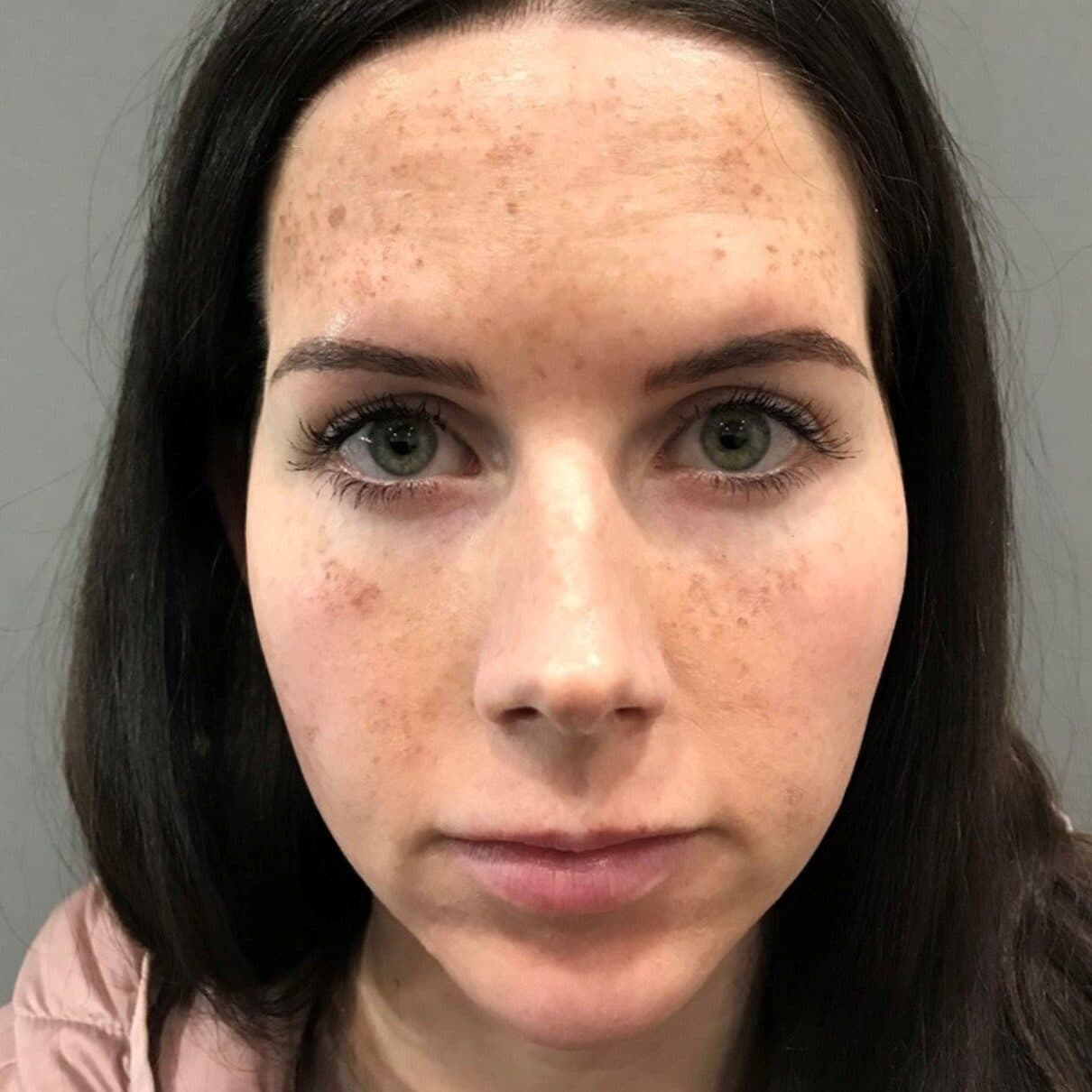
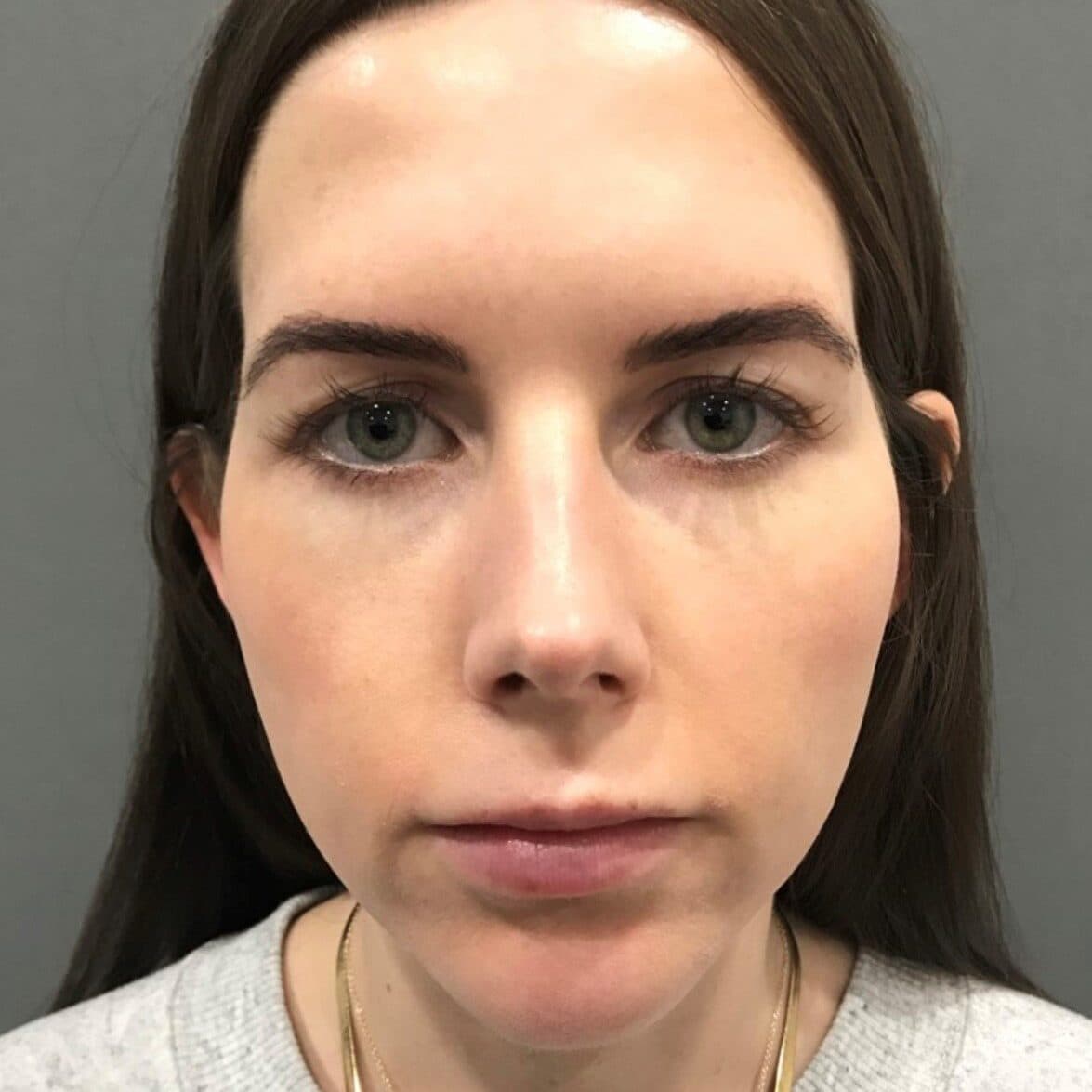
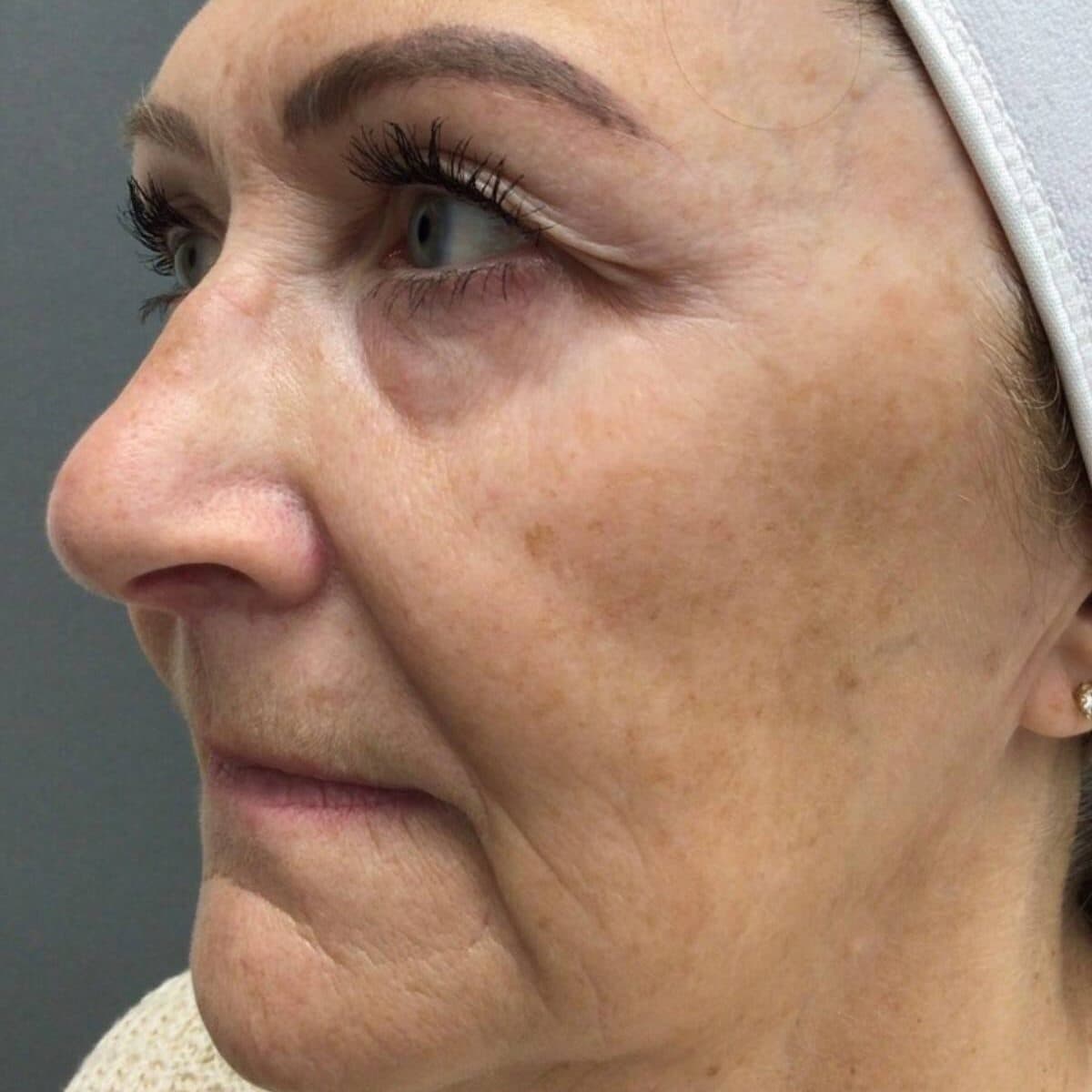
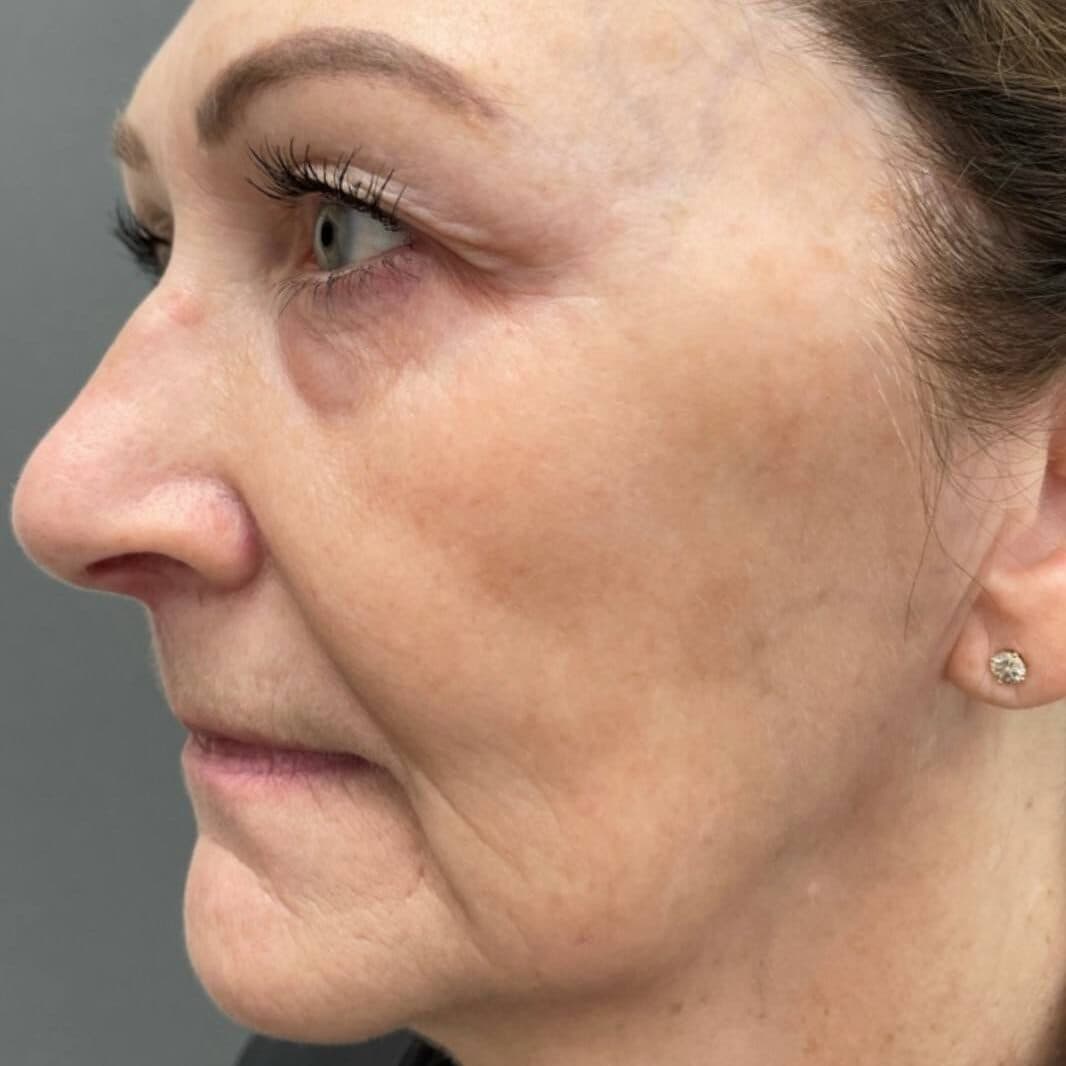
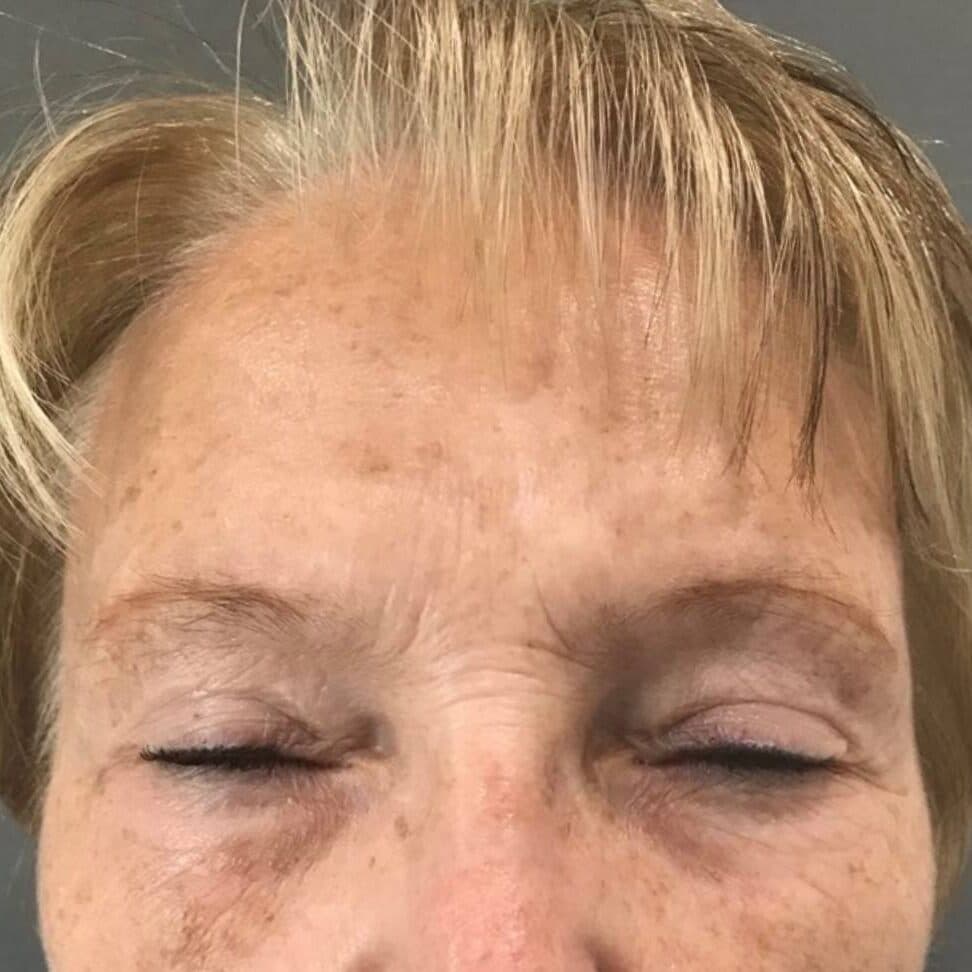
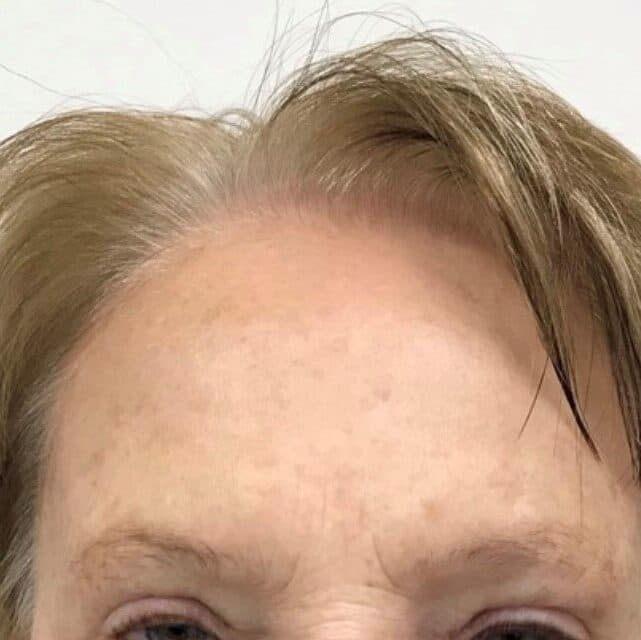
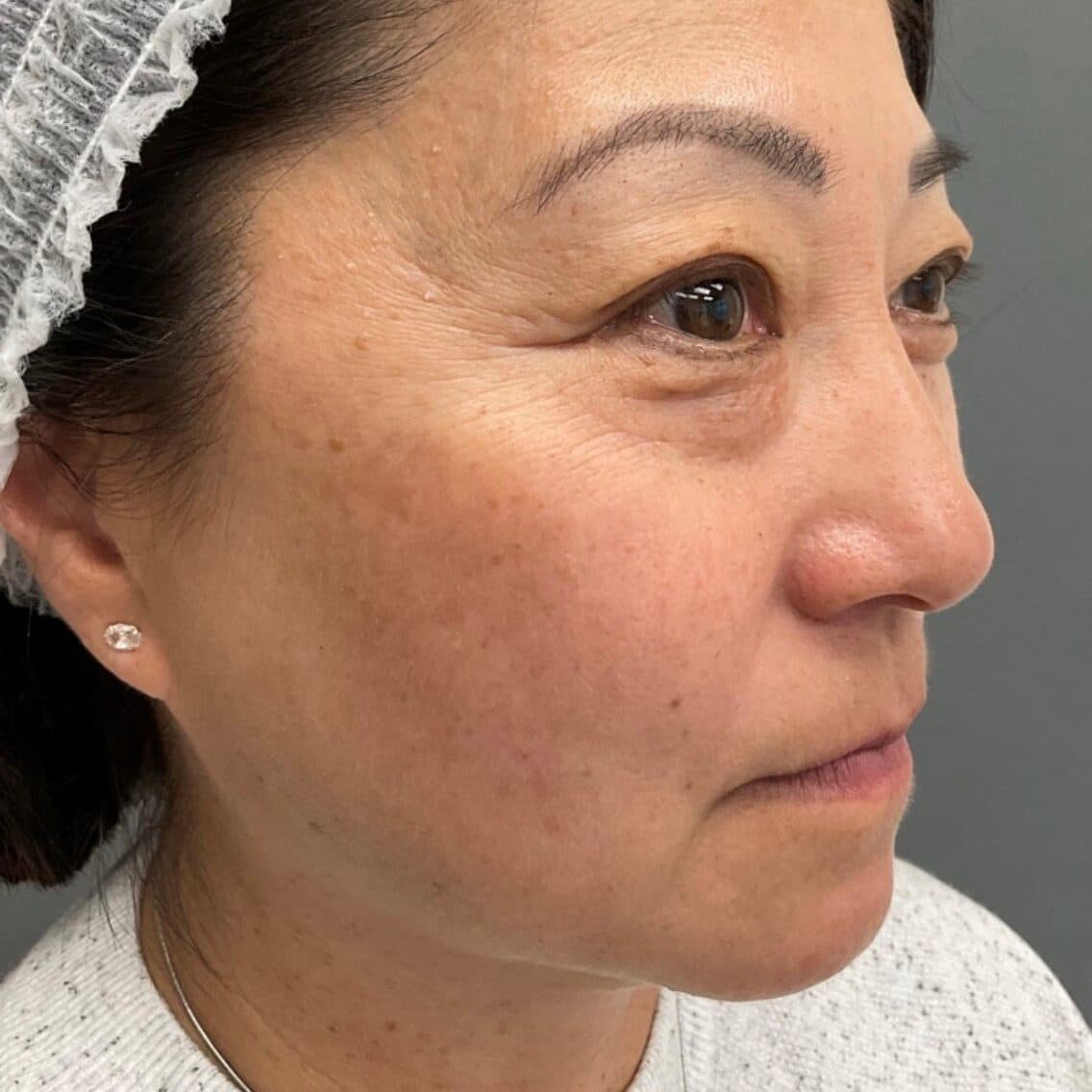
The following results show improvements in skin tone, texture and pigmentation achieved after a course of PicoSure laser treatment at Dr Joney De Souza Clinic, now delivered on the PicoSure Pro platform.
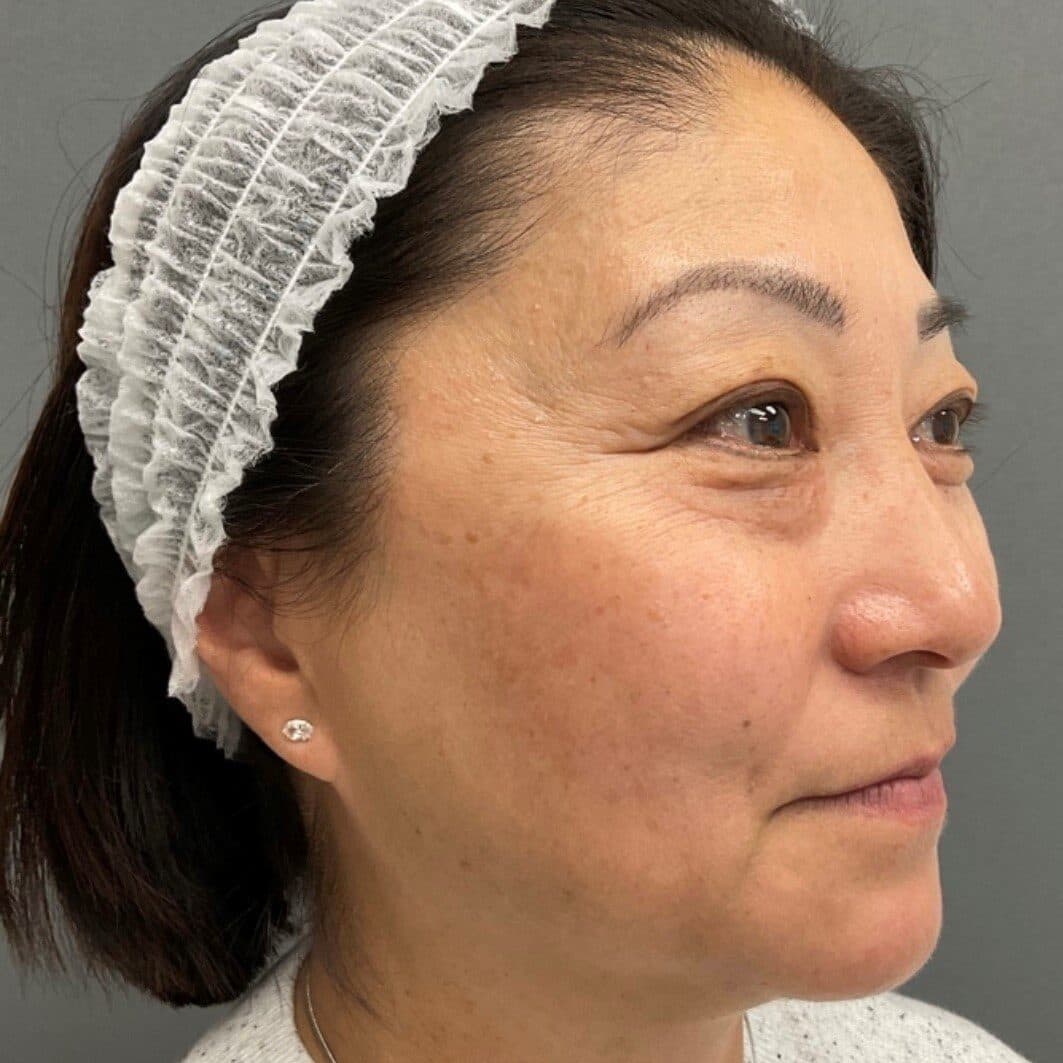
There is a new laser in our Marylebone treatment room. It is the one we reach for first when pigmentation refuses to shift. PicoSure Pro is the latest generation of the 755nm picosecond platform. It works on one beautifully simple idea, which is speed.
Each pulse lasts about a trillionth of a second. That is faster than heat can travel. The energy arrives as a sharp pressure wave. It shatters pigment where it sits and leaves the skin around it cool. Older lasers had to warm the skin to do the same work. This one does not.
A pico laser session in London fits into a lunch break, and the surface of your skin is never removed.
What the Pro generation brings is a second colour of light, and more power behind both. The original worked at 755nm, the wavelength brown pigment absorbs most readily. That wavelength also reaches marks sitting deeper down. The Pro adds 532nm, absorbed right at the surface. That is what a sharply defined sun spot or a scatter of freckles actually wants.
A wider range of energy also lets your practitioner dial the laser to your skin. There is no settling for the nearest setting. It arrives with five handpieces: the 755nm zoom, and four fixed 532nm heads at 5, 6, 8 and 10mm.
The spot is sized to the job and the wavelength is chosen for the depth. The job is never fitted to the beam. That runs from a light pass across the decolletage to concentrated work on one determined mark. It is the difference between a treatment built for the average patient and one built around yours.
The aim is clearer skin now, and skin that holds its clarity for the years ahead. The same platform powers our separate PicoSure tattoo removal service, which is assessed and priced on its own page.
Picture the same brilliant idea, then give it a second colour of light. Both are pico lasers working at 755nm, the wavelength brown pigment absorbs most readily. Both clear that pigment by pressure rather than heat. The Pro adds 532nm, and that is the real difference.
A shorter wavelength is absorbed right at the surface, which suits sharply defined spots and freckles. It also reaches the warm ink colours 755nm passes over. The Pro also delivers the pulse at higher power, and higher power opens up the range.
Your practitioner can sweep gently across a whole area or concentrate on one determined mark. They can also move the settings as your skin answers through a course. The plan you end up with is shaped around your skin, and it is confirmed at your consultation in Marylebone.
This is one of the happiest answers in laser medicine. PicoSure Pro is used right across Fitzpatrick types I to VI, and that breadth is what picosecond technology unlocked. The reason comes down to heat, or rather the absence of it. Older lasers delivered much of their effect as warmth, and warmth is what asks more of skin rich in melanin.
A picosecond pulse outruns heat entirely. The pigment takes the energy and the skin around it is left undisturbed. Deeper complexions are treated with a considered, unhurried approach. A patch test at your assessment shows exactly how your own skin responds.
Yes, and it is a question we hear often. Asian skin is prone to pigmentation concerns such as melasma, sun spots and post-inflammatory marks. It also carries a higher risk of rebound pigmentation with older heat-based lasers.
The picosecond pulse works by pressure rather than heat. PicoSure Pro therefore treats melanin-rich skin with far less of that risk. Your specialist confirms suitability with a patch test and keeps the early settings deliberately gentle. Intensity builds up as your skin shows how it responds.
Yes, and it is one of the most rewarding areas we treat. The skin under the eye is delicate. That is exactly where a laser working by pressure rather than heat earns its keep. Pigmented dark circles and under eye pigmentation lift, the eye itself is shielded throughout, and the settings stay deliberately gentle.
Your assessment confirms that pigment is what is casting the shadow. The plan you leave with is then the one that will genuinely work for you.
The marks left behind after a breakout are pigment, and pigment is what this laser was built for. Those brown and grey shadows that linger long after the spot has gone respond well. Superficial acne scarring often softens alongside them.
Skin reads as one even colour again, and foundation stops being the thing that evens it. Where texture rather than colour is the concern, your consultation points you to the treatment that remodels it. The plan always matches the problem.
At Dr Joney De Souza Clinic in Marylebone, a specialist trained on the platform carries out every PicoSure Pro session. Dr Joney De Souza provides clinical oversight. Most of that work sits with Roma Sumskiene, our Advanced Skin and Laser Specialist. Roma is Level 4 qualified and has run hundreds of PicoSure sessions.
Pigment rewards a methodical operator, and Roma is exactly that. Every plan is built to a medical standard. It weighs your skin history, any concerns and the right energy settings for your skin type and tone.
Dr Joney De Souza has spent over 20 years in aesthetic medicine in London. His reputation is built on clinical results and honest advice. What sets the clinic apart is not only the technology but the quality of assessment behind every treatment.
The clinic will never recommend something that is not right for your skin. The team talks through realistic outcomes before you commit. Patients come back not just for the results, but for the trust built over years of care.
Where our PicoSure differs. We run PicoSure Pro with both wavelengths and five handpieces. The beam is matched to your treatment area rather than one setting serving every face. We also fit the Focus lens. Rejuvenation is part of what the platform does here, not only pigment clearance.
And we include around 30 minutes of numbing and a full 45-minute treatment, rather than a rushed session with none. The result is more thorough and more comfortable, from pigmentation clearance to overall skin rejuvenation.
Trained specialist practitioners carry out every PicoSure session at Dr Joney De Souza Clinic. Pico laser treatment prices depend on the area treated and whether you choose a single session or a course. Most patients get their best results from a course of three PicoSure sessions, spaced four to six weeks apart.
Even a single session gives a visible lift in brightness and a softening of pigmentation. Your specialist shapes every plan around how your skin responds and reviews progress at each visit. Weighing up pico laser treatment near you? Our guide to PicoSure laser cost in London sets out what to expect.
PicoSure is an Associate treatment. Final pricing confirmed at consultation.
| Associate (£) | Associate x3(£) | |
|---|---|---|
Face | 475 | 1,282 |
Face & Neck | 595 | 1,606 |
Face, Neck & Decolletage | 750 | 2,025 |
Neck | 350 | 950 |
Neck & Decolletage | 550 | 1,485 |
Decolletage | 400 | 1,080 |
Eye area | 320 | 864 |
Mouth area (‘smoker’s lines’) | 320 | 864 |
Scars to Small (10×10 cm) | 320 | 864 |
PicoSure is outstanding at lifting surface pigmentation, melasma and uneven tone. Some patients also have textural concerns, such as enlarged pores, fine lines or superficial scarring. Pairing PicoSure with Fraxel 1540 gives a more complete result.
PicoSure handles colour and pigmentation, while Fraxel 1540 works on texture and rebuilds collagen deeper down. Patients who complete a planned sequence of both often see a fuller improvement than either treatment delivers alone.
The clinic offers both. Many patients do well on a tailored combination, with sessions spaced to allow full recovery between each. The two lasers use different wavelengths and mechanisms, so they complement rather than compete. If you are weighing up both, your specialist can map out the right sequence and timing at your first consultation.
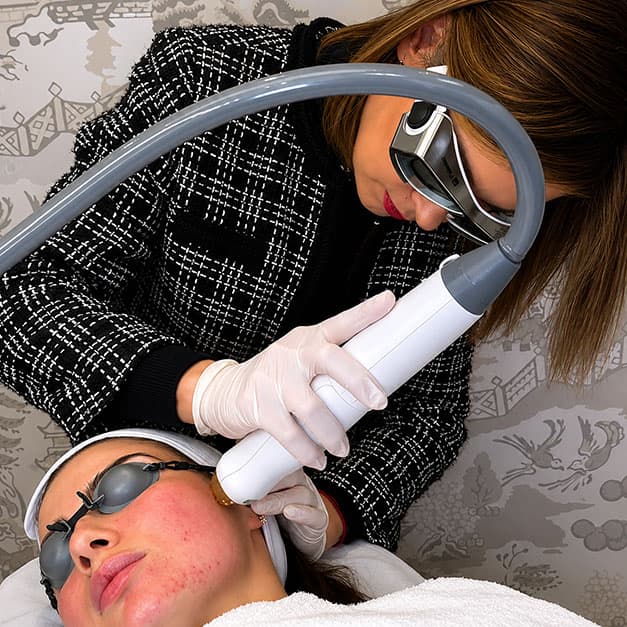
Below are answers to the questions we hear most about PicoSure laser treatment at Dr Joney De Souza Clinic in Marylebone. If your question is not covered, the team is a message away on WhatsApp or through the form on this page.
PicoSure is clinically used to treat a wide range of pigmentation and skin concerns. The treatment is most commonly chosen for sun damage and age spots, post-inflammatory hyperpigmentation, melasma and freckles. It also treats uneven skin tone, dull complexion, under eye pigmentation, superficial acne scarring and overall skin rejuvenation.
PicoSure Pro with the Focus lens is also chosen for overall skin texture and brightness. That holds even in patients without significant pigmentation. It is a popular option for laser freckle removal too.
The number of pico laser sessions depends on the type and severity of your concern. For most pigmentation conditions, a course of three sessions spaced four to six weeks apart produces the most consistent results.
Patients with lighter or more superficial pigmentation sometimes see meaningful improvement after a single session. More persistent conditions such as melasma may benefit from additional treatments. Your specialist will review your skin after each session and adjust the plan accordingly.
PicoSure is suitable for a broad range of skin tones, including medium and darker skin types. Those tones carry a higher risk of side effects with older laser technologies.
The picosecond pulse duration generates less heat in the surrounding tissue than nanosecond or millisecond lasers. This reduces the risk of post-inflammatory hyperpigmentation in patients with higher melanin levels. A consultation and patch test are always conducted before your first session. They confirm suitability for your specific skin type and concern.
Yes. PicoSure has a strong safety profile for Fitzpatrick skin types IV, V and VI when used at appropriate settings. The clinic’s practitioners are experienced in treating a diverse range of skin tones. They adjust energy settings based on your consultation assessment. Patients with darker skin tones achieve effective pigmentation reduction. The risk of post-inflammatory hyperpigmentation is kept to a minimum.
Older Q-switched nanosecond lasers deliver pulses lasting one billionth of a second. PicoSure, however, delivers pulses lasting one trillionth of a second, generating a photomechanical PressureWave rather than primarily thermal energy.
The surrounding tissue absorbs significantly less heat. This reduces the risk of burning or post-inflammatory pigmentation. PicoSure can treat conditions that older technologies could not safely address. That matters most for patients with darker skin tones or sensitive skin.
Most patients describe PicoSure as a series of snaps or mild warmth on the skin surface. Your specialist applies a topical numbing cream before the session. The majority of patients therefore find the treatment comfortable and well tolerated.
A full-face session takes 20 to 30 minutes from the point the laser begins. After treatment, the skin typically feels warm and appears slightly pink. This usually settles within a few hours to 24 hours. Most patients return to their normal routine the following day.
The Focus lens is an attachment for the 755nm handpiece. It concentrates energy into a pattern of high-intensity zones instead of spreading it evenly. Treated zones sit surrounded by untouched tissue, which speeds the healing response and prompts collagen and elastin.
We fit it here for skin rejuvenation and for difficult pigmentation such as melasma. A broad even pass would carry more risk for some skin types. On PicoSure Pro it works with more power behind it than the original platform allowed.
PicoSure involves minimal downtime compared to ablative laser treatments such as CO2 or UltraClear. Most patients return to work the following day. Some resume normal activities the same afternoon after applying makeup to cover any residual redness.
We advise patients to avoid high-intensity exercise, saunas and direct sun exposure for 48 hours after treatment. Wear SPF 50 daily throughout your course. The combination of short recovery time and visible results is frequently cited. It is a key reason patients choose PicoSure over alternative treatments.
Many patients notice an immediate brightening effect after their first session, particularly in areas of superficial pigmentation. The full improvement in pigmentation and skin radiance develops over two to four weeks after each session. During that time the body processes the treated pigment particles.
In most cases, the most significant change is visible between the second and third session of a course. Hold off on assessing final results until four weeks after the last treatment.
Results vary depending on the condition treated and your exposure to triggering factors such as sun exposure and hormonal changes. In most cases, pigmentation removed during a course of PicoSure does not return to the same degree. That holds provided patients maintain good sun protection habits.
Melasma in particular can be influenced by hormones, heat and UV exposure. Some patients therefore benefit from annual maintenance sessions to sustain their results. Your specialist will advise on a maintenance plan appropriate to your skin and lifestyle.
Yes. PicoSure combines well with several treatments offered at the clinic. Many patients pair a course of PicoSure with Profhilo or polynucleotides. The pairing adds hydration and skin quality improvements after laser treatment.
Fraxel 1540 can also be used alongside PicoSure in a planned sequence to target both pigmentation and skin texture. Your specialist will advise on appropriate spacing between treatments. This allows your skin to recover fully between each session.
Yes. We fit the Focus lens alongside the pigmentation handpieces. You receive rejuvenation and pigment clearance rather than one of the two. Most patients notice brighter, fresher and more even skin. Results vary between individuals, and your consultation confirms what your skin needs.
Yes. We allow around 30 minutes of numbing and a full 45-minute treatment, for comfort and a thorough result.
Because you receive both treatment heads, proper numbing time and a full-length treatment, rather than a rushed single-head session.
The right laser depends on your skin concern, your skin tone and how much downtime you can take. Different systems work on different principles and suit different conditions. Below is how PicoSure compares to the other laser options at Dr Joney De Souza Clinic and beyond. Our explainer on PicoSure and erbium laser goes a level deeper.
Related reading: is PicoSure laser safe.
More PicoSure reading: how many sessions, recovery and aftercare and PicoSure Pro vs PicoSure. Also see Pro sessions and results and PicoSure for melasma.
CO2 fractional laser is an ablative treatment that removes the surface layer of the skin and stimulates significant collagen remodelling. That makes it highly effective for deep wrinkles, scarring and texture concerns. PicoSure is a non-ablative treatment that works beneath the skin surface without breaking it. The result is far less downtime and a more comfortable experience.
CO2 is the stronger option for resurfacing. PicoSure is the more targeted and lower-risk choice for pigmentation and tone. Both treatments are available at the clinic, and your specialist can advise on the most appropriate option for your concern.
IPL uses a broad-spectrum light source to target pigmentation and redness. It works well for mild sun damage and vascular concerns. PicoSure Pro uses two specific wavelengths, 755nm and 532nm, in picosecond pulses. These offer far greater precision and effectiveness for deeper or more stubborn pigmentation conditions.
PicoSure delivers more consistent results than IPL for melasma, post-inflammatory hyperpigmentation and age spots. The gap widens in patients with higher skin tones, where IPL carries greater risk. Patients who have not achieved sufficient results with IPL frequently see better outcomes with PicoSure.
Fraxel 1540 uses a fractional erbium laser to target the deeper layers of the skin. It stimulates collagen production and improves skin texture, fine lines and superficial scarring. PicoSure, in contrast, works on the photomechanical PressureWave principle and is primarily used for pigmentation, tone and brightness.
The two treatments are complementary rather than interchangeable: PicoSure for colour concerns, Fraxel for texture concerns. Many patients at the clinic choose a planned sequence of both treatments for a more comprehensive approach to skin renewal.
Morpheus8 is a radiofrequency microneedling treatment designed to remodel deeper tissue and stimulate collagen and elastin. That makes it highly effective for skin laxity, texture and body contouring. It is not the primary choice for pigmentation treatment.
PicoSure is specifically designed to target and break down pigment particles in the skin. That makes it the more appropriate option for melasma, age spots and uneven tone. Both treatments serve different purposes. Each can be used at different points in a broader skin treatment plan.
Yes. For melasma laser treatment, PicoSure is one of the most widely used options. It is generally preferred over ablative or high-heat laser options because of its lower thermal load.
Heat is exactly what can worsen melasma. A platform with such a low thermal load is therefore the safer route. It is also why the Focus lens is often the one we reach for.
Melasma is a complex, hormone-driven condition, and results vary between patients. In most cases, a course of three to four sessions produces significant lightening. Ongoing sun protection and occasional maintenance treatments are important to sustain results over time.
PicoSure is generally well tolerated by patients with sensitive skin, particularly compared to ablative laser treatments. The picosecond pulse produces limited thermal damage, so the surrounding tissue experiences minimal inflammation. Inflammation is the main trigger for sensitivity and post-procedural reactions.
A patch test and full consultation are always carried out before any first session. These identify individual risk factors or contraindications. Your specialist will advise on any adjustments to your skincare routine in the weeks before and after treatment. This keeps the risk of irritation to a minimum.
In the two weeks before your first PicoSure session, you should avoid direct sun exposure, sunbeds and self-tanning products. Pause active vitamin A products such as retinol or tretinoin for at least one week before treatment.
Your specialist will advise you to arrive with clean, product-free skin on the day. Stop taking any blood-thinning supplements if possible. Patients taking certain antibiotics or photosensitising medications should discuss this at their consultation before proceeding.
Topical treatments such as vitamin C serums, hydroquinone or retinol can improve mild pigmentation over time. They rarely achieve the level of correction that laser treatment produces in a shorter timeframe. PicoSure directly targets the pigment deposits beneath the surface. It breaks them down in a way that topical products cannot replicate.
Many patients find that a course of three PicoSure sessions achieves what years of topical treatment could not. Considering the cumulative spend on products over time, it can be a cost-effective long-term investment. The results also tend to be more reliable and consistent than those from topical-only approaches.
At Dr Joney De Souza Clinic, specialist practitioners carry out all PicoSure treatments. Each is specifically trained in the technology, with clinical oversight from Dr De Souza. Roma is named in many of our patient reviews. She has particular expertise in PicoSure laser for pigmentation and skin rejuvenation.
All new patients are assessed at an initial consultation before their first laser session. This allows your specialist to design a treatment plan tailored specifically to your skin and concerns.
Many patients notice a visible improvement in skin brightness immediately after their first session as the treated pigment begins to fragment. The full result of each session develops over two to four weeks. During that window the body clears the broken-down pigment particles and produces new collagen.
In most cases, the most dramatic improvement occurs between the second and third session of a course. Patience is important: PicoSure produces progressive results. Final outcomes should be assessed four weeks after the last session.
You can book a consultation directly via the online booking link on this page. You can also reach us by WhatsApp at the number listed above, or by calling the clinic directly.
Consultations for new patients take 30 to 45 minutes. They include a full skin assessment, medical history review and discussion of your goals. If your consultation confirms PicoSure is appropriate, your specialist carries out a patch test on the day. The test confirms your skin’s response.
The consultation is entirely no-obligation. There is no pressure to proceed with treatment if the timing is not right for you. Patients travel to us from across London and the surrounding boroughs.
After your PicoSure session, keep the skin clean and avoid touching the treated area. Your specialist applies SPF before you leave the clinic. Continue wearing SPF 50 daily for at least four weeks after your final session. Avoid saunas, steam rooms, intense exercise and direct sun exposure for 48 hours after treatment.
Skip retinoids, acids and active skincare for seven days and use gentle, hydrating products only. Avoid heavy make-up for 24 hours too. If you experience prolonged redness, blistering or unexpected changes, contact the clinic directly.
Rated 4.9 out of 5 from 276 verified Google reviews
The results from my PicoSure treatment have been incredible. My pigmentation has faded significantly and my skin looks clearer and more even than it has in years. Highly recommend Dr Joney and the whole team.
I had a course of PicoSure sessions for sun damage and the improvement is remarkable. The treatment was comfortable and the staff were professional throughout. I will definitely be returning.
Dr De Souza is exceptional. My skin tone is so much more even after PicoSure and the results keep improving. I cannot recommend this clinic highly enough.
Fantastic clinic. PicoSure has made a real difference to my skin texture and pigmentation. The aftercare advice was thorough and my results have been amazing.